A honest, no-confusion guide for anyone who has stood in a jewellery showroom wondering the same thing
If you have ever shopped for a gold ring or walked through a jewellery showroom, someone has almost certainly mentioned 18K and 22K gold. And if you are like most people, you nodded along while quietly wondering what the difference actually means for the piece sitting in front of you.
This guide breaks it down simply — no jargon, no sales talk.
What the Numbers Actually Mean
Gold in its purest form is too soft to wear. It bends, scratches, and loses its shape quickly. So jewellers mix it with other metals — silver, copper, zinc — to make it stronger and workable.
The karat number tells you how much of that mix is actually gold.
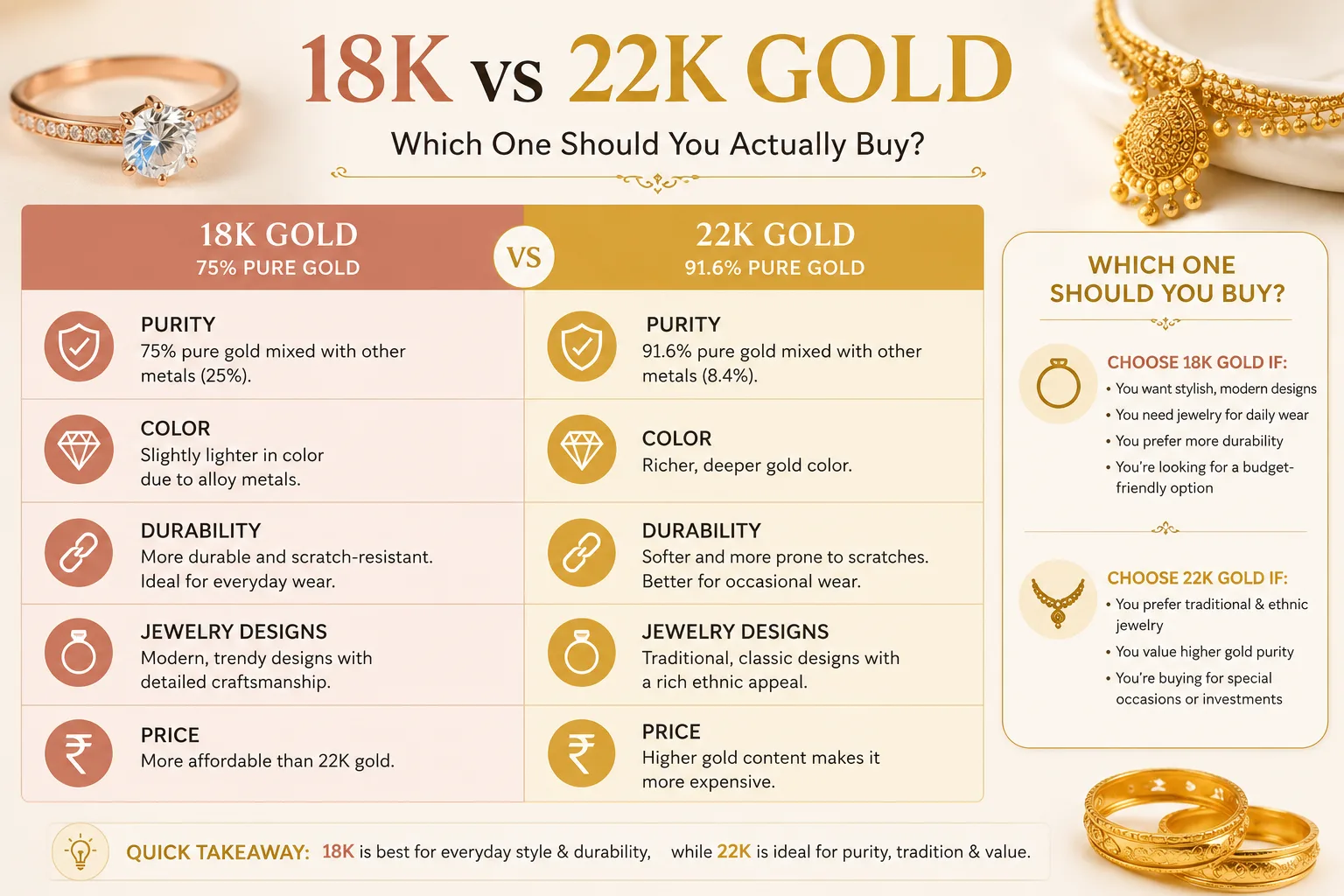
22K gold is 91.6 percent pure gold. That is the 916 hallmark you see on certified Indian jewellery. It is rich in colour, warm in tone, and considered the standard for traditional gold jewellery across India.
18K gold is 75 percent pure gold. The remaining 25 percent is made up of other metals, which makes it significantly harder and more durable. This is why 18K is the preferred choice for pieces set with diamonds or precious stones — the stronger metal holds settings more securely over time.
Which Is Better for a Gold Ring?
It depends entirely on how you plan to wear it.
If you are buying a gold ring for daily wear — something you will put on every morning and forget you are wearing — 18K is the more practical choice. It resists scratches and dents better and holds its shape through regular use. A solitaire or stone-set gold ring almost always works best in 18K for exactly this reason.
If you are buying a gold ring for a wedding, engagement, or as a heritage piece — something worn on occasions and passed down eventually — 22K gives you that deep, traditional gold colour and higher intrinsic value. Many families in India specifically prefer 22K for bridal jewellery because of its purity and cultural significance.
When you buy gold ring online, always check whether the listing specifies 18K or 22K clearly. Reputed platforms list this alongside the BIS hallmark details, so there is no guesswork involved.
What About a Gold Necklace?
The same logic applies. A gold necklace for women that is worn occasionally — for festivals, weddings, or special dinners — is typically more beautiful in 22K. The colour is richer, the finish warmer, and the weight feels more substantial in the hand.
A lighter, everyday gold necklace for women — a simple pendant or a delicate chain worn daily — often works better in 18K because it takes the wear and tear of everyday life more gracefully.
When browsing a gold necklace online, pay attention not just to the design but to the karat. It tells you a great deal about how the piece was intended to be worn.
Gold Earrings: Does Karat Matter Here Too?
More than people realise. Lightweight everyday gold earrings — studs, small hoops, minimal drops — are often made in 18K because the durability suits daily wear perfectly. Statement pieces like jhumkas, chandbalis, and elaborate festive earrings are frequently crafted in 22K to honour tradition and achieve that unmistakable warm gold finish.
If you are looking to buy online gold earrings, filter by karat alongside design. A pair of 22K jhumkas for a wedding and a pair of 18K studs for daily wear serve completely different purposes — and both are worth having.
So Which Should You Choose?
Here is the simplest way to think about it.
Choose 22K when the occasion matters most — weddings, engagements, heirlooms, and pieces you want to carry real gold value. Choose 18K when the piece needs to be practical — daily rings, everyday necklaces, and earrings that go through real life with you.
Neither is better. They are just built for different moments. The key is knowing which moment you are buying for — and choosing accordingly.
Good jewellery is never an impulse decision. Whether you are buying a gold ring, a gold necklace for women, or a pair of gold earrings, knowing your karat is the first step toward buying something you will genuinely never want to take off.