
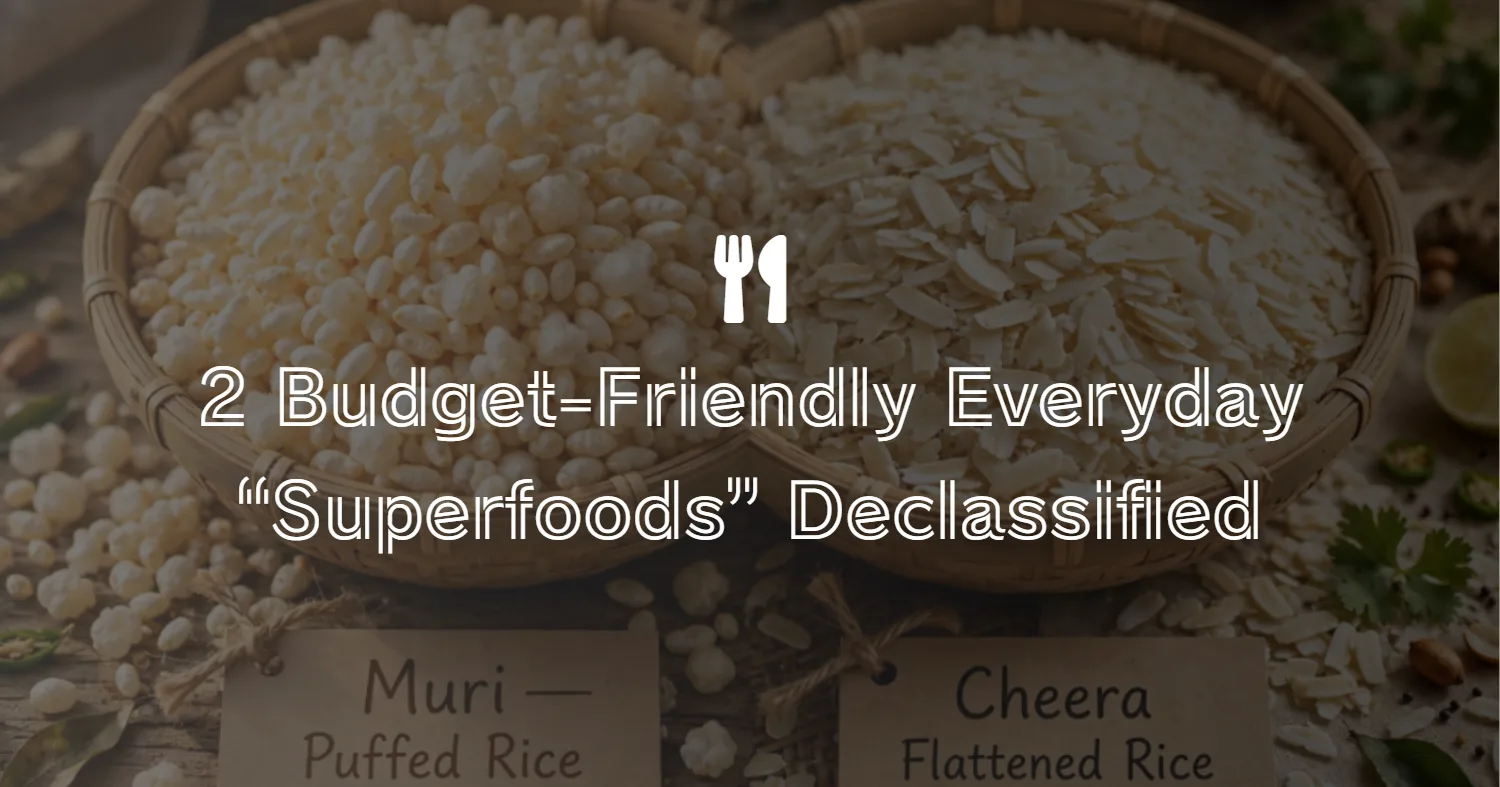
Forget expensive superfoods that are out of your budget. Two of the most useful foods in Indian kitchen are already making global sensation.
If you're trying to eat healthier, you don't necessarily need quinoa, imported berries, expensive protein bars, or complicated meal plans.
Sometimes, the answer is much simpler: You should think about puffed rice (muri/murmura in regional Indian names) and flattened rice (poha/chira/chivda).
They're humble, inexpensive and more than familiar in India. And they've been part of Indian food traditions for generations.
An important catch is that puffed rice and flattened rice aren't complete meals by themselves. They're primarily cereal-based carbohydrate foods. Their real nutritional value comes from how you build the meal around them; adding vegetables, pulses, sprouts, nuts, seeds, curd, eggs, or other protein-rich foods.
So let's take these two everyday foods out of the “cheap snack” category and look at what they can actually do for your diet.
Why puffed rice and flattened rice could be your budget-friendly, heart-healthy meals?
Walk into almost any Indian grocery store and you'll find them.
Muri. Murmura. Pori. Poha. Chira. Chuda. Aval. The names change depending on the region, but the basic foods remain surprisingly simple.
Puffed rice is rice that has been processed so the grain expands into a light, airy texture.
Flattened rice is rice that has been processed and pressed into thin flakes.
The Indian Food Composition Tables published by the National Institute of Nutrition identify puffed rice as “Rice, puffed” and flattened rice as “Rice, flakes,” with regional names including Muri, Murmure, Chira, Poha, Avalakki and others.
Their simplicity is actually their biggest advantage. You can make them sweet or savory. Hot or cold. Crunchy or soft. Traditional or completely modern.
And because they're relatively quick to prepare, they're especially useful when you don't have an hour to cook breakfast.
What to know about puffed rice or murmura?
Puffed rice has a reputation for being “just air.” That's not quite fair.
It is a lightweight cereal food that primarily provides carbohydrates, but its low bulk density makes it particularly useful for snacks and light meals.
It's also incredibly versatile. You can turn it into:
- Jhalmuri
- Bhel-style snacks
- Muri mixtures
- Puffed rice upma
- Sprout bowls
- Vegetable snack bowls
- Breakfast mixtures
- Traditional regional recipes
NIN dietary material includes puffed rice among minimally processed cereal foods, which is a useful reminder that not every convenient food belongs in the same category as highly processed packaged snacks.
What else?
A bowl of plain puffed rice isn't particularly rich in protein or fiber. That's why the best way to use it is as a base.
Add: Puffed rice + sprouts + vegetables + peanuts + lemon
Now you've got a much more interesting meal.
Or try: Puffed rice + roasted chickpeas + cucumber + tomato + coriander
Flattened rice for everyday superfooding special
If puffed rice is the crunchy one, flattened rice is the soft, versatile workhorse.
Most people know it as poha.
Rinse it, let it soften, season it, add vegetables and peanuts, and you've got breakfast in minutes.
But poha isn't limited to one recipe. You can combine flattened rice with:
- Peas
- Carrots
- Beans
- Onions
- Tomatoes
- Peanuts
- Sprouts
- Curd
- Herbs
- Seasonal fruit
- Eggs
- Paneer
- Lentils
What Does a Balanced Puffed Rice or Poha Meal Look Like?
Here's a simple formula you can remember:
Cereal + Protein + Vegetables/Fruit + Healthy Fat
Your cereal
Choose:
- Puffed rice
- Flattened rice
Your protein
Add one or more:
- Sprouts
- Chickpeas
- Lentils
- Roasted gram
- Peanuts
- Curd
- Paneer
- Eggs
- Beans
Your vegetables or fruit
Use what's available:
- Tomato
- Cucumber
- Carrot
- Peas
- Spinach
- Cabbage
- Beans
- Onion
- Seasonal fruit
Your healthy-fat source
Keep the portion sensible:
- Peanuts
- Sesame seeds
- Other nuts
- Seeds
Here's a detailed review of both superfoods from India
A 7-Day everyday meal plan with puffed rice and flattened rice
You can treat the following as a medical diet, calorie-restriction program, or personalized weight-loss plan.
Day 1
Breakfast: Vegetable poha with peanuts and lemon
Mid-morning: Seasonal fruit
Lunch: Rice or roti + dal + vegetables + curd
Evening: Puffed rice + roasted gram + cucumber
Dinner: Vegetables + beans/lentils + rice or roti
Day 2
Breakfast: Poha with peas, carrots and peanuts
Mid-morning: Fruit + a small serving of nuts
Lunch: Dal + vegetables + rice
Evening: Muri with sprouts, tomato, onion and coriander
Dinner: Roti + vegetables + paneer/beans
Day 3
Breakfast: Poha with vegetables and curd
Mid-morning: Seasonal fruit
Lunch: Chickpeas + vegetables + rice/roti
Evening: Puffed rice + roasted chickpeas + lemon
Dinner: Dal + vegetables + your preferred staple
Day 4
Breakfast: Vegetable poha with peanuts
Mid-morning: Fruit
Lunch: Rice + dal + leafy greens + vegetables
Evening: Sprout and puffed-rice bowl
Dinner: Eggs/paneer/beans + vegetables + roti
Day 5
Breakfast: Poha with mixed seasonal vegetables
Mid-morning: Fruit or curd
Lunch: Beans + vegetables + rice/roti
Evening: Muri + peanuts + roasted gram
Dinner: Lentils + vegetables + rice
Day 6
Breakfast: Vegetable poha + curd
Mid-morning: Seasonal fruit
Lunch: Your regular balanced homemade meal
Evening: Jhalmuri-style puffed rice with vegetables
Dinner: Paneer/eggs/beans + vegetables + roti or rice
Day 7
Breakfast: Poha with vegetables, peanuts and lemon
Mid-morning: Fruit
Lunch: A balanced family meal
Evening: Muri + sprouts + cucumber + tomato
Dinner: Dal or another protein source + vegetables + your preferred cereal/staple
The important point is that flattened rice and puffed rice don't replace every other food.
Finally, wrapping things up!
The World Health Organization emphasizes four broad principles for healthy eating: adequacy, balance, moderation and diversity. That last word, “diversity” realy matters.
Eat different vegetables, rotate your protein sources, eat fruit, include legumes, use different grains when practical, add nuts and seeds and enjoy familiar foods like poha and puffed rice along the way. Indians remain healthy on these meals, which is a fact.
There's some hidden advantages too: they are good for heart, liver and whole body plus they're quite affordable.
A diet that requires expensive ingredients every week isn't realistic for everyone. Puffed rice and flattened rice are useful precisely because they're familiar, accessible staples that can be combined with inexpensive local ingredients.
You can use peanuts instead of constantly buying expensive nuts. You can cook according to what's available. That's not just budget-friendly but It's sustainable too.
Want puffed rice and flattened rice in bulk? Drop your views!