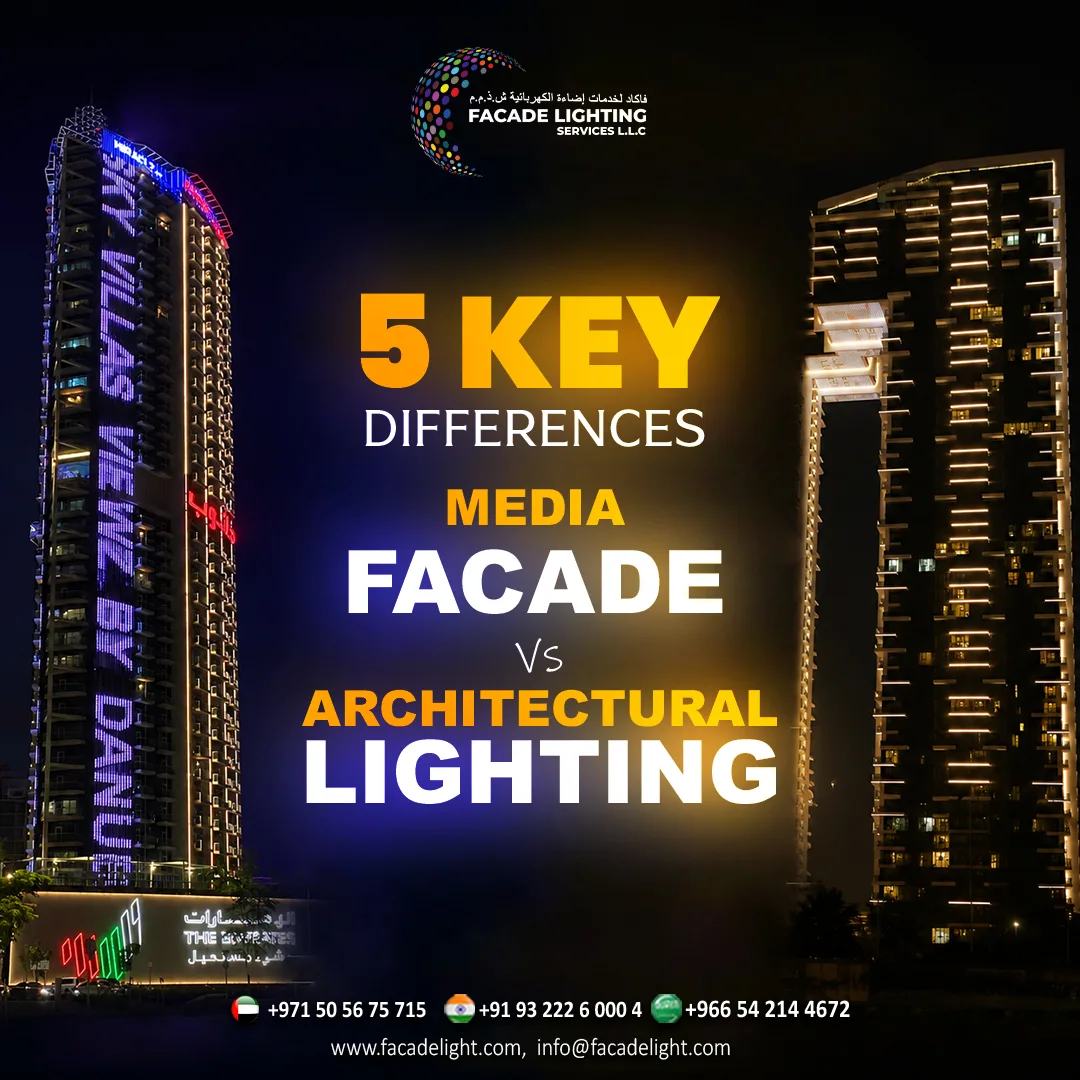
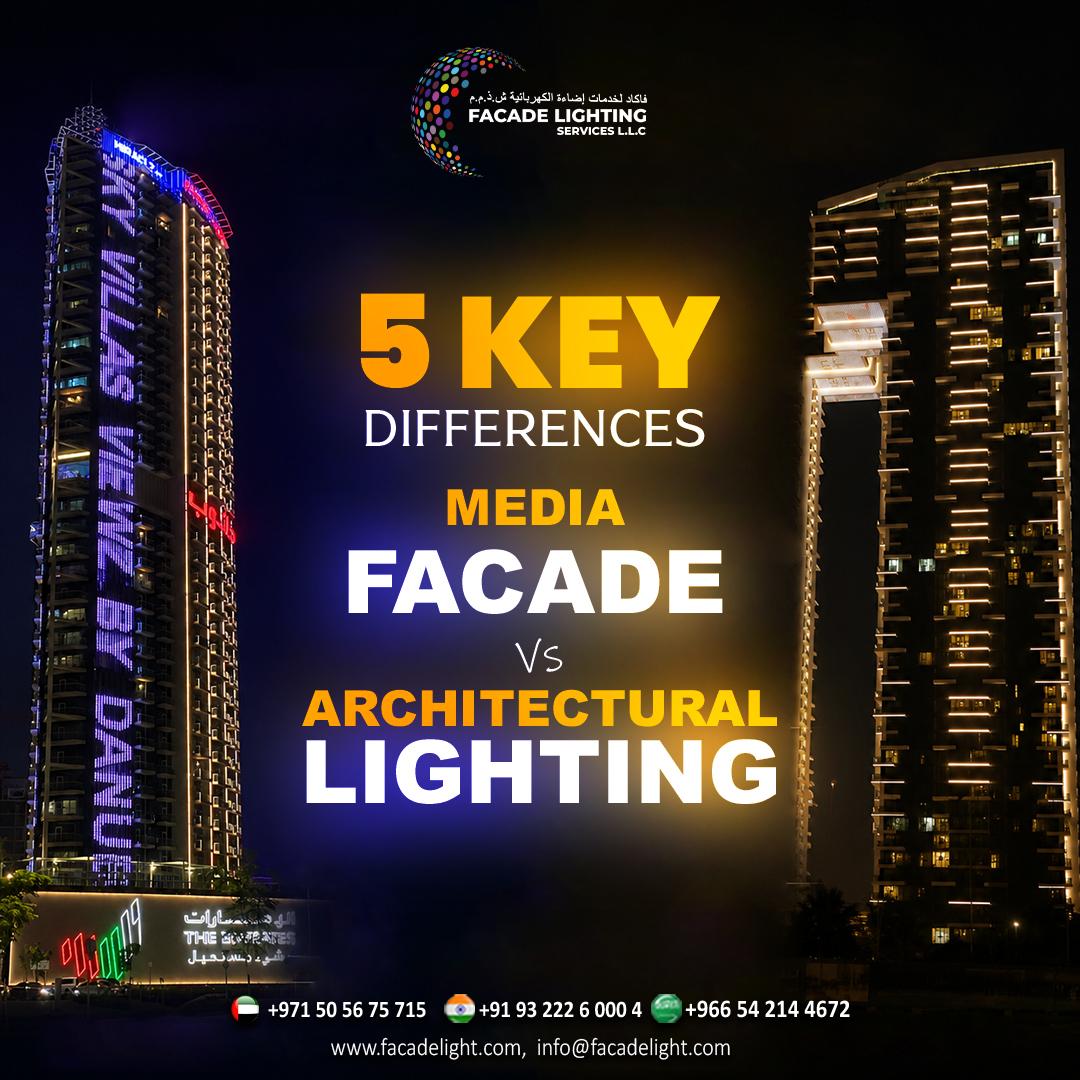
Have you ever noticed while walking at night through the cities of Dubai some buildings glow subtly, simply highlighting the architecture elegantly with their warm and steady lights? The remaining other buildings are alive with colorful lights, running animations, and branding visuals that shift every few seconds. Both impress us. To understand "What exactly is the difference between media facade lighting and architectural lighting?" The answer is that both fall under the façade lighting category but are a little bit confusing. The facts may look similar, but they are different; they use different techniques, and their purposes are also different and deliver different outcomes.
Here are the five breakdown points to go through.
1. Purpose:
Architectural lighting is mainly to highlight the physical appearance of the building. It mainly works with the structure of the building by highlighting the textures, vertical lines, materials, and geometric values. The main agenda is to make the building visually stronger and brighter while preserving its identity.
Media façade lighting, instead of highlighting architecture, transforms the building into a message broadcaster. Buildings like hotels and restaurants use this technique to run brand visuals while commercial buildings use it for advertising campaigns. Cultural buildings used for art installations and storytelling. In short, the building becomes a screen for advertisements.
2. Technology:
The technologies behind architectural lighting and media facades are entirely different. Architectural façade lighting systems use floodlights, wall washers, spotlights, linear LED lights, uplighters, and contour fixtures. They are strategically positioned for visual elegance, shadow definitions, color options, and setting light intensity but without individual pixel controls. Here we mount fixtures, aim them correctly, and connect them to the controller. Maintenance is reasonable because the components are easily available.
Media façade systems rely on pixel-controlled LED systems and advanced control protocols such as DMX or DALI. It means the light points distributed across the entire building surface are controlled by new advanced technology software so that they can display video content, real-time data, and animations for every single pixel simultaneously. The techniques used in media façade lighting systems are more complex and demand specialized programming expertise. Media facade lighting systems use transparent LED mesh screens, RGB pixel nodes, etc. Here a higher level of engineering expertise is required during design, installation, and other operations.
3. Visual and Audience Impact:
Architectural façade lighting creates a redefined nighttime appearance. Mostly it is used by luxury hotels, residential villas, heritage structures, and sleek commercial buildings because it adds an impressive look without overwhelming the architecture of the building.
Media façade lighting systems are mainly for visibility and engagement. Mostly it is used in amusement areas, sports venues, and other entertainment areas to create an innovative visual experience. Animation, color transition, text about brands, and event-based themes make even dull and urban environments highly interactive along with advertisements.
4. Maintenance Cost and ROI:
The main difference between architectural facades and media facades is the maintenance budget.
Architectural façade lighting for a well-designed mid- to large-sized commercial project in Dubai requires investment in quality fixtures, control systems, commissions, and installation. It requires low maintenance because once it is scheduled and installed, it operates consistently for long periods of time with slight adjustments.
But in the case of media facades, it requires continuous maintenance. Visuals created need to be updated and optimized for the building's pixel layout. Apart from hardware maintenance, it requires software updates, scheduling of the text/content, and controls systems for proper working.
5. Building Selection:
Apart from all of these practical differences, media façades are not the right solution for all types of structures.
Architectural lighting sets almost all building types, whether it is a residential or commercial building, hotels, corporate buildings, cultural buildings, hospitals, etc. The architectural lighting highlights the buildings regardless of its function and character
These lights illuminate cultural buildings and become memorable for every visitor. If we add media façades to this, running a brand becomes completely inappropriate.
Media facades are the best option for dynamic visual communication, which generates great brand value for retail and entertainment complexes, hotels, sports and event venues, and public places. They require large spaces in buildings for screens, a perfect place where an audience can see and engage. Also, a team of professionals to manage the content and uninterrupted operations.
At façade lighting services we suggest media façades to clients if they actually need them and if the building suits all the requirements of installing a media façade. Here are some of the key points to consider before taking the decision to save your valuable time and money.
QuestionsArchitectural LightingMedia Façade LightingPurposeEnhance Building StructuresDynamic VisualsTech SpecsLed Fixtures, Uplighters, Wall WashersPixel-mapped LEDs, DMX Controls, Mesh ScreensContentStaticAnimation & Real-Time GraphicsCost ManagementModerate One-Time InvestmentHigh and Operational InvestmentSuitsMost Of Building TypesCommercial, Entertainment and LandmarksMaintenanceLowModerate to High
Conclusion:
The main point to keep in mind is to choose the system that serves your building, not the one that looks impressive.
Both architectural façade lighting and media façade lighting give your building an enhanced look. But you should choose which one serves your building the most with respect to its purpose and its location.
If your building needs a perfect appearance at night—more defined, premium, and a landmark in an urban area—then you should go with architectural façade lighting. If your building needs to say something at night to engage, broadcast, communicate, the media façade lighting is worth investing in.
At FacadeLight, we combine the uses of both and deliver the best to our clients. We suggest architectural lighting for structures that need permanent nighttime identity and media facades for elevations where dynamic content creates a maximum impact.
When buildings receive perfect lighting, they become a landmark. We are happy to serve you with that.