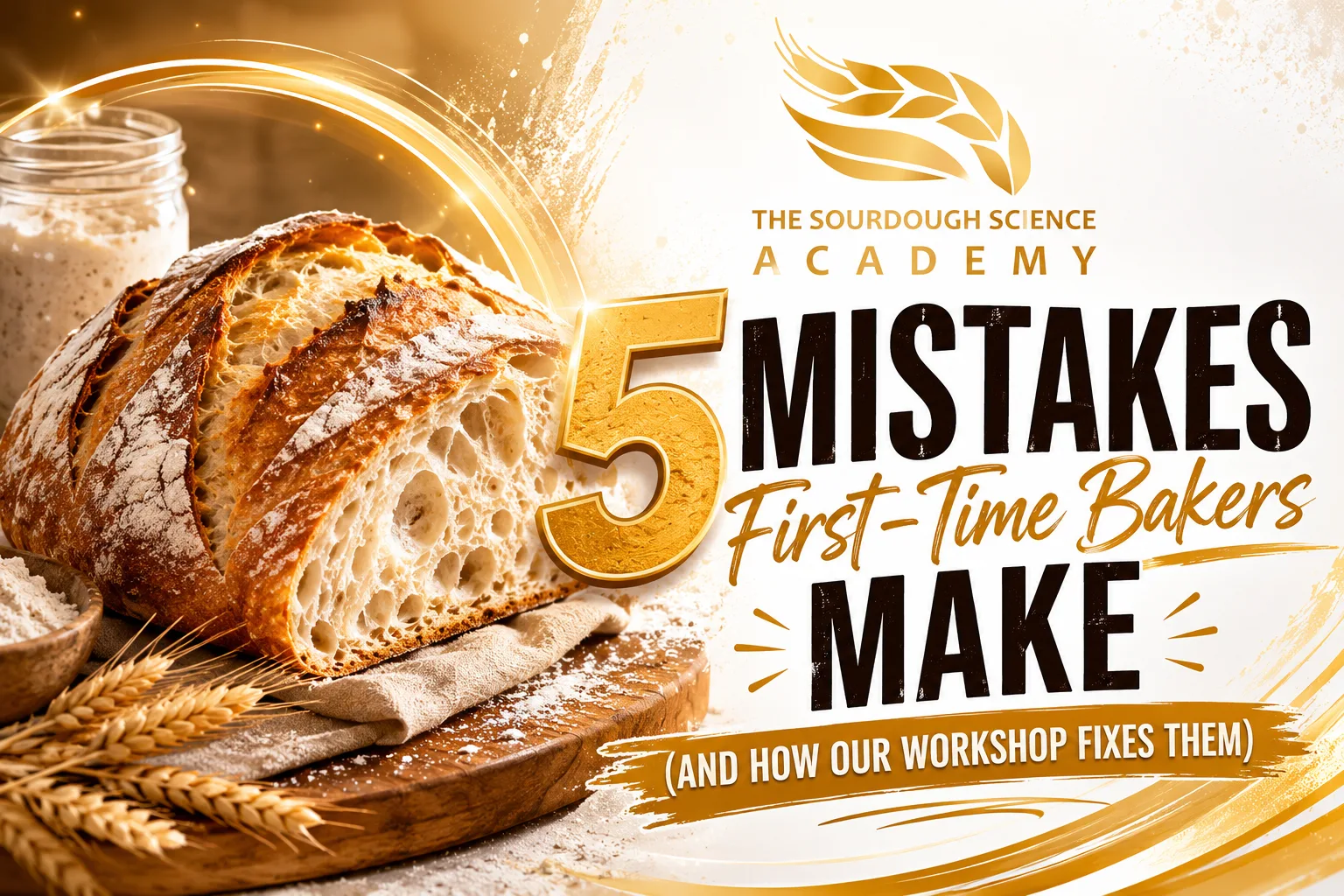
There's a moment every sourdough baker remembers. You pull a loaf out of the oven, full of hope, and it comes out flat, dense, and nothing like the open, airy bread you pictured. I remember mine clearly. It wasn't pretty. But that loaf, and the dozens of failed ones that came after it, is the reason The Sourdough Science Academy exists today.
I founded the Academy in September 2021 with one mission: to fight gluten intolerance through the art and science of crafting sourdough bread, pizza, and organic fresh pasta. Using organic ingredients and ancient grains, and a slow fermentation process, sourdough can significantly reduce gluten content compared to commercially produced bread. That single fact changed the direction of my life, and it's why, from our base in Coomera, Queensland, we now run weekend workshops across the Gold Coast and Brisbane for home bakers, food lovers, and professionals alike.
Over the years, teaching thousands of students in our upcoming classes, I've noticed the same five mistakes show up again and again, for almost every single first-time baker. The good news? None of them is your fault. Sourdough isn't taught the way it should be: as a living science, not a recipe. Once you understand why these mistakes happen, fixing them becomes simple.
Let's walk through them.
Why First-Time Bakers Struggle With Sourdough (And It's Not Their Fault)
Most people learn sourdough from a blog post, a video, or a recipe card. They're told to "feed the starter" or "let the dough rise" without ever being told what is actually happening inside the bowl. Sourdough is fermented. It's biology and chemistry working together, not a fixed set of steps. When you don't understand the science, every small variation, a colder kitchen, a different flour, a busy week, throws off your results, and you have no idea why.
This is the gap we built The Sourdough Science Academy to close. Our workshops are scientifically structured, hands-on, and designed so that by the end of the day, you're not just following instructions, you understand your dough.
Mistake #1: Treating the Starter Like an Ingredient, Not a Living Culture
The single biggest mistake first-time bakers make is thinking of their starter as "just flour and water." It isn't. Your starter is alive, a community of wild yeast and bacteria that breathe, eat, and grow, very much like we do. When you understand how to care for it as a living system, with the right food, warmth, and attention, your baking transforms. Every loaf comes out lighter, tastier, and full of life.
Most beginners either underfeed their starter, store it somewhere too cold, or give up on it after a few "failed" days, not realising that a sluggish starter is simply asking for a different feeding ratio or a warmer spot, not a death sentence.
How our workshop fixes this: We teach you to read your starter the way you'd read a person's mood: is it hungry, is it happy, is it sluggish because of temperature? You'll leave knowing exactly how to keep yours alive and thriving long after the class ends. If you don't have a starter yet, you can begin right now with our free 2-Hour Sourdough Method training, and everything you need to keep it going is available in our online shop.
Mistake #2: Skipping the Science of Gluten Development
Why does sourdough come out dense instead of open and airy? It almost always comes back to gluten, specifically, the gliadin and glutenin proteins that form the gluten network when flour meets water. Most first-time bakers mix the dough, walk away, and hope. But it's the combination of water, mixing, and resting that actually builds the gluten structure, and there's a delicate balance between strength and elasticity that makes an airy loaf possible.
If you've ever wondered why your dough doesn't rise the way it should, this is almost always the missing piece. We cover this in detail in our blog post, Why Your Sourdough Bread Is Dense and How to Fix It, and in our YouTube video below.
How our workshop fixes this: You'll physically feel the difference between underdeveloped and well-developed dough with your own hands. Once you've felt it once, you'll never mix "blind" again.
Mistake #3: Guessing Instead of Measuring
Sourdough is unforgiving when it comes to ratios. A handful of flour here, a splash of water there, it feels harmless, but hydration percentages matter enormously to how your dough behaves. First-time bakers tend to measure with cups and eyeball scoops, which is one of the fastest ways to end up with inconsistent results every single time.
We always recommend feeding and building your dough using a digital kitchen scale rather than guesswork. We go through this exact process step-by-step in How to Feed a Sourdough Starter Using a Digital Kitchen Scale.
How our workshop fixes this: Every station in our class is set up with scales, so you build the habit of weighing rather than guessing from day one, the same habit every consistent home baker eventually has to learn.
Mistake #4: Baking by the Clock Instead of by the Dough
This is the mistake that trips up even bakers who've been at it for months. A recipe says "bulk ferment for 4 hours," so they set a timer and walk away, but fermentation speed depends on your kitchen's temperature, your starter's strength, and your flour. The real secret to a beautiful open crumb isn't a stopwatch; it's learning to follow the dough itself, not just the clock.
How our workshop fixes this: Chef Roberto walks you through what dough actually looks and feels like at each fermentation stage, so you start trusting your eyes and hands over a timer. This is one of the biggest "lightbulb moments" we see in every class, whether it's our Sourdough Bread Workshop in Brisbane or our beginner sessions on the Gold Coast, and you can read what a first class actually looks like in Beginner Sourdough Class on the Gold Coast: What to Expect.
Mistake #5: Trying to Learn Alone, Without Hands-On Guidance
You can watch a hundred videos and still feel lost the first time you handle real dough. Sourdough is a tactile craft. Reading about gluten strength is one thing; feeling it stretch under your own palms, with someone correcting your technique in real time, is what actually makes it click. This is the mistake I see most often: talented home cooks who've watched everything online but never had anyone in the room with them, telling them "yes, that's it" or "not quite yet."
How our workshop fixes this: Every one of our sourdough services, from the Sourdough Bread Workshop to private one-on-one sessions, is built around direct, hands-on correction. If you genuinely can't make it into a class, our Ultimate Sourdough Bread Online Course and online consultations bring that same guidance to your own kitchen, wherever you are.
The Health Side of Sourdough: Why We Do This Work
Beyond the craft itself, there's a deeper reason this Academy exists. Sourdough's slow, natural fermentation process makes bread easier to digest and reduces its overall gluten content compared to standard commercial loaves. For many people struggling with gluten intolerance, learning to bake with organic ingredients and ancient grains has been life-changing, not because sourdough is a medical cure, but because understanding what's actually happening in your dough lets you make informed choices about what you eat and how you make it.
This is why every workshop blends two things that don't usually get taught together: the science of fermentation, and the lived, human experience of sitting down to share bread you made with your own hands.
From Bread to Pizza and Beyond: What You'll Master
Our classes don't stop at the loaf. In our Sourdough Bread Workshop, you'll learn to craft a perfect, crusty loaf with an open crumb. In our pizza sessions, that same starter becomes the base for an authentic, flavourful sourdough pizza, taught with the same time-honoured Italian techniques. And if pasta is more your thing, our Organic Fresh Pasta classes bring the same fermentation-first philosophy to handmade pasta.
It's a genuine culinary journey, bread, pizza, and pasta, built on the same scientific foundation, taught by someone who has spent years refining it through both formal training (including studies through TAFE Queensland Brisbane) and thousands of hours of real, hands-on baking.
If you'd like a touch of Italian finishing flair once your bread is out of the oven, we've also put together a guide on How to Use Terre Francescane Black Truffle Extra Virgin Olive Oil Like an Italian Chef, a small touch that makes a huge difference.
Real Students, Real Transformations
We don't ask anyone to take our word for it. Over the years, more than 3,000 students have come through our doors across the Gold Coast and Brisbane, and we've earned over 360 five-star reviews from people who walked in nervous about their first loaf and walked out as confident bakers. We're proud to be known as one of Australia's leading sourdough workshop providers.
That same hands-on, science-based approach has carried into the corporate world too. We've run team-building sourdough and pizza experiences for organisations including Foundations Care and Buddy Up, helping teams build connection, collaboration, and a little stress relief through the simple, grounding act of making bread together. If your workplace is looking for something genuinely different from the usual team day, our corporate workshops are designed exactly for that.
You can read more about our story, our background, and our approach on our About Us page, and if you've ever wanted to learn online at your own pace, Roberto's "pay what feels right" approach to baking education is changing how people learn. Read about it in Roberto's Pay What Feels Right Learning Hub Is Changing Online Baking Education.
Bring This Experience to Your Team, Your Kids, or Your Next Event
Sourdough has a way of bringing people together, and we've built our services around exactly that:
- Corporate workshops for teams looking to build connection through hands-on baking (explore our corporate offerings)
- Pizza catering for private and corporate events, made fresh with organic sourdough crust (see our pizza catering)
- Kids' pizza and bread-making experiences, full of laughter and learning
- Private one-on-one lessons, tailored entirely to your skill level and goals
- Online consultations and courses for anyone learning from home, anywhere in Australia or beyond
For full details on bookings, cancellations, and what to expect on the day, our terms and conditions for event classes cover everything you need to know before you join us.
Watch & Learn: Our YouTube Educational Series
If you want a head start before your first class, our YouTube channel is full of free lessons from our Sourdough Educational Series. A few good places to start:
- Why your starter is alive, and how to care for it like a living system: Watch here
- Why your sourdough is dense, and the gluten science behind an open crumb: Watch here
- A look inside our Sourdough Bread Workshop itself: Watch here
Frequently Asked Questions
- Is sourdough bread better for you than regular bread?
For many people, yes. Sourdough's slow, natural fermentation process breaks down some of the gluten and starches before you even eat it, which can make it easier to digest than bread made with commercial yeast and a fast rise. It also tends to have a lower impact on blood sugar and a richer, more developed flavour, since the fermentation has more time to do its work. - What is so special about sourdough bread?
Sourdough is made using a wild, naturally cultivated starter of yeast and bacteria, instead of commercial yeast. That living culture is what gives sourdough its distinctive tangy flavour, chewy texture, and that beautiful open, airy crumb when it's made correctly. It's also a slower, more intentional process, which is exactly why we teach it as both an art and a science. - What is the 3-ingredient sourdough?
At its simplest, true sourdough bread needs just three ingredients: flour, water, and salt. The "fourth ingredient" is your starter, which is itself made only from flour and water, left to ferment naturally over time. No commercial yeast, no additives, just those basics, combined with technique, time, and temperature. - What are the ingredients for sourdough bread?
A classic loaf of sourdough bread is made with flour, water, salt, and an active sourdough starter. From there, the quality of your flour and the strength of your starter make all the difference, which is why we focus on organic ingredients and ancient grains in everything we teach.
Ready to Start Your Sourdough Journey?
Every mistake we've covered here is one we've watched hundreds of students walk in with, and walk out having fixed, often within a single day. Sourdough isn't about being naturally talented in the kitchen. It's about understanding the science behind what you're doing and having someone beside you to guide your hands until it becomes second nature.
If you're ready to stop guessing and start understanding your dough, book your spot at our next Sourdough Bread Workshop, explore our full range of sourdough services, or browse our online courses if you'd rather start from home. You can also check our FAQ page for anything we haven't covered here.
We'd love to bake with you.
Chef Roberto Giammellucca, Founder, The Sourdough Science Academy
📍 Coomera, Queensland, Australia, serving the Gold Coast to Brisbane
📧 info@thesourdoughscience.com
📱 WhatsApp: +61 492 936 808
Follow along and learn more: