Running a multi-vendor Shopify marketplace means handling a large amount of vendor data. Vendor profiles, products, orders, payments, inventory, and customer details all need regular updates.
When this information sits across different systems, managing it can become difficult. Data may get duplicated, missed, or updated late.
Centralizing vendor data creates one reliable source of information. It can also help marketplace owners improve daily operations and vendor relationships.
Here are seven key benefits of centralizing vendor data in a Shopify marketplace.
What Does Centralized Vendor Data Mean?
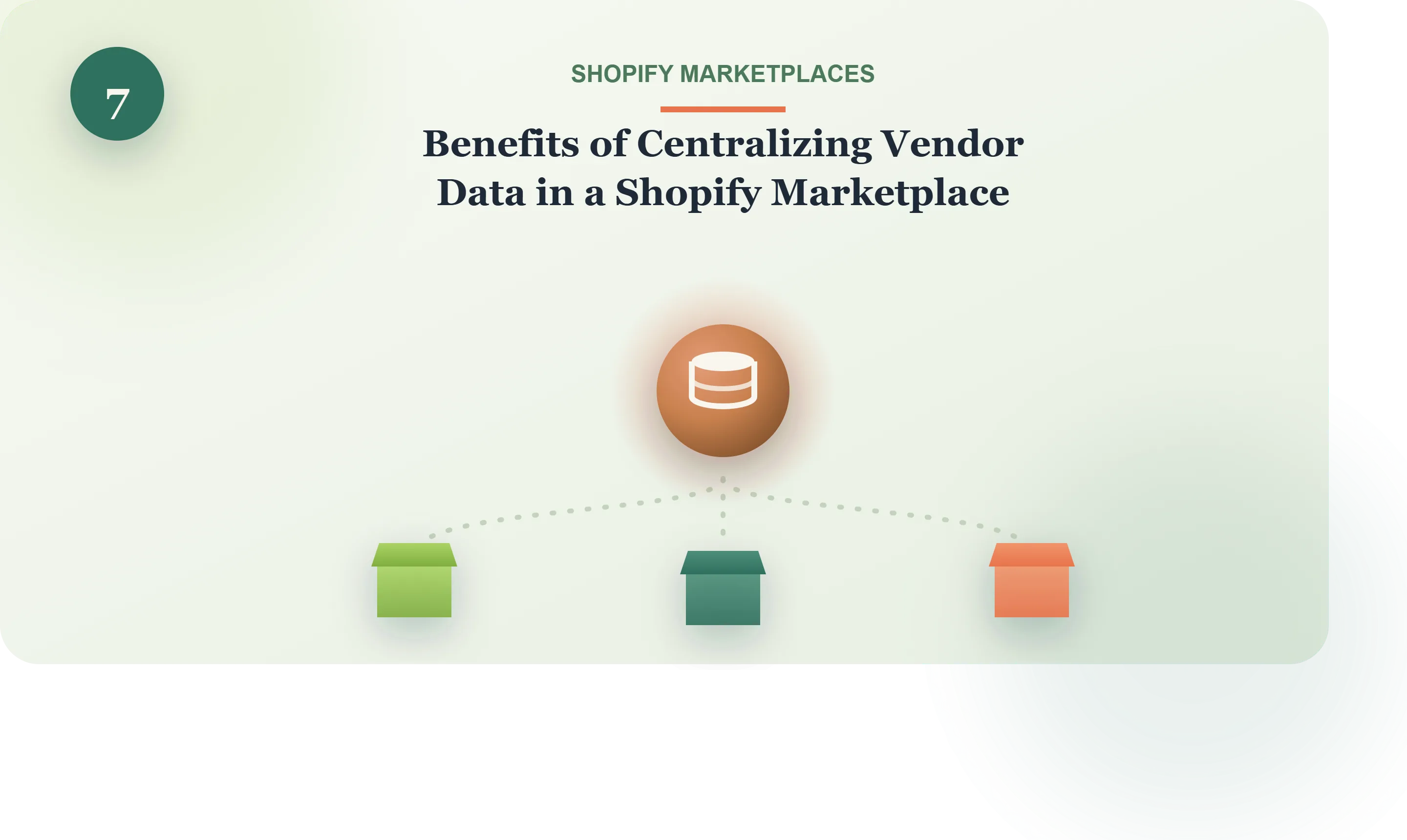
Centralized vendor data means keeping important vendor information in one connected system.
For example, a marketplace may store:
- Vendor profiles and contact details
- Product and SKU information
- Pricing and inventory data
- Order and sales records
- Commission details
- Payment information
- Vendor performance data
- Customer interactions
A centralized setup can connect Shopify with CRM, ERP, accounting, and other business tools. This creates a smoother flow of information across the marketplace.
1. Get One Reliable View of Vendor Information
One of the biggest benefits is better data visibility.
Marketplace teams often use spreadsheets, emails, CRM tools, and separate dashboards. This can make it hard to find the latest vendor information.
Centralized data brings important details into one place. Teams can quickly check vendor status, product information, orders, and performance.
As a result, employees spend less time searching for information.
2. Reduce Duplicate and Incorrect Data
Manual data entry can create errors.
For example, a vendor may update a phone number or business address. However, the change may not reach every system.
This can create duplicate or outdated records.
A centralized data system helps keep vendor information consistent. Updates can also flow between connected platforms.
Therefore, marketplace teams can work with cleaner and more accurate data.
3. Improve Vendor Onboarding
Vendor onboarding can involve many steps. Vendors may need to provide business details, product information, payment details, and documents.
Without a centralized system, teams may collect this information through different channels. This can slow down the approval process.
A connected vendor data system makes onboarding easier. Teams can organize vendor information and track the onboarding status from one place.
It also creates a smoother experience for new vendors.
4. Make Vendor Performance Easier to Track
A Shopify marketplace needs to understand how each vendor performs.
Centralized data makes it easier to track useful metrics such as:
- Total sales
- Number of orders
- Product performance
- Order cancellations
- Returns
- Customer reviews
- Average order value
- Fulfilment performance
With this information, marketplace teams can identify trends more quickly.
For example, they can find vendors with strong sales or products with rising demand. They can also identify areas where vendors need support.
5. Improve Customer Service
Vendor data can directly affect customer support.
A customer may ask about an order, product, return, or delivery. Support teams need accurate information to respond quickly.
When vendor and order data are centralized, support teams can access relevant information faster.
They can see the vendor connected to an order, product details, order status, and other useful information.
As a result, customers can receive clearer and faster responses.
6. Support Better CRM Integration
Customer and vendor relationships often require more than Shopify alone.
A CRM can help marketplace businesses manage communication, sales activities, support interactions, and relationship data.
Working with a CRM development company can help businesses create custom CRM workflows around their marketplace needs.
For example, a custom CRM setup can connect vendor information with sales activity, support history, and vendor performance.
This creates a more complete view of marketplace relationships.
7. Make the Marketplace Easier to Scale
As a marketplace grows, the amount of vendor data grows too.
Managing 20 vendors is very different from managing hundreds or thousands. Manual processes that work at a small scale can become slow and expensive later.
Centralized data provides a stronger foundation for growth.
A Shopify Development Company can help build custom marketplace features and connect Shopify with other business systems.
These integrations can support automated workflows, better reporting, and smoother data management.
As a result, the marketplace can add more vendors without increasing manual work at the same rate.
How to Centralize Vendor Data Effectively
Centralizing data requires proper planning. Start by identifying the information your marketplace needs most.
Next, decide which system should act as the main source for each type of data.
For example:
- Shopify can manage marketplace and ecommerce activity.
- A CRM can manage relationship and communication data.
- An ERP can manage business and operational information.
- Accounting software can manage financial records.
APIs and integrations can then connect these systems.
It is also important to define data rules. Decide how records will be created, updated, checked, and removed.
Finally, protect vendor data with proper access controls and security measures.
Why Centralized Vendor Data Matters
Vendor data is an important part of marketplace operations. Poor data management can slow down teams and create unnecessary problems.
Centralization helps businesses create a more organized workflow. It can improve data accuracy, vendor onboarding, reporting, customer support, and scalability.
Moreover, connected systems give marketplace owners better visibility into their operations.
Conclusion
Centralizing vendor data can make a Shopify marketplace easier to manage and scale. It reduces data problems while improving vendor and customer experiences.
With the right Shopify integrations and CRM setup, marketplace businesses can create more efficient and connected operations.