ISO 15189 accreditation is an essential step for any medical laboratory looking to establish itself in terms of competency, quality assurance, safety, and diagnostic accuracy. This accreditation standard is concerned with quality assurance within laboratories, patient safety, and proper diagnostics. The process of achieving accreditation may be complicated, hence the need for a good consultant who will make it possible.
ISO 15189 consultants assist medical laboratories in developing a system that enables them to achieve ISO 15189 accreditation. In doing this, the consultant makes the job easier by performing risk assessment, documentation, internal audit, and training among other things. Choosing a good consultant helps you achieve the ISO accreditation and improve your QMS in the process.
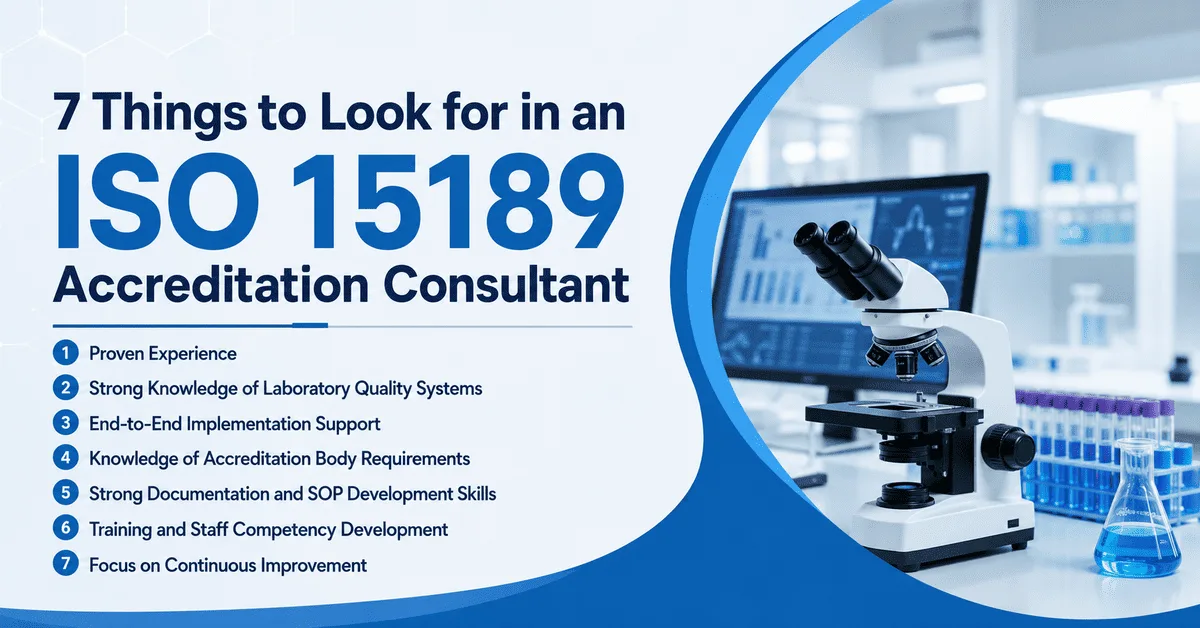
Below are 7 important things to look for when selecting the right ISO 15189 accreditation consultant.
1. Proven Experience in ISO 15189 Projects
A reliable consultant should have hands-on experience in ISO 15189 accreditation in laboratory environments. They should possess a proven track record of guiding laboratories through implementation, internal assessments, and external accreditation audits. Experienced consultants understand common compliance challenges and can provide practical solutions that reduce delays and minimize errors during the accreditation process.
2. Strong Knowledge of Laboratory Quality Systems
An ISO 15189 expert consultant should be knowledgeable about lab quality management systems, laboratory procedures, diagnostic processes, and all related issues. This makes it possible for him to come up with solutions that will fit perfectly in your own lab environment and will not require general compliance approaches.
3. End-to-End Implementation Support
The best consultants provide complete support from gap analysis to final accreditation. Organizations can work with an experienced ISO 15189 accreditation consultant for laboratory compliance who assists in documentation, internal audits, corrective actions, and readiness for external assessment. Comprehensive support ensures that laboratories remain confident and fully prepared at every stage of the accreditation journey.
4. Knowledge of Accreditation Body Requirements
Each accreditation body may have slightly different expectations. The consultant should be familiar with NABL or equivalent international standards to ensure smooth approval and minimal non-conformities during assessment.
5. Strong Documentation and SOP Development Skills
Documentation is a core requirement of ISO 15189. The consultant should help develop standard operating procedures (SOPs), quality manuals, and record systems that meet compliance requirements while remaining easy for staff to use.
6. Training and Staff Competency Development
A successful accreditation depends on trained personnel. The consultant should provide training sessions to improve staff awareness of ISO 15189 requirements, internal auditing, and laboratory best practices. Continuous staff development ensures that quality standards are maintained even after accreditation has been achieved.
7. Focus on Continuous Improvement
Beyond certification, the consultant should help build a culture of continuous improvement in your laboratory. This ensures long-term compliance, better efficiency, and improved patient outcomes.
Benefits of ISO 15189 Accreditation
ISO 15189 accreditation helps laboratories enhance the accuracy and reliability of test results by establishing effective quality management systems and standardized procedures. It also improves regulatory compliance, strengthens patient and healthcare provider confidence, and promotes better risk management and staff competency. Understanding how ISO 15189 accreditation improves laboratory performance can provide valuable insights into its role in achieving long-term quality, efficiency, and continuous improvement in laboratory services.
Conclusion
Choosing the right ISO 15189 consultant is a strategic decision that directly impacts the success of your laboratory accreditation journey. From documentation and training to full QMS implementation, the right expert ensures smooth compliance and faster approval.
There are many laboratories looking forward to getting the ISO 15189 accreditation because of increased demands. Those laboratories that prioritize their quality control systems are likely to provide credible results and operate excellently.