
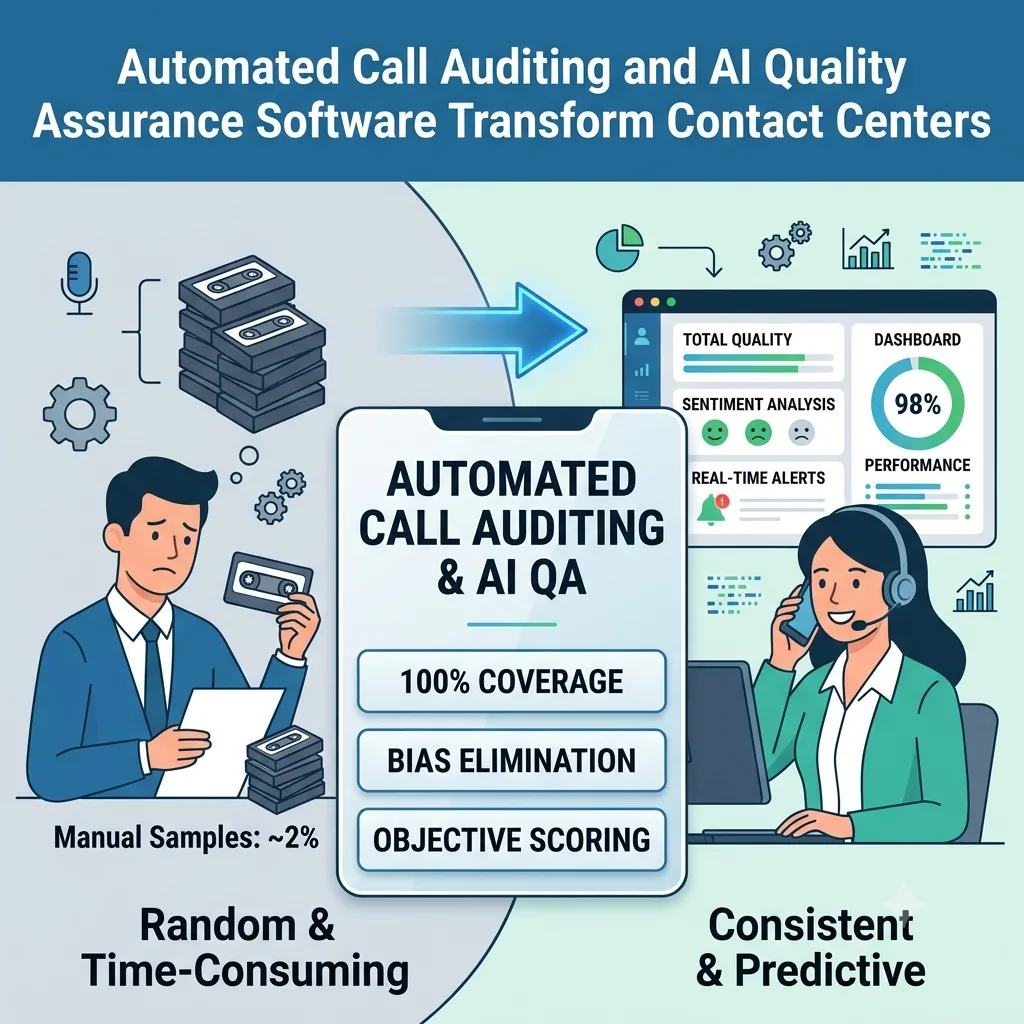
In the fast-paced world of Business Process Outsourcing (BPO), quality is the product. Clients entrust their brand reputation to outsourcing partners, expecting seamless interactions, accurate resolutions, and empathetic support. Traditionally, monitoring this quality has been a manual, labor-intensive process. Supervisors would listen to a tiny fraction of total calls—often less than 2%—to score performance, leading to subjective evaluations and missed coaching opportunities.
Today, the landscape is shifting. To remain competitive, forward-thinking BPOs are turning to AI call auditing solutions to transform their Quality Assurance (QA) workflows. By moving from manual sampling to 100% automated coverage, BPOs can unlock insights that drive revenue, improve customer satisfaction (CSAT), and streamline operations.
The Limitations of Traditional BPO QA
For years, quality assurance in BPO was synonymous with human-led scorecards. While human expertise is necessary for nuanced coaching, relying on manual auditing carries significant bottlenecks:
- Limited Scope: When a human auditor can only listen to a handful of calls, significant trends, compliance breaches, or recurring customer frustrations go unnoticed.
- Scalability Issues: As call volumes spike, scaling a manual QA team is expensive and logistically difficult.
- Subjectivity: Different supervisors may interpret scorecards differently, leading to inconsistent performance evaluations.
- Delayed Feedback: By the time a quality incident is flagged by a manual audit, the interaction often happened days prior, making timely coaching impossible.
Why AI Call Auditing is a Game Changer
AI-driven quality assurance audit software solves these issues by automating the analysis of every single interaction—voice and text—in real-time. Here is how it is reshaping the industry:
1. 100% Coverage
The most immediate benefit of AI is the ability to audit every interaction. Instead of guessing performance based on a small sample, AI provides a comprehensive view of team behavior. This ensures that compliance risks, such as failure to disclose mandatory legal disclaimers, are caught instantly, preventing potential fines or legal issues.
2. Objective Performance Metrics
AI software utilizes Natural Language Processing (NLP) and sentiment analysis to score calls based on predefined benchmarks. Whether it is tracking script adherence, tone of voice, or resolution effectiveness, AI removes the "human bias" element. This provides a consistent, fair, and data-backed performance scorecard for every agent.
3. Deep Sentiment Analysis
Beyond just "did the agent follow the script?" AI evaluates how the agent spoke and how the customer reacted. By identifying patterns in customer sentiment—such as frustration, confusion, or satisfaction—AI helps BPOs identify the root causes of customer churn. This emotional intelligence allows for more targeted coaching.
4. Predictive Coaching
Modern QA software doesn’t just report on what happened; it suggests what to do next. AI-powered platforms can flag agents who are struggling with specific knowledge gaps and automatically recommend training modules. This turns QA from a "policing" function into a proactive development tool.
What to Look for in QA Audit Software
If you are a BPO leader considering an AI-driven overhaul, not all quality assurance audit software is created equal. When evaluating vendors, prioritize the following features:
- Integration Capabilities: The software must integrate seamlessly with your existing CCaaS (Contact Center as a Service) and CRM platforms to gather data without friction.
- Real-time Alerting: Look for software that provides live suggestions to agents during the call (Agent Assist) and alerts supervisors to "at-risk" calls immediately.
- Customizable Scorecards: Your QA software must be flexible enough to reflect the unique requirements of your various client accounts.
- Actionable Reporting: Data is useless without visualization. Ensure the platform provides robust dashboards that help you track KPIs like First Call Resolution (FCR) and Average Handle Time (AHT) in relation to quality scores.
The Future of BPO Quality Assurance
The adoption of AI in BPO is no longer a "nice-to-have" innovation; it is a necessity for scalability. By automating the auditing process, BPOs can reduce the overhead costs associated with manual QA teams while simultaneously increasing the quality of service.
The goal of AI is not to replace the human supervisor, but to empower them. By offloading the tedious task of listening to hours of recordings to AI, supervisors can spend their time where it matters most: mentoring agents, building team culture, and solving complex customer issues.
Conclusion For BPOs, the transition to AI call auditing solutions is the ultimate competitive advantage. By leveraging sophisticated quality assurance audit software, your organization can ensure compliance, boost agent performance, and ultimately deliver the kind of high-touch service that retains clients and drives growth.
As the BPO industry continues to evolve, those who embrace these intelligent tools will lead the market, moving from reactive quality management to proactive, data-driven excellence.