
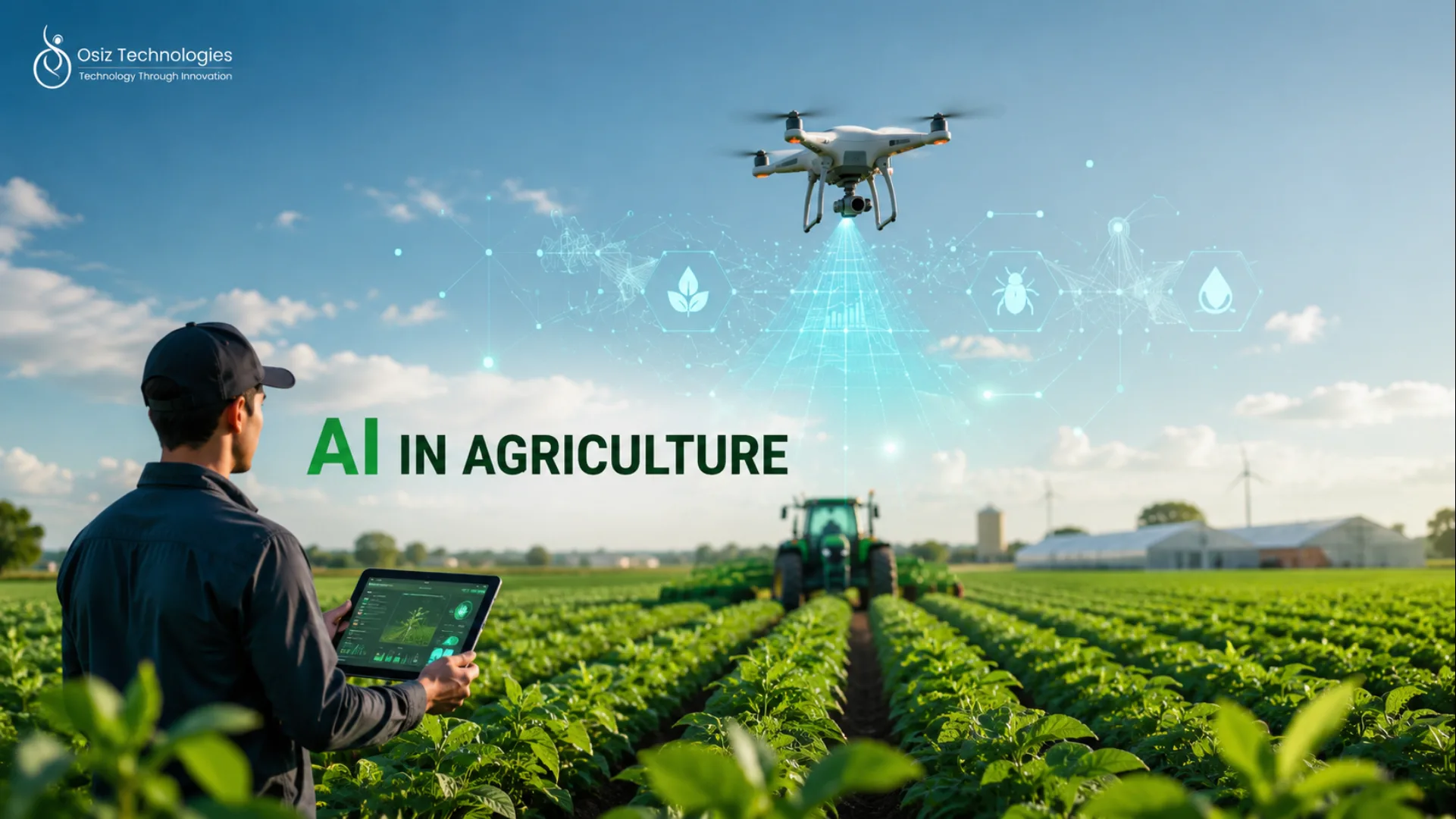
Agriculture has always been the foundation of human development, providing food, resources, and economic opportunities across the world. However, farmers and agribusinesses today face several challenges, including unpredictable weather, resource limitations, rising demand, and the need for sustainable production. Technology is becoming a powerful solution to address these challenges and improve farming efficiency.
AI Development in Agriculture is helping transform traditional farming into a smarter and more connected ecosystem. By combining artificial intelligence with data analytics, machine learning, and automation, farmers can gain valuable insights, make informed decisions, and improve overall productivity. AI-powered solutions are enabling agriculture to become more precise, efficient, and future-ready.
Understanding AI Development in Agriculture and Its Importance
AI Development in Agriculture focuses on creating intelligent systems that can analyze agricultural data, automate processes, and provide accurate recommendations. These solutions use technologies like machine learning, computer vision, predictive analytics, and IoT devices to solve various farming challenges.
The importance of AI in agriculture lies in its ability to process large amounts of data and turn it into meaningful insights. Farmers can use AI to understand soil conditions, monitor crop health, predict weather patterns, and optimize resource usage. Instead of depending only on traditional farming knowledge, they can now make decisions based on real-time information.
For agribusinesses, AI also improves operational efficiency by streamlining supply chains, reducing waste, and supporting better planning. This makes AI an important technology for building a more productive and sustainable agricultural industry.
How AI Solutions Are Changing Traditional Farming Practices
Traditional farming methods often depend on manual observation and experience. While these methods have been effective for generations, modern challenges require faster and more accurate approaches. AI solutions are changing farming by introducing automation, smart monitoring, and data-driven strategies.
Farmers can now use AI-powered tools to monitor large fields, identify crop issues, and improve resource management. Technologies such as drones, sensors, and smart farming platforms help collect important information that AI systems analyze to provide useful recommendations.
AI is also helping farmers reduce unnecessary use of water, fertilizers, and pesticides. By understanding the exact needs of crops, farmers can improve yield quality while minimizing environmental impact. This combination of technology and farming expertise is creating a new era of intelligent agriculture.
Key Applications of AI in the Agriculture Industry
AI-Based Crop Monitoring and Analysis
AI-powered crop monitoring helps farmers track the health and growth of their crops more effectively. Using drones, satellite images, and sensors, AI systems can analyze fields and detect early signs of stress, nutrient deficiencies, or unhealthy plant conditions.
Computer vision technology allows AI solutions to identify changes in crops that may not be easily visible through manual inspection. This helps farmers take timely action, protect their harvests, and improve overall crop productivity.
Smart Irrigation and Resource Management
Water management is one of the most important areas where AI is making a major impact. Smart irrigation systems use AI algorithms to analyze soil moisture, weather conditions, and crop requirements.
Based on this information, AI can recommend or automate irrigation schedules to ensure crops receive the right amount of water. This helps reduce water waste, lower farming costs, and support sustainable agricultural practices.
AI-Powered Pest and Disease Detection
Crop diseases and pest attacks can cause significant losses if they are not identified early. AI-powered detection systems use image recognition and machine learning to identify signs of diseases and infestations.
By detecting these issues at an early stage, farmers can take preventive measures and apply targeted treatments. This reduces crop damage, improves production quality, and minimizes the unnecessary use of chemicals.
Predictive Analytics for Better Harvest Planning
AI-driven predictive analytics helps farmers and agricultural businesses forecast future outcomes using historical and real-time data. These systems can predict crop yields, market demand, and possible weather-related challenges.
With accurate predictions, farmers can plan planting schedules, manage resources, and prepare for harvesting more efficiently. This improves decision-making and creates a more organized agricultural process.
The Impact of AI Development on Agribusiness Operations
AI is not only transforming farms but also reshaping the entire agribusiness industry. Agricultural companies are using AI solutions to improve supply chain management, inventory planning, and market analysis.
AI-powered systems help businesses understand customer demand, optimize logistics, and reduce operational challenges. Automation also allows companies to handle repetitive tasks faster and focus on strategic growth.
By integrating AI into business operations, agribusinesses can improve efficiency, increase profitability, and develop innovative services that support modern farming needs.
AI-Driven Precision Farming: Creating Sustainable Smart Farms
Precision farming is one of the most significant advancements in modern agriculture. It combines AI technologies with sensors, IoT devices, drones, and analytics to help farmers manage their fields with greater accuracy.
AI in Agriculture enables precision farming by providing insights into crop conditions, soil health, and resource requirements. Farmers can identify which areas of a field need attention and apply treatments more effectively.
Smart farms powered by AI help reduce waste, improve crop productivity, and support environmentally responsible farming. As AI technology continues to evolve, precision farming will become an essential part of sustainable agriculture.
Challenges and Considerations in Implementing AI for Agriculture
Although AI offers many advantages, adopting these technologies also comes with challenges. Some farmers may face difficulties due to high implementation costs, limited technical knowledge, or lack of digital infrastructure.
AI systems also depend on accurate data to deliver reliable results. Managing agricultural data securely and ensuring accessibility for farmers are important considerations.
To make AI adoption successful, technology providers need to focus on creating affordable, simple, and scalable solutions that can benefit farmers of all sizes.
Conclusion: AI Development Shaping the Next Era of Agribusiness
The future of agriculture is becoming smarter with the integration of artificial intelligence, automation, and data-driven solutions. AI is helping farmers improve productivity, reduce resource waste, and create more sustainable farming practices.
As the demand for intelligent agricultural solutions continues to grow, an AI Development Company can help businesses build innovative technologies that transform farming operations. With continuous advancements, AI will continue to shape the next generation of agribusiness and create a more efficient future for agriculture.