
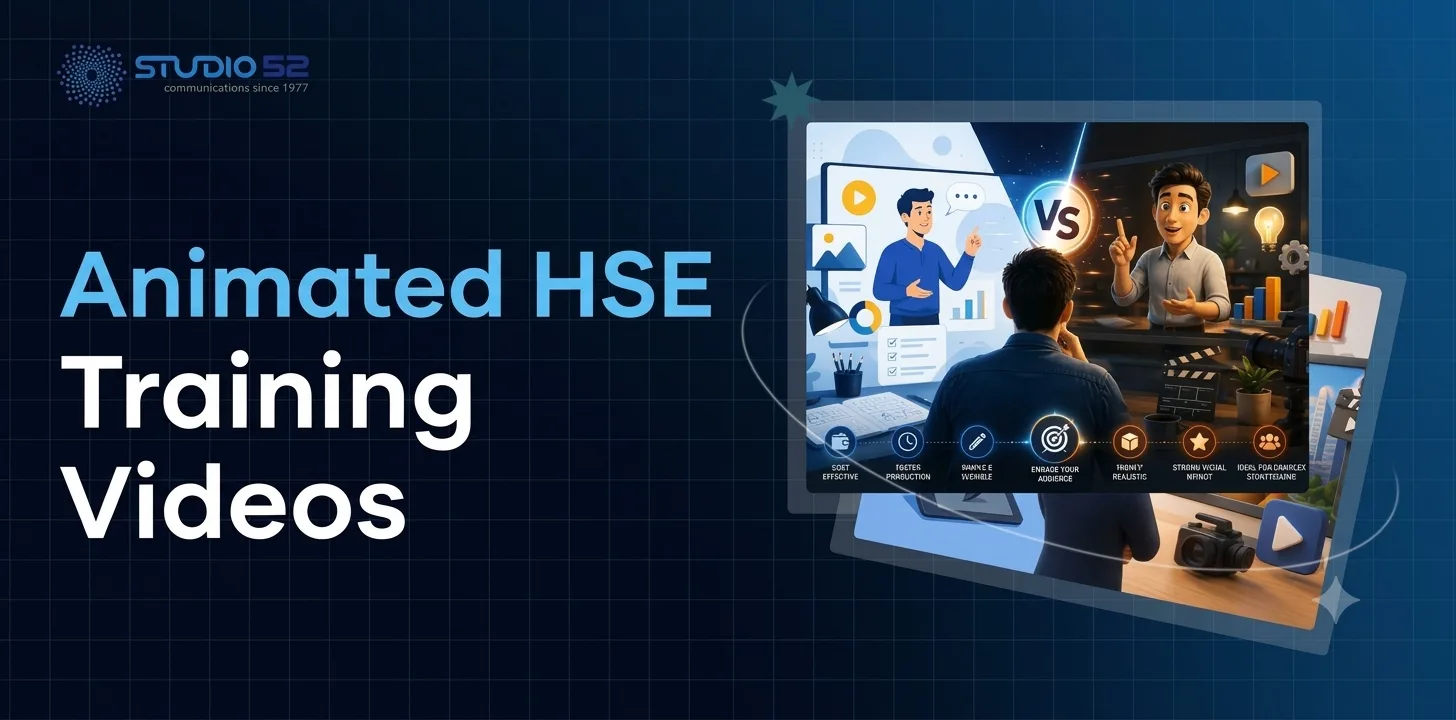
Animated HSE Training Videos for Modern Industrial Workplaces
Industrial workplaces require employees to understand various safety procedures, operational requirements and environmental responsibilities. From machinery operations and electrical systems to chemical handling and emergency response, workers need clear instructions to perform their activities responsibly.
Traditional training methods often depend on written manuals, presentations and verbal explanations. Although these methods are useful, certain technical procedures can be difficult to explain without visual demonstrations.
Animated HSE training videos offer a different approach to communicating complex safety information. Through illustrations, characters, motion graphics and three-dimensional visual environments, animation can simplify technical concepts and demonstrate workplace situations.
Businesses can use animated training videos to explain safety procedures, identify hazards and communicate preventive measures in an engaging format.
What Makes Animated HSE Training Videos Valuable?
Animation allows businesses to present information that may be difficult to capture through conventional filming.
For example, a video about machine safety may need to explain the internal movement of equipment components. A live-action camera may not be able to show these details clearly, whereas 3D animation can create a visual representation of the process.
Similarly, animated scenarios can demonstrate unsafe working practices without recreating dangerous activities in real environments.
Animated HSE training videos can help organisations explain:
- Equipment operation and machine safety.
- Personal protective equipment.
- Electrical hazard prevention.
- Fire safety and emergency response.
- Chemical handling and storage.
- Workplace hazard identification.
- Environmental protection procedures.
- Safe material handling practices.
The visual approach can make complicated topics easier to follow and provide employees with a clear understanding of the intended safety message.
Difference Between 2D and 3D Safety Animation
Both 2D vs 3D animation can be useful for workplace safety training, but they serve different visual requirements.
2D Safety Animation
Two-dimensional animation uses illustrated characters, shapes, graphics and visual storytelling. It is useful for explaining general workplace rules, safety awareness messages and straightforward procedures.
For example, an animated video can demonstrate correct PPE usage or explain how employees should respond when they identify an unsafe condition.
3D Safety Animation
Three-dimensional animation creates detailed visual environments and objects. It is useful for explaining machinery, equipment components, industrial processes and complicated technical procedures.
For example, a 3D safety animation can demonstrate how a machine operates, show moving components and illustrate potential hazards associated with incorrect usage.
The choice between these formats depends on the complexity of the subject, intended audience and training objectives.
Using Animation to Explain Industrial Hazards
Some workplace hazards are not easy to demonstrate through real-life filming. Animation can help explain these situations through controlled visual examples.
A video about electrical safety can illustrate how unsafe connections create potential risks. An animation about working at heights can demonstrate the importance of fall protection equipment.
Similarly, industrial safety animation can show how moving machinery, incorrect handling or unsafe working distances may create hazardous situations.
These demonstrations can be designed around specific training objectives and relevant workplace procedures.
Animation also allows businesses to highlight important details using labels, visual indicators and narration.
Making Employee Training More Engaging
Training content should communicate information clearly while maintaining employee attention.
Animated videos can present information through visual storytelling instead of relying entirely on long written explanations.
Characters can demonstrate workplace situations, graphics can highlight important safety instructions and narration can explain the procedures.
Short videos focusing on individual topics can also be used during toolbox talks, employee induction and refresher training.
For organisations with multilingual workforces, subtitles and different voice-over versions may help make training information more accessible.
The main objective should always be to make safety information understandable and relevant rather than simply adding visual effects.
The Process of Developing Animated HSE Videos
Creating an effective animated HSE video involves several production stages.
The first stage is identifying the training topic and understanding the intended audience. Organisations can provide relevant safety procedures and technical information to help develop the content.
The next stage involves scriptwriting. The script should explain the topic in a clear sequence and avoid unnecessary technical language.
Storyboarding is used to plan the visual presentation of each scene. It helps determine where characters, equipment, graphics and animated demonstrations will appear.
The animation process may include character design, environment development, object modelling, movement, narration and sound editing, depending on the chosen style.
The completed video should be reviewed to ensure that the animation represents the intended safety procedures accurately.
Applications of Animated HSE Videos Across Industries
Animated HSE training videos can be used across several industries because safety procedures often involve technical information that benefits from visual explanation.
Manufacturing organisations can use animation to explain machinery operation, production safety and equipment-related hazards.
Construction companies can develop animated demonstrations for working at heights, scaffolding and lifting operations.
Oil and gas businesses may use visual content to explain industrial processes, emergency procedures and workplace precautions.
Logistics organisations can also use animation to communicate warehouse safety, material handling and vehicle movement procedures.
Customised videos allow each business to focus on the topics most relevant to its workforce.
Using Animated Videos for Induction and Refresher Training
Animated safety training videos can become part of an organisation's ongoing employee training programme.
During induction, businesses can introduce general safety policies and workplace requirements through visual presentations.
During refresher training, employees can watch short videos covering specific procedures and potential hazards.
Organisations can also maintain a collection of animated videos for different departments, job roles and operational activities.
This makes it easier to organise training resources and provide employees with information relevant to their responsibilities.
Keeping Animated Safety Content Accurate
Although animation offers creative flexibility, the information presented must remain accurate.
Safety managers and technical professionals should review the script and visual demonstrations before the video is finalised.
The production team should understand the intended procedures and use appropriate references when creating machinery, equipment and workplace environments.
Training videos should also be reviewed periodically to ensure that the content reflects current operational practices.
Conclusion
Animated HSE training videos provide businesses with a visual method of explaining workplace hazards, technical procedures and safety responsibilities. Through 2D animation, 3D animation and motion graphics, organisations can present complex information in an accessible format.
Studio52 offers professional safety video production and animation-based visual communication solutions for businesses looking to develop customised training resources. By combining accurate information with effective visual storytelling, organisations can strengthen their workplace safety communication and support employee awareness.