R series is a category, not a destiny
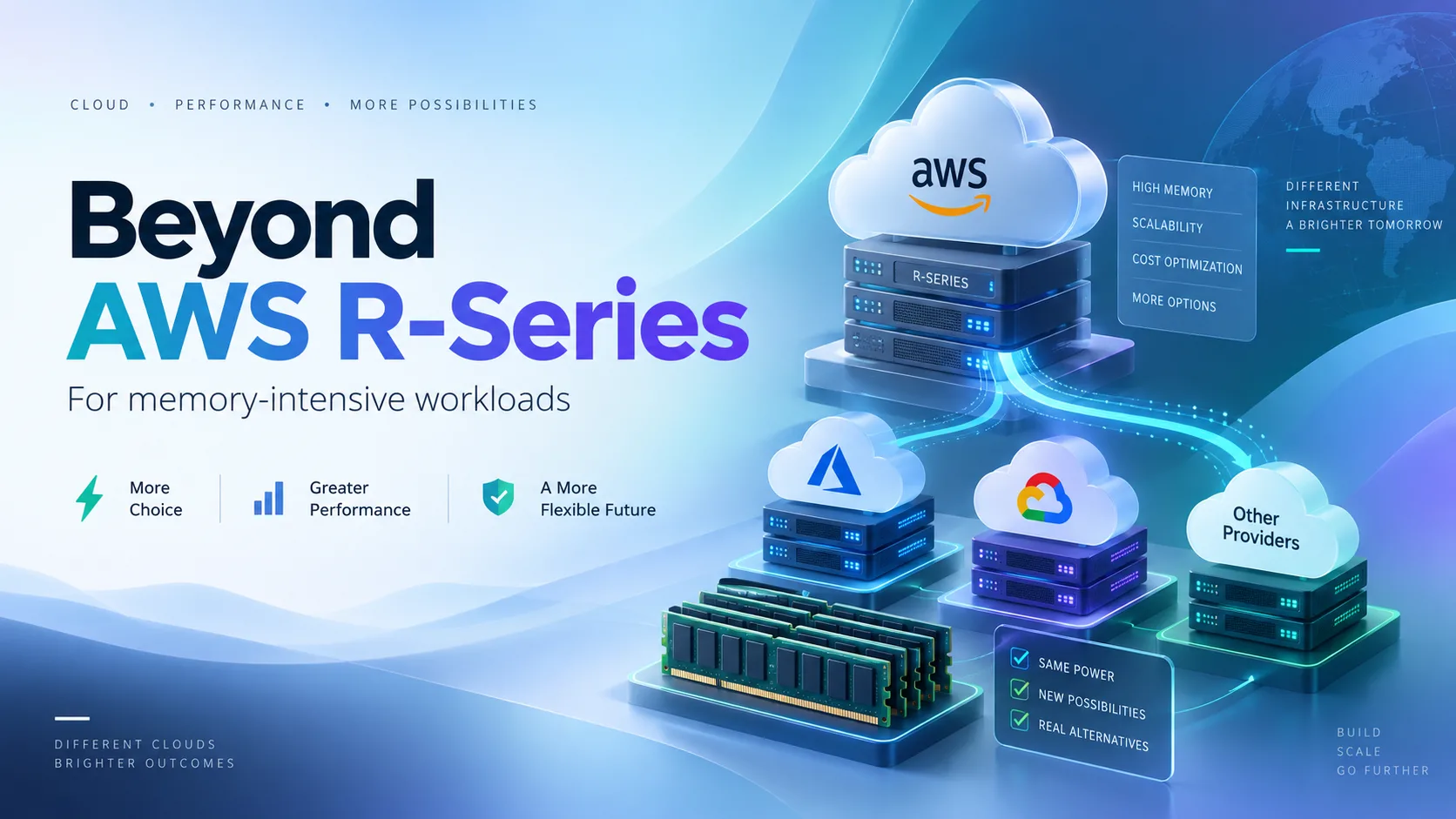
AWS R family instances are a natural choice for databases, caches, analytics, and other memory intensive applications. I use them often, but I never treat them as the only serious option. Azure E series, Google memory optimized machines, Oracle flexible compute, and regional high memory offerings can all deliver strong results. The useful question is not which provider has an R shaped product. It is which platform gives the application enough memory bandwidth, predictable CPU, storage performance, network capacity, and recovery options at a sustainable total cost.
For India focused projects I include AceCloud RAM-intensive instances in the comparison because it is designed around high memory workloads and publishes clear workload positioning. That gives teams a practical alternative to translating every requirement into a hyperscaler family code before they can start testing.
Azure E series is the closest mainstream comparison
Azure E family VMs are built for large databases, analytics, and enterprise applications that need more memory per core. I like them when a company already operates Azure networking, identity, policy, and monitoring. The migration from an AWS R based application can be straightforward when the software stack is portable, but storage and network architecture should be rebuilt deliberately rather than copied mechanically. Cloud disks have different performance tiers and pricing models, so a memory migration can accidentally become a storage regression.
Google M series makes sense for large memory estates
Google memory optimized machines cover mainstream and extremely large memory needs, and newer generations provide significant memory per vCPU. I consider Google when the workload interacts with BigQuery, GKE, data pipelines, or other Google services, and when very large memory configurations are required. The important architectural question is whether a large node is truly necessary. I prefer to validate that the working set cannot be partitioned economically before committing to an extreme memory footprint.
Regional compute can simplify high RAM buying
AceCloud provides RAM intensive configurations with a clear memory heavy ratio and publishes RAM-intensive pricing for several sizes. I like this style of catalog because it makes capacity planning easy to explain to engineering and finance. Local support can also be valuable for stateful systems, where a storage, memory, or network issue can have more business impact than a stateless web tier problem. I would still validate backup, recovery, redundancy, and storage throughput before moving a critical database.
What I compare before leaving R series
I test memory latency, memory bandwidth, CPU steal or contention, storage wait, network throughput, and application level latency at realistic concurrency. I also test reboot and restore time. A 512 GB or 1 TB application can take a long time to warm caches or reload data, so operational recovery becomes part of performance. I examine maintenance behavior, live migration where available, backup consistency, and the provider response process during an infrastructure incident.
One more test I consider essential
I also test memory pressure instead of testing only a comfortable steady state. I increase the working set until the application approaches its planned limit and watch latency, page faults, garbage collection, cache eviction, and storage spill. This tells me how much safety margin the workload actually needs. I then restart the instance and measure warm up time, because a memory rich system can take much longer to rebuild caches or reload data than teams expect. That recovery time belongs in the architecture and cost model, especially for databases and in memory analytics.
A final operational check I would add
Large memory nodes also change failure economics. If one server holds a huge portion of the active dataset, a restart can affect more users and take longer to recover. I therefore compare scale up with scale out before choosing a provider. Sometimes two smaller nodes with replication create a better availability profile than one enormous machine. In other cases, coordination overhead makes the larger node more efficient. I want the provider to support both paths so the application architecture, not the VM catalog, determines the final shape.
My migration view
I would keep R family instances when the application is deeply integrated with AWS or when the team already has strong automation and commitments. I would move when another platform delivers equal or better workload performance, simpler support, lower full system cost, or a better geographic fit. I would not migrate a memory intensive system based on list price alone. Large memory applications expose platform differences quickly and failures are expensive. Run a shadow environment, replay representative load, test a restore, and measure steady state for long enough to capture background jobs. If the alternative passes those tests, it deserves to be called an R series alternative.