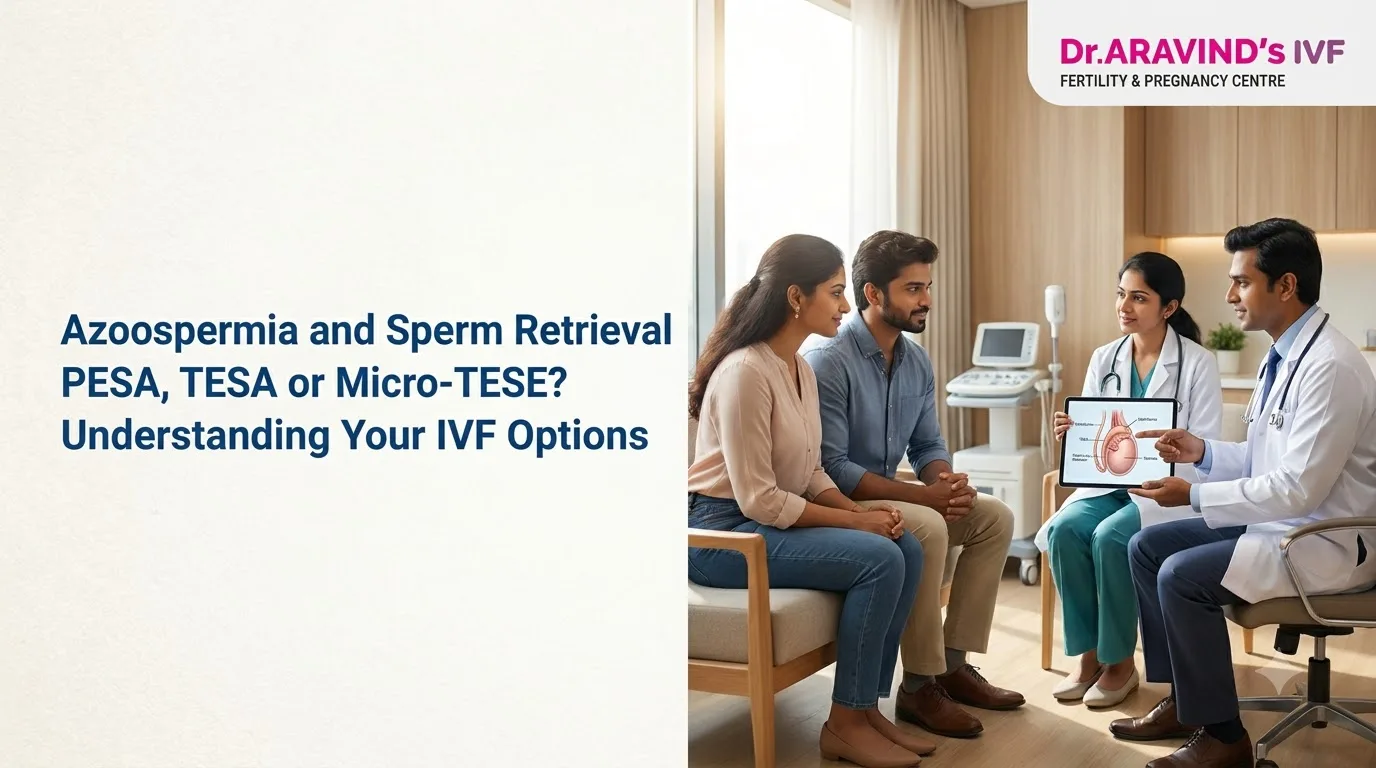
Azoospermia means that no sperm is found in the semen. Although this diagnosis can feel discouraging, sperm may still be present inside the epididymis or testicles in selected cases. Procedures such as PESA, TESA, and Micro-TESE can retrieve sperm for use with IVF and ICSI. A consultation at a trusted fertility centre in Nagapattinam can help identify the cause and select the appropriate procedure.
What Is Azoospermia?
Azoospermia is the absence of sperm in the ejaculate. Doctors usually confirm it through repeated semen analysis because sperm counts can vary between samples.
There are two main types:
- Obstructive azoospermia: The testicles produce sperm, but a blockage prevents it from reaching the semen.
- Non-obstructive azoospermia: Sperm production inside the testicles is severely reduced, irregular, or absent.
This distinction is important because the best retrieval method depends mainly on where sperm is likely to be found.
When Is PESA Used?
PESA, or percutaneous epididymal sperm aspiration, uses a fine needle to collect sperm from the epididymis. The epididymis is the tube behind the testicle where sperm mature and are stored.
PESA may be considered for men with obstructive azoospermia, especially when:
- There is a history of vasectomy.
- Sperm production appears normal.
- A blockage affects the sperm pathway.
- Sperm is likely to be available in the epididymis.
PESA is usually a minimally invasive, day-care procedure performed under local anaesthesia. If viable sperm is found, it can be used immediately for ICSI or frozen for a future IVF cycle.
When Is TESA Used?
TESA, or testicular sperm aspiration, collects sperm-containing tissue directly from the testicle using a fine needle.
TESA may be recommended when:
- PESA is unsuccessful or unsuitable.
- Sperm needs to be obtained directly from testicular tissue.
- The patient has selected obstructive azoospermia.
- The fertility team plans IVF with ICSI.
- A minimally invasive testicular retrieval method is appropriate.
TESA generally involves short recovery. Mild soreness, bruising, or swelling may occur for a few days. The laboratory examines the sample immediately to identify usable sperm.
When Is Micro-TESE Used?
Micro-TESE, or microsurgical testicular sperm extraction, is mainly considered for non-obstructive azoospermia. In this condition, sperm production may occur only in small, scattered regions of the testicle.
During Micro-TESE:
- A small incision is made.
- Testicular tissue is examined under an operating microscope.
- Tubules that appear more likely to contain sperm are selected.
- The tissue is sent to the embryology laboratory for detailed examination.
Micro-TESE is more involved than PESA or TESA and usually requires a longer recovery period. It can be especially useful when a blind needle aspiration may not adequately search the uneven areas of sperm production.
Choosing the Right Procedure
Diagnosis or situationProcedure commonly consideredVasectomy-related obstructionPESA or TESASperm production preservedPESA may be suitablePESA does not retrieve spermTESA may be consideredNon-obstructive azoospermiaMicro-TESEPatchy sperm productionMicro-TESESperm required for ICSISuitable retrieval method based on diagnosis
This is a general guide, not a personal recommendation. Your doctor may review semen analysis, hormones, testicular examination, ultrasound findings, genetic testing, and previous treatment before choosing a procedure.
How Retrieval Supports IVF
Retrieved sperm is generally used with intracytoplasmic sperm injection (ICSI). In ICSI, an embryologist selects one viable sperm and injects it directly into a mature egg.
For couples exploring ivf with pesa tesa or tese, the treatment plan may include:
- Sperm retrieval on the day of egg collection.
- Fresh sperm use for ICSI.
- Cryopreservation of extra sperm.
- Coordination between the urologist, fertility specialist, and embryology team.
At the best IVF centre in India, careful coordination helps the team plan sperm handling and IVF treatment according to the couple’s individual needs.
Factors That Affect Outcomes
Sperm retrieval and IVF outcomes are influenced by:
- Type and cause of azoospermia.
- Hormonal profile and testicular function.
- Genetic factors.
- Sperm quantity and quality.
- Female partner’s age and ovarian reserve.
- Embryo development and laboratory expertise.
Sperm retrieval does not guarantee fertilisation, pregnancy, or live birth. A responsible best fertility centre in Nagapattinam should explain realistic expectations rather than promise a fixed outcome.
Recovery and Aftercare
PESA and TESA are usually followed by a short recovery period. Most men can return to light activities within one or two days, while heavy lifting and strenuous exercise may need to be avoided for several days.
Micro-TESE may require additional rest because it involves a small incision and more tissue handling. Follow the clinic’s instructions on wound care, medicines, exercise, sexual activity, and follow-up visits. Seek medical advice for fever, severe pain, excessive swelling, or bleeding.
Frequently Asked Questions
1. Can azoospermia be treated with sperm retrieval?
In selected men, sperm can be retrieved from the epididymis or testicles and used with ICSI, even when no sperm is present in the semen.
2. Is PESA or TESA better for obstructive azoospermia?
PESA may be considered when sperm is likely to be stored in the epididymis. TESA may be chosen if PESA is unsuccessful or direct testicular retrieval is more appropriate.
3. Why is Micro-TESE used for non-obstructive azoospermia?
Micro-TESE allows the surgeon to search testicular tissue under magnification for small areas that may contain sperm-producing tubules.
4. Can retrieved sperm be frozen?
Yes. Suitable sperm can be cryopreserved for future ICSI, depending on the quantity and laboratory assessment.
5. Where can couples discuss sperm retrieval in Nagapattinam?
A qualified fertility centre in Nagapattinam can assess the cause of azoospermia and explain whether PESA, TESA, or Micro-TESE is appropriate. Couples can also discuss ivf with pesa tesa or tese as part of their treatment plan.
Make an Informed Decision
PESA is generally associated with epididymal retrieval in obstructive cases, TESA collects a testicular sample, and Micro-TESE provides a targeted search when sperm production is limited. The correct option depends on the medical diagnosis and IVF plan. A detailed evaluation is the safest first step before scheduling sperm retrieval.