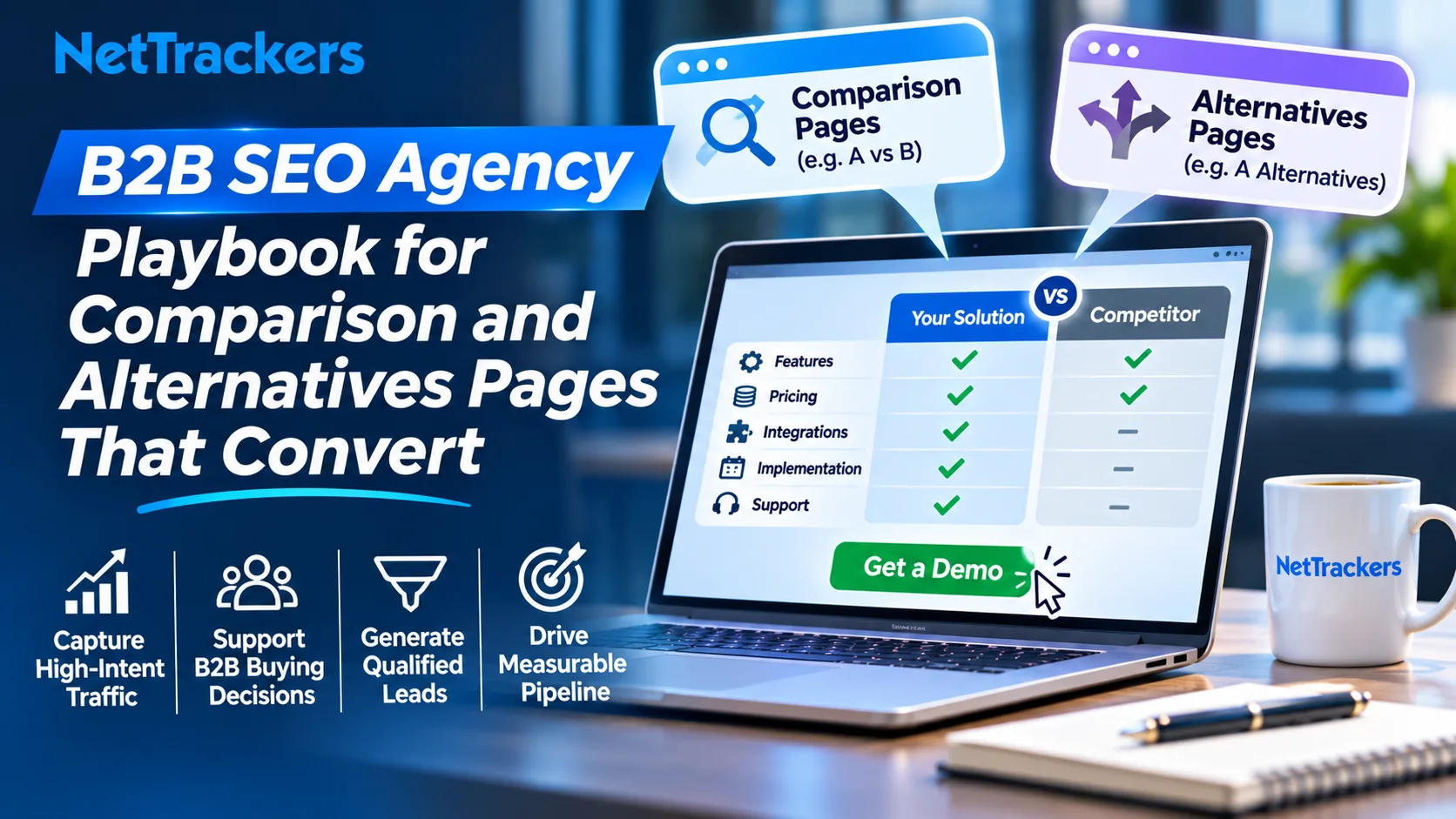
B2B buyers rarely make purchasing decisions after visiting a single website or reading one product description. They compare suppliers, evaluate pricing, review features and investigate alternatives before requesting demonstrations or contacting sales teams. A B2B SEO agency helps businesses capture this high-intent search traffic by developing comparison and alternatives pages that answer important purchasing questions. Unlike broad educational blogs, these pages target prospects who may already understand their requirements and are actively evaluating available solutions. A carefully structured comparison strategy can improve search visibility, build buyer confidence and generate more relevant enquiries throughout complex B2B sales cycles.
How a B2B SEO Agency Builds Comparison Pages That Convert
Comparison and alternatives pages support buyers during the consideration and decision stages of their purchasing journey. They provide detailed information about competing solutions, important features, pricing models and suitability for different business requirements. Effective pages explain meaningful differences rather than presenting one company as universally superior to every competitor. Their purpose is to help readers make informed decisions while demonstrating where a particular product or service may offer the strongest fit. This requires accurate research, commercial keyword targeting and a conversion strategy suited to longer B2B buying processes.
Why Comparison Content Matters in B2B SEO
B2B purchasing decisions often involve several stakeholders, including department managers, finance teams, procurement specialists and senior leadership. Each stakeholder may evaluate the same solution according to different priorities, such as cost, technical compatibility or operational performance. Comparison pages make these considerations easier to investigate before a formal sales conversation begins. They can also address objections that might otherwise prevent qualified prospects from contacting a supplier. When developed accurately, these resources support both organic search acquisition and sales enablement.
1. Understand the Difference Between Comparison and Alternatives Pages
Although these content formats are closely related, they serve different search intentions. A comparison page usually examines two or more named products, services or approaches against common evaluation criteria. An alternatives page helps readers explore other solutions when an existing option no longer meets their requirements. Understanding this distinction allows businesses to create content that matches the questions prospective customers actually ask. Each page should have a specific purpose rather than duplicate similar information across multiple URLs.
Comparison Pages
Comparison pages commonly target searches containing terms such as versus, vs, comparison or difference. For example, a business software provider might create an article comparing two CRM platforms for small and medium-sized companies. The page should examine features, integrations, implementation requirements, pricing approaches and relevant limitations. It should also identify circumstances in which either solution may be appropriate. Balanced explanations help readers evaluate the options without relying entirely on promotional messaging.
Alternatives Pages
Alternatives pages focus on buyers considering replacements for a particular provider, platform or working method. Someone searching for an alternative may be dissatisfied with pricing, functionality, customer support or the complexity of implementation. A useful page should explain why businesses consider switching and identify suitable replacement options. The content should evaluate competing solutions according to meaningful criteria rather than simply list brand names. This approach makes the article more useful for visitors approaching an actual purchasing decision.
2. Identify High-Intent Comparison Keywords
Keyword research for B2B comparisons requires a different approach from broad informational content planning. Search volumes may be relatively low, but users performing these searches can have clear commercial objectives. A phrase involving a specific competitor, product feature or industry requirement may attract fewer visitors than a general category term. However, it may also bring prospects who are further along in their buying journey. Keyword prioritisation should therefore consider commercial relevance, search intent and potential deal value alongside search volume.
Examples of Comparison and Alternatives Keywords
| Keyword pattern | Example search | Buyer intent |
|---|---|---|
| Brand vs competitor | Platform A vs Platform B | Direct product comparison |
| Competitor alternative | Platform A alternatives | Considering a replacement |
| Product category comparison | CRM vs ERP software | Understanding solution differences |
| Industry-specific alternatives | CRM alternatives for manufacturers | Finding industry suitability |
| Pricing comparison | Platform A vs Platform B pricing | Evaluating financial requirements |
| Feature comparison | CRM tools with advanced reporting | Comparing capabilities |
| Service approach comparison | In-house SEO vs SEO agency | Choosing a delivery model |
Evaluate Commercial Relevance Before Search Volume
A keyword with substantial search volume is not automatically valuable for a B2B business. Some queries attract students, general researchers or individuals outside the target customer profile. Others may involve businesses with an immediate purchasing requirement but much lower search demand. Marketing teams should prioritise keywords that align with the company's actual services and ideal customer profile. This helps prevent content campaigns from generating traffic that rarely contributes to qualified enquiries.
3. Research Competitors Before Writing
Comparison content should be based on verifiable information about competing products and services. Businesses need to understand relevant features, service levels, implementation requirements and pricing arrangements before presenting direct comparisons. Official product documentation, public pricing pages and reliable technical resources can provide useful evidence. Where information cannot be verified, the content should explain the limitation rather than invent details. Accurate research is essential because misleading competitor claims can damage trust and create unnecessary legal risks.
What Should Your Competitor Research Include?
Begin by identifying the features and capabilities most relevant to the intended audience. Review how competing providers position their products and which types of customers they appear to serve. Compare important factors such as deployment, technical integrations, training, customer support and contractual requirements where this information is available. Record the sources and dates used for information that may change frequently. This documentation makes future content reviews easier and reduces the risk of publishing outdated claims.
4. Build a Comparison Framework Around Buyer Priorities
A useful comparison should reflect the factors that determine whether a solution fits a particular business. Technical teams may prioritise integrations and security, while procurement teams may concentrate on pricing and contract terms. Department managers may focus on usability, workflow efficiency and staff training requirements. A strong content framework addresses these perspectives without overwhelming readers with irrelevant specifications. The most important criteria should appear prominently so visitors can evaluate the options efficiently.
Essential Comparison Criteria
| Evaluation factor | Questions buyers may ask |
|---|---|
| Features | Which capabilities are included? |
| Pricing | What is the pricing model and total expected cost? |
| Implementation | How complex is the setup process? |
| Integrations | Will it connect with existing systems? |
| Scalability | Can it support future business requirements? |
| Security | What security controls and certifications are available? |
| Support | What assistance is included after purchase? |
| Customisation | Can the solution accommodate specific workflows? |
| Contract terms | Are there minimum commitments or cancellation restrictions? |
| Best fit | Which organisations are likely to benefit most? |
5. Write Honest and Balanced Competitor Comparisons
One of the biggest weaknesses of competitor comparison content is obvious bias. Some businesses create tables showing their own product with every desirable feature while portraying competing solutions as consistently inferior. Readers can recognise these patterns, particularly when they have already researched the alternatives independently. A credible comparison should acknowledge the strengths and limitations of each option. Honesty helps prospects understand whether a solution genuinely meets their needs and can improve the quality of subsequent sales enquiries.
Explain When a Competitor May Be the Better Choice
A comparison page becomes more trustworthy when it recognises situations where another provider may be more suitable. For example, one platform may offer more advanced enterprise functionality while another provides a simpler implementation process. Neither characteristic automatically establishes which solution is better for every organisation. Explaining these differences demonstrates an understanding of the buyer's priorities rather than focusing exclusively on promotion. This approach can also discourage poorly matched prospects from entering the sales pipeline.
6. Structure Pages for Search Engines and Buyers
Comparison pages need a clear information hierarchy that helps readers locate relevant details quickly. Descriptive headings, concise explanations and logically organised sections can improve usability and content accessibility. The introduction should identify the solutions being compared and explain which buyer needs the page addresses. Detailed tables and supporting explanations should then clarify the meaningful differences. A conclusion should recommend appropriate next steps without relying on exaggerated claims.
Recommended Comparison Page Structure
A practical structure begins with a direct overview of the options and the intended audience. The next section can provide a side-by-side summary covering the most important decision criteria. Supporting sections should examine pricing, functionality, integrations, implementation and potential limitations in greater detail. Relevant use cases can explain which option may suit different organisations. The page should finish with an FAQ and a conversion opportunity aligned with the reader's stage of research.
7. Use Original Evidence to Build Credibility
Comparison pages are stronger when they offer information that readers cannot obtain from generic marketing descriptions. Original testing, documented implementation experience and verified customer examples can make a comparison more useful. Screenshots and product demonstrations may support important claims when the business has permission to use them. Where measurable performance differences are discussed, the methodology and conditions should be explained. Unsupported claims about competitors should never be presented as established facts.
Why Generic AI-Generated Comparisons Underperform
Automatically generated comparisons may repeat widely available product descriptions without providing meaningful analysis. They can also contain outdated prices, invented features or incorrect statements about competing providers. Publishing many near-identical pages with minimal research can create a poor user experience. Google recommends content that demonstrates original insight, substantial value and genuine usefulness to readers. Human review and verifiable evidence should therefore remain central to comparison content production.
8. Optimise for Long B2B Sales Cycles
B2B buyers may visit a website several times before requesting a proposal or demonstration. They may also share comparison pages with colleagues responsible for technical, operational or financial approvals. Content should anticipate these different information requirements and help readers return to relevant details. Supporting resources such as implementation guides, case studies and pricing explanations can provide additional depth. The objective is to assist the decision-making process rather than force every visitor into an immediate sales conversation.
Match Calls to Action With Buyer Intent
A visitor comparing solutions may not be ready to request a sales call immediately. Some prospects may prefer to download a comparison checklist or review a detailed implementation guide. Others may be sufficiently advanced to request a demonstration or discuss technical requirements. Providing relevant next steps allows visitors to engage according to their level of readiness. Calls to action should be clear and useful without interrupting the information readers came to find.
9. Build Internal Links Between Relevant Commercial Pages
Internal linking helps visitors move between related services, comparisons and supporting educational resources. It also helps search engines understand relationships between different pages on a website. A comparison article may link to relevant product pages, implementation guides, customer stories and pricing information. These links should use descriptive anchor text and appear where they genuinely support the reader's journey. Avoid inserting unrelated links simply to increase the number of connections between pages.
Create a Comparison Content Hub
Businesses with several relevant solutions may benefit from a central comparison resource. This hub can organise product-versus-product pages, competitor alternatives and industry-specific buying guides. The structure should help users navigate between related questions without encountering repetitive content. Each individual page must still offer distinct information and satisfy a clear search intent. A coordinated content architecture can support usability and reduce unnecessary overlap between competing pages.
10. Optimise Comparison Pages for AI Search
AI-powered search tools can influence how business buyers discover and evaluate potential suppliers. Some systems summarise publicly available product information or reference sources when discussing competing solutions. Clear explanations and accurate, accessible content may help these systems understand a company's offering. However, there is no guaranteed method for securing inclusion in AI-generated recommendations. Businesses should focus on factual consistency, useful comparisons and technically accessible pages rather than speculative optimisation tactics.
Make Important Product Information Easy to Understand
Product names, relevant features and service limitations should be presented clearly. Pricing descriptions should explain the available model without suggesting certainty where quotations depend on individual requirements. Important statements should be supported by evidence when possible. Structured data may help search engines interpret eligible content, but it does not guarantee AI citations or enhanced search appearances. Keeping information accurate across website pages and external profiles can support a more consistent digital presence.
11. Turn Comparison Traffic Into Qualified Leads
Search visibility becomes commercially valuable when relevant visitors progress towards meaningful business outcomes. Comparison pages should provide opportunities for prospects to ask questions or explore a suitable next step. Contact forms, demo requests and downloadable resources can support different levels of buyer readiness. However, unnecessary form fields and aggressive promotional messaging may discourage engagement. Conversion optimisation should focus on removing obstacles while preserving the quality and usefulness of the content.
Conversion Elements Worth Testing
Relevant customer case studies can help demonstrate how a solution performs in practical situations. Clear explanations of implementation and support can address concerns that delay purchasing decisions. Short enquiry forms may make it easier for prospects to request additional information. Product demonstrations and suitable comparison resources can support visitors who want more detailed evaluation. Businesses should test these elements and measure outcomes rather than assume one conversion format will work for every audience.
12. Measure Pipeline Impact Instead of Traffic Alone
Comparison content may attract fewer visitors than broad educational articles while reaching more commercially relevant prospects. Total sessions and rankings therefore provide an incomplete view of performance. Businesses should evaluate enquiries, marketing-qualified leads, sales-qualified leads and opportunities associated with comparison pages. Revenue attribution can provide additional context when reliable CRM and analytics integration is available. These measurements help teams understand whether high-intent content is contributing to actual business growth.
KPIs for Comparison and Alternatives Pages
| KPI | What it measures |
|---|---|
| Organic impressions | Search visibility for comparison queries |
| Organic clicks | Visits generated through search |
| Commercial keyword rankings | Position for decision-stage searches |
| Page engagement | Visitor interaction with the content |
| CTA conversion rate | Visitors taking a relevant next step |
| Marketing-qualified leads | Enquiries meeting marketing criteria |
| Sales-qualified leads | Prospects accepted by the sales team |
| Demo requests | Interest in a product demonstration |
| Pipeline value | Potential revenue associated with opportunities |
| Closed-won revenue | Confirmed commercial outcomes |
13. Keep Comparison Information Accurate and Updated
Competitor features, pricing models and contractual terms can change over time. A comparison that was accurate when published may become misleading several months later. Businesses should establish a review schedule based on how frequently the relevant market changes. Product launches, major pricing updates and changes in service availability may require earlier revisions. Clear maintenance responsibilities help prevent high-performing commercial pages from becoming outdated.
Establish a Practical Review Process
Assign responsibility for checking competitor information and updating relevant sources. Keep records of when important claims were last verified. Review existing pages when sales teams report recurring objections or changes in buyer questions. Monitor search performance to identify content that may no longer satisfy search intent. Regular maintenance helps preserve the reliability of the information while keeping commercial recommendations relevant.
14. Common Mistakes to Avoid
Publishing comparison content without sufficient research can create more problems than it solves. Businesses sometimes target competitors that do not serve the same audience or compare products using irrelevant criteria. Other mistakes include unsupported pricing claims, repetitive content, misleading feature tables and calls to action that do not match buyer intent. These weaknesses can reduce credibility even when a page achieves organic visibility. A successful strategy requires careful topic selection and honest analysis rather than content volume alone.
Why Every Competitor Does Not Need a Separate Page
Creating dozens of nearly identical alternatives pages may appear attractive from a keyword targeting perspective. However, each page needs a distinct purpose and enough original information to justify publication. If several pages answer the same question, consolidation may create a more useful resource. Businesses should prioritise their most relevant competitors and frequently requested comparisons. Publishing fewer well-researched pages can be more sustainable than maintaining a large collection of superficial comparisons.
15. How NetTrackers Supports B2B Comparison SEO
NetTrackers provides B2B SEO agency services for UK organisations operating across complex buying journeys and longer sales cycles. Its published offering includes decision-maker keyword research, B2B content strategy, technical optimisation and competitor gap analysis. The agency also emphasises qualified leads and pipeline-focused reporting rather than relying exclusively on traffic and ranking metrics. These capabilities can support businesses developing comparison pages, competitor alternatives and other decision-stage content. The appropriate campaign scope should reflect the client's industry, target accounts, competitive landscape and commercial objectives.
Building a Search Strategy Around Buying Decisions
A successful B2B SEO campaign should begin by understanding how the intended customers evaluate potential suppliers. Research can identify the comparisons, technical questions and purchasing concerns that influence these decisions. Content planning should then prioritise pages that provide useful answers to those questions. Technical optimisation and relevant internal linking help make the resources accessible to search engines and prospective customers. Performance should be assessed through qualified enquiries and pipeline contribution alongside organic visibility.
Frequently Asked Questions
What Is a B2B Comparison Page?
A B2B comparison page evaluates two or more products, services or business solutions against relevant purchasing criteria. It typically discusses features, pricing, implementation, support and suitability for different organisations. The purpose is to help buyers understand meaningful differences before choosing a supplier. Credible comparisons should acknowledge strengths and limitations rather than favour one provider without supporting evidence. They can be particularly useful during the consideration and decision stages of a longer purchasing journey.
What Is the Difference Between Comparison and Alternatives Content?
Comparison content usually examines named products or services side by side. Alternatives content focuses on other available options for buyers considering replacing a particular solution. Both formats can target commercially relevant search queries. However, their structure and recommended next steps should reflect the different questions visitors want answered. Businesses should avoid publishing overlapping pages that provide little distinct value.
Do Comparison Pages Generate Better Leads?
Comparison pages can attract visitors who are closer to making a purchasing decision. This may create opportunities for more commercially relevant enquiries than general educational content. However, performance depends on keyword targeting, page quality, competition and the suitability of the offering. There is no universal conversion rate that every B2B comparison page can expect to achieve. Businesses should evaluate results using actual lead quality, pipeline data and conversion tracking.
Should Businesses Mention Competitors by Name?
Mentioning competitors can be appropriate when it helps readers understand a genuine comparison. Information should be accurate, fair and based on verifiable evidence. Businesses should avoid misleading claims, inappropriate use of trademarks and unsupported statements about competitor performance. Pricing and feature information should be reviewed regularly because these details can change. Where legal uncertainty exists, professional advice may be appropriate before publication.
How Many Comparison Pages Should a B2B Website Have?
The number depends on relevant competitors, product categories and the questions prospective buyers regularly ask. Some businesses may benefit from a small number of detailed comparisons, while others have several distinct solution categories. Each page should target a clear search intent and provide information that is not unnecessarily duplicated elsewhere. Publishing a large number of superficial pages may create maintenance challenges without meaningful commercial benefits. Topic prioritisation should reflect business value rather than an arbitrary publishing target.
Conclusion
Comparison and alternatives pages can help B2B businesses reach prospective customers during important purchasing decisions. Successful content should combine high-intent keyword research, balanced competitor analysis, original evidence and relevant conversion opportunities. Businesses must also ensure that pages are technically accessible, factually accurate and updated as market conditions change. Working with a B2B SEO agency can help coordinate these activities and connect decision-stage search visibility with qualified leads and measurable pipeline outcomes. NetTrackers offers UK businesses a structured approach to B2B SEO that focuses on commercial relevance throughout complex sales cycles.
Strengthen Your B2B SEO Strategy With NetTrackers
NetTrackers supports UK businesses with keyword research, B2B content strategy, technical SEO and competitor analysis. Its approach focuses on reaching relevant decision-makers and connecting organic search performance with qualified enquiries. Organisations planning comparison pages or competitor alternatives content can explore how these services fit their commercial objectives. Contact NetTrackers on +44 20 4572 4940 or visit the NetTrackers website to discuss your requirements. A structured assessment can help identify which commercial search opportunities deserve priority.