
The way people discover information online is changing. For years, businesses and website owners focused primarily on appearing in traditional search engine results. They researched keywords, optimized page titles, improved website structure, and worked to earn quality backlinks.
These practices remain important, but people are increasingly using AI-powered assistants to ask questions, explore products, compare services, and find explanations. Instead of browsing several search results, users may receive a summarized response from an AI platform.
This shift has introduced new areas of optimization, including Generative Engine Optimization (GEO) and Answer Engine Optimization (AEO). For WordPress website owners, understanding these developments can help them build a more adaptable search strategy.
1. Understanding the Changing Search Landscape
Traditional SEO focuses on helping search engines discover, understand, and rank website content. It involves several elements, including relevant keywords, useful information, technical performance, internal linking, and a clear website structure.
AI-powered search introduces another layer. Platforms such as ChatGPT, Gemini, Claude, and Perplexity can interpret questions and generate responses using information from different sources.
This creates new opportunities for publishers. Well-organized, informative content may be easier for search systems to understand and reference. However, appearing in an AI-generated answer is not guaranteed, even when a website follows optimization recommendations.
The important takeaway is that website owners should continue investing in useful content and sound technical SEO while learning how emerging discovery platforms work.
2. What Are SEO, GEO, and AEO?
Although these terms are related, each describes a slightly different approach to online visibility.
Search Engine Optimization (SEO) focuses on improving a website's visibility in conventional search results. It includes on-page optimization, technical improvements, structured data, and content development.
Generative Engine Optimization (GEO) focuses on making website information easier for generative AI systems to discover, interpret, and potentially reference when producing answers.
Answer Engine Optimization (AEO) focuses on presenting information in a clear format that helps answer specific questions. Direct explanations, descriptive headings, FAQs, and concise summaries can make content easier to understand.
These approaches overlap. A well-written article with a logical structure, accurate information, and appropriate technical markup can support several types of search discovery.
Rather than treating GEO and AEO as replacements for SEO, website owners can consider them additional parts of a broader visibility strategy.
3. Why WordPress Website Owners Need to Pay Attention
WordPress makes publishing accessible to individuals, bloggers, businesses, and online stores. Its flexibility also means website owners can manage many aspects of optimization through plugins.
However, managing SEO settings across multiple pages can become time-consuming. A website may have hundreds of articles, product pages, categories, and landing pages, each requiring appropriate metadata and technical settings.
There is also the challenge of keeping content organized for newer search experiences.
Website owners may need to consider questions such as:
- Are important pages accessible to search engines?
- Do articles have meaningful SEO titles and descriptions?
- Is structured data implemented appropriately?
- Are outdated URLs redirecting correctly?
- Can website owners control which AI crawlers access their content?
- Is the content structured around the questions visitors actually ask?
Addressing these areas requires a combination of good editorial practices and reliable technical tools.
4. Introducing the VisibleGen SEO, GEO & AEO WordPress Plugin
One tool developed for this changing environment is the VisibleGen SEO, GEO & AEO WordPress plugin.
The plugin brings several search optimization features together within WordPress. Its purpose is to help website administrators manage traditional SEO requirements while exploring the technical and content-related considerations of AI-powered discovery.
Its features cover several areas:
On-page SEO management: Website owners can create SEO titles and meta descriptions for posts, pages, and products. The plugin also supports canonical URLs, indexing controls, title templates, and advanced robots directives.
GEO content checks: Its content analysis provides suggestions for making articles easier to understand and potentially reference in AI-generated answers. These include using direct answers, question-based headings, key takeaways, specific information, and structured lists or tables.
AI crawler controls: The plugin allows administrators to manage access for different AI crawlers. It includes presets designed to allow AI search while restricting certain training crawlers, giving website owners more control over their content preferences.
llms.txt generation: It can generate and maintain an llms.txt file that lists important website pages for AI systems. This provides an additional way to organize information about a website, although it does not guarantee that AI platforms will use or cite those pages.
These features make the plugin relevant to website owners who want to explore SEO and AI-search readiness without managing every setting separately.
5. Technical SEO Still Plays an Important Role
Content optimization is only one part of website visibility. Technical problems can also affect how search engines access and interpret a website.
For example, broken internal links can create frustrating visitor experiences. Incorrect redirects may send users to irrelevant pages, while duplicate URLs can create indexing confusion.
VisibleGen includes several tools intended to help manage these technical issues.
Its redirect manager supports different redirect types, including 301, 302, 307, 308, and 410 responses. It also includes a 404 log, suggestions for matching missing pages, and internal link scanning.
Other features include XML sitemap improvements, robots.txt editing, site health checks, and options for managing social metadata.
Having these controls in one place can make routine website maintenance easier. However, administrators should still review changes carefully, particularly when editing redirects, robots directives, or indexing settings.
6. Structured Content Helps Both Readers and Search Systems
A technically optimized website still needs content that genuinely answers visitors' questions.
Imagine someone searching for information about website security. An article containing several long paragraphs without descriptive headings may be difficult to navigate. A more organized article could explain the main issue first, then cover common risks, practical considerations, and frequently asked questions.
This structure benefits readers because they can find relevant information more easily.
It can also help automated systems interpret the relationships between different sections.
VisibleGen supports structured data formats such as Article, Organization, Person, WebSite, WebPage, and BreadcrumbList. It also offers an FAQ block with FAQPage schema and WooCommerce Product schema support.
Structured data helps describe page information to search systems, but it should accurately reflect the content. Adding schema does not automatically qualify a page for rich results or improve its rankings.
7. Choosing SEO Tools Without Overcomplicating Your Website
WordPress offers many SEO plugins, and installing several tools with overlapping features can create unnecessary complexity.
Before choosing a plugin, website owners should identify their actual requirements. A small blog may need basic metadata and sitemap management, while a larger publication may also require redirects, bulk editing, structured data, and more detailed technical controls.
VisibleGen also provides an import option for selected SEO settings from Yoast SEO, Rank Math, and All in One SEO. Its listing explains that it avoids duplicate output while another supported SEO plugin remains active.
Website administrators should still review imported settings and test their website after switching tools.
It is equally important to understand privacy and external connections. According to its WordPress.org listing, the plugin's core features work without connecting a VisibleGen account. Optional account-based tools, such as AI assistance, keyword data, rank tracking, and analytics integrations, require a connection and involve specific data-sharing conditions.
Reading the plugin's documentation and privacy information before enabling optional integrations is a sensible step.
8. A Practical Approach to Future Search Visibility
Preparing for AI-powered search does not mean abandoning established SEO practices. A better approach is to build a strong foundation and improve it gradually.
Start by publishing original, accurate, and helpful content. Use descriptive headings, answer important questions clearly, and keep website navigation straightforward.
Next, review technical elements such as indexing settings, canonical URLs, redirects, and structured data. Make sure important pages can be accessed and understood by search engines.
Finally, explore GEO and AEO features where they fit your publishing goals. Tools such as VisibleGen can help manage some of these tasks, but they should support a broader strategy rather than replace editorial judgment.
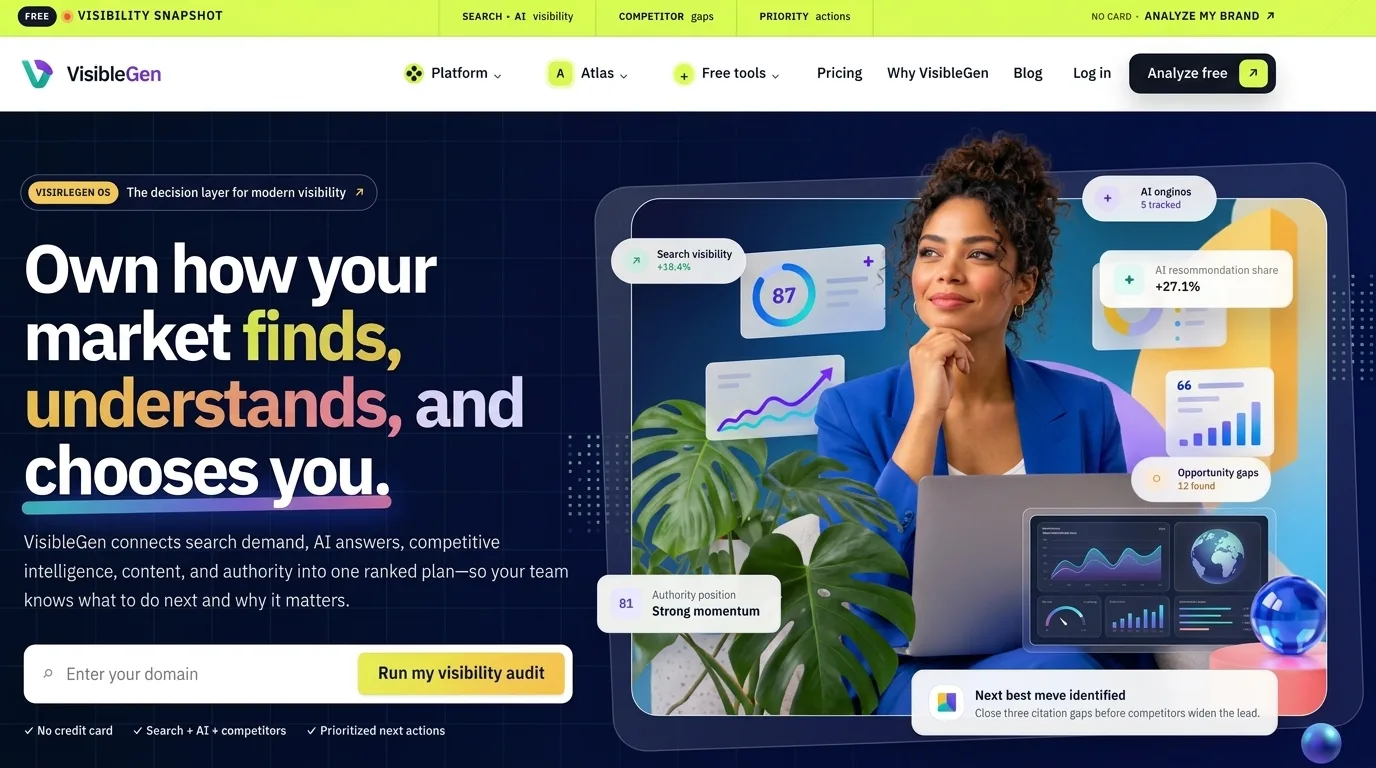
For additional information about its SEO tools and wider search visibility features, visit VisibleGen.
Conclusion
Search behavior continues to evolve, and website owners need to think beyond traditional keyword rankings. SEO remains essential, while GEO and AEO introduce additional considerations for content organization, technical accessibility, and AI-powered discovery.
For WordPress publishers, the right combination of useful content, responsible technical optimization, and practical tools can create a stronger foundation for long-term visibility.
Ultimately, the goal should remain simple: make information accurate, accessible, and genuinely useful to the people looking for it.