
Introduction: Which Science Degree Should You Choose After 12th?
Choosing a science degree after Class 12 can feel like standing at a crossroads. You may know that you want a career in science, healthcare, research, or laboratories, but which course should you choose?
Three options worth considering are BSc Medical Laboratory Technology, BSc Chemistry Honors, and MSc Chemistry. Each programme develops different skills and can lead to rewarding career opportunities in India.
BSc Medical Laboratory Technology is suitable for students interested in diagnostic laboratories, clinical testing, and healthcare. BSc Chemistry Honors offers a strong foundation in chemical sciences, laboratory techniques, and scientific analysis. For students who already have a bachelor's degree in chemistry, MSc Chemistry can provide advanced subject knowledge and prepare them for research, teaching, laboratory, and industry-oriented roles.
If you are considering higher education in Mohali, Punjab, understanding these courses can help you make a more informed admission decision.
What Are BSc Medical Laboratory Technology, BSc Chemistry Honors and MSc Chemistry?
What is BSc Medical Laboratory Technology?
BSc Medical Laboratory Technology is an undergraduate programme focused on laboratory-based healthcare and diagnostic science. Students learn about areas such as clinical biochemistry, microbiology, pathology, hematology, laboratory procedures, and diagnostic testing.
The programme combines classroom learning with practical laboratory training. It can be a good choice for students who want to work behind the scenes in healthcare while contributing to accurate diagnosis and patient care.
What is BSc Chemistry Honors?
BSc Chemistry Honors is an undergraduate degree designed for students who want deeper knowledge of chemistry. It generally covers areas such as organic chemistry, inorganic chemistry, physical chemistry, analytical chemistry, and laboratory work.
The course can help students develop scientific reasoning, experimentation, observation, and analytical skills. It also creates a foundation for postgraduate study, including an MSc Chemistry.
What is MSc Chemistry?
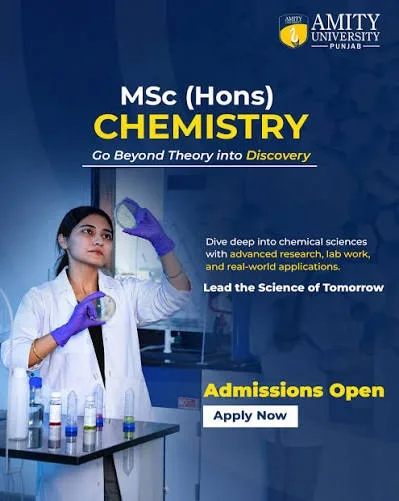
MSc Chemistry is a postgraduate programme for students who want advanced knowledge of chemistry and greater exposure to laboratory research and scientific applications.
Depending on the curriculum, students may study advanced organic, inorganic, physical, analytical, or interdisciplinary chemistry. The programme can be particularly useful for students planning careers in research, laboratories, education, pharmaceuticals, chemical industries, or higher academic studies.
Key Factors to Consider Before Choosing a Science Course
Before submitting an application, ask yourself what kind of career you want to build. Consider these factors:
- Career interest: Decide whether healthcare diagnostics, chemistry, research, or laboratory science interests you most.
- Academic background: Check whether your Class 12 or bachelor's subjects meet the programme requirements.
- Practical learning: Laboratory-based courses require regular practical sessions and hands-on learning.
- Course duration: Compare undergraduate and postgraduate study timelines before making your decision.
- Curriculum: Review subjects, electives, laboratory training, projects, and research opportunities.
- Career scope: Look at the roles you can pursue after graduation or postgraduate study.
- Higher education plans: If you want research or teaching opportunities, consider whether postgraduate study may be necessary.
- Location: Studying in Mohali or another education hub in Punjab can provide access to academic facilities and a student-focused environment.
Why Choose Amity University Punjab for Science Education?
Choosing the right university matters just as much as choosing the right course. A good academic environment should give students opportunities to combine theoretical concepts with practical learning.
Amity University Punjab in Mohali can be considered by students looking for science and technology-focused higher education in Punjab. Students can look for programmes that support classroom learning, laboratory exposure, academic projects, skill development, and broader professional preparation.
Why does practical learning matter? Think of science education like learning to drive. Reading the rules gives you the foundation, but practical experience helps you understand how those rules work in real situations.
For students considering BSc Medical Laboratory Technology, BSc Chemistry Honors, or MSc Chemistry, factors such as laboratory infrastructure, faculty support, academic resources, research exposure, and programme curriculum should be part of the university-selection process.
What Are the Eligibility Requirements and Admission Process?
Who can apply for BSc Medical Laboratory Technology?
Students who have completed Class 12 with the required science subjects may be eligible for BSc Medical Laboratory Technology, subject to the university's specific eligibility criteria.
Who can apply for BSc Chemistry Honors?
Students who have completed Class 12 with the relevant science subjects can generally apply for BSc Chemistry Honors, depending on the programme's admission requirements.
Who can apply for MSc Chemistry?
MSc Chemistry is generally intended for students who have completed a relevant bachelor's degree, such as a BSc with chemistry as a major or an equivalent qualification, subject to university-specific requirements.
What are the typical admission steps?
The admission process usually involves:
- Check the programme eligibility criteria.
- Review the course structure, duration, and academic requirements.
- Complete the online application form.
- Submit the required academic and personal documents.
- Complete any applicable selection or admission requirements.
- Receive admission confirmation if selected.
- Complete fee payment and enrolment within the specified deadline.
Requirements can vary by programme and admission cycle, so students should verify the latest information directly with the university before applying.
What Career Opportunities Are Available After These Courses?
Careers after BSc Medical Laboratory Technology
Graduates can consider roles such as:
- Medical laboratory technologist
- Clinical laboratory technician
- Pathology laboratory professional
- Diagnostic laboratory assistant
- Clinical research support professional
- Laboratory quality control assistant
With experience and additional qualifications, graduates can also consider advanced roles in laboratory management, clinical research, or specialised diagnostic areas.
Careers after BSc Chemistry Honors
Graduates may pursue opportunities in:
- Laboratory testing
- Quality control
- Chemical analysis
- Research assistance
- Technical support
- Environmental testing
- Education and academic support
Students who want specialised or research-oriented careers can consider postgraduate study after completing their bachelor's degree.
Careers after MSc Chemistry
An MSc Chemistry can open pathways into:
- Research and development
- Chemical analysis
- Quality assurance and quality control
- Laboratory management
- Scientific research
- Teaching and academic careers
- Technical and analytical roles
Students interested in long-term research careers may also consider doctoral-level education after completing their postgraduate studies.
Which Course Is Right for You?
The right programme depends on your interests and long-term goals.
If you are interested in healthcare diagnostics and laboratory testing, BSc Medical Laboratory Technology may be a suitable choice. If chemistry fascinates you and you want to build a strong undergraduate foundation in the subject, BSc Chemistry Honors can be a strong option. If you already hold a relevant bachelor's degree and want advanced chemistry knowledge, MSc Chemistry may be the logical next step.
Instead of choosing a course simply because it sounds popular, ask yourself a simple question: Can I see myself studying these subjects and working in this field for the next several years?
Conclusion: Take the Next Step Towards Your Science Career
Science offers more than one career path. Whether your interest lies in diagnostic healthcare, chemical sciences, laboratory work, or research, the right academic programme can give you the foundation to move forward.
BSc Medical Laboratory Technology, BSc Chemistry Honors, and MSc Chemistry each serve different academic and professional goals. Students in India, particularly those considering higher education in Mohali and Punjab, should compare eligibility, curriculum, practical exposure, career opportunities, and university facilities before making a final decision.
Frequently Asked Questions
1. What is BSc Medical Laboratory Technology?
BSc Medical Laboratory Technology is an undergraduate science programme that focuses on clinical laboratory procedures, diagnostic testing, pathology, microbiology, and related healthcare laboratory applications.
2. What is BSc Chemistry Honors?
BSc Chemistry Honors is an undergraduate chemistry programme that provides detailed knowledge of organic, inorganic, physical, and analytical chemistry along with practical laboratory training.
3. Is MSc Chemistry a good option after BSc Chemistry?
Yes. MSc Chemistry can be a suitable postgraduate option for BSc Chemistry graduates who want advanced subject knowledge and career opportunities in research, laboratories, quality control, education, and related fields.
4. What can I do after BSc Medical Laboratory Technology?
Graduates can pursue roles in diagnostic laboratories, clinical testing, pathology laboratories, healthcare-related laboratory services, and clinical research support.
5. What are the career options after MSc Chemistry?
Graduates can pursue opportunities in research and development, quality control, chemical analysis, laboratory services, scientific research, teaching, and technical roles.
6. Where can I study these science programmes in Punjab?
Students looking for higher education in Punjab can consider universities in Mohali and other education hubs. Before applying, compare programme curriculum, eligibility, practical facilities, faculty, academic resources, and career support.