For many years, academic performance was considered the primary measure of educational success.
Today, parents and educators increasingly recognise that children need more than good examination results. They also need confidence, creativity, communication skills, physical fitness, emotional awareness, teamwork, and the ability to adapt to changing situations.
This broader approach is often described as holistic education.
What Is Holistic Education?
Holistic education focuses on the development of the whole child.
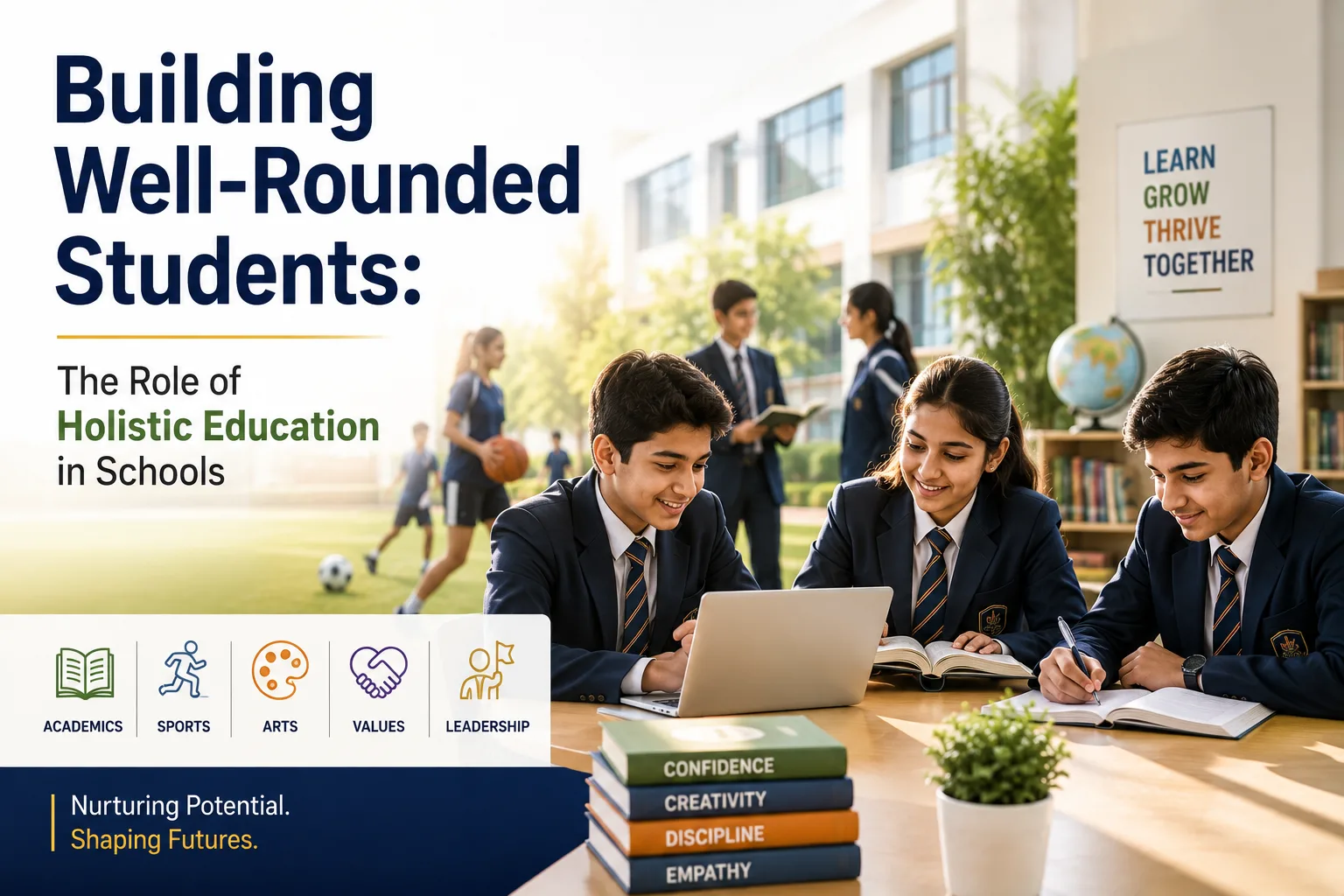
Instead of treating academics as the only goal, it brings together different areas of development, including:
- Academic knowledge
- Physical development
- Creativity
- Communication
- Social skills
- Emotional well-being
- Leadership
- Values and responsibility
- Technology and innovation
The aim is to create a balanced educational experience.
Academics Remain Important
Holistic education does not mean reducing academic standards.
Children still need strong foundations in mathematics, science, languages, social sciences, and other subjects.
The difference lies in how learning is supported.
Projects, experiments, discussions, practical activities, and technology can help students connect academic concepts with real situations.
Physical Development
Physical activity is an important part of childhood.
Sports can support fitness while helping children develop teamwork, discipline, resilience, and confidence.
A school environment that encourages regular participation in sports can therefore contribute to development beyond academics.
Creativity and Self-Expression
Children need opportunities to express themselves.
Art, music, dance, theatre, creative writing, design, and cultural activities provide different forms of self-expression.
Creative activities can also help students develop imagination and confidence.
Technology and Innovation
Technology is becoming increasingly relevant to education and future careers.
Schools can introduce students to technology through coding, robotics, STEM activities, digital projects, innovation labs, and design thinking.
The objective should be to teach children how to use technology creatively and responsibly.
Social and Communication Skills
Children learn how to interact with others through everyday school experiences.
Group projects, sports teams, clubs, debates, presentations, cultural programs, and student leadership activities can help develop communication and collaboration.
These skills can be valuable in higher education, workplaces, and personal relationships.
Emotional Well-Being
A child's ability to learn can also be influenced by emotional well-being.
Schools can support students by providing counselling resources, wellness programs, positive relationships, and environments where children feel comfortable seeking help.
Helping students understand emotions and manage challenges can contribute to greater confidence and resilience.
Leadership and Responsibility
Leadership opportunities can encourage students to become more responsible.
Student councils, house activities, event organisation, community initiatives, and group projects can allow children to practise decision-making and teamwork.
Such experiences can teach students that leadership is about responsibility rather than simply authority.
Experiential Learning
One of the strongest elements of holistic education is learning through experience.
A student studying environmental science, for example, may understand the topic differently after participating in an environmental project.
Similarly, robotics can make engineering concepts practical, while sports can demonstrate teamwork and discipline in real time.
Choosing a Holistic Education School in Faridabad
Parents considering a holistic education school in Faridabad should look at the entire educational ecosystem.
Important questions include:
- How strong is the academic program?
- What sports opportunities are available?
- Are creative activities encouraged?
- What technology and innovation facilities exist?
- Are leadership opportunities provided?
- How does the school support student wellness?
- Are students encouraged to participate in projects?
- Does the school promote teamwork and communication?
A Balanced School Environment
Grand Columbus International School in Faridabad follows a broad educational approach combining academics with sports, technology, creativity, innovation, leadership, and student development opportunities.
Its programs include robotics and innovation activities, sports, clubs, cultural activities, leadership opportunities, and experiential learning.
Such an environment can give students multiple avenues through which they can explore their interests and develop different skills.
Why Every Child Needs a Different Path
Holistic education does not mean every child must excel in every area.
Children have different personalities, interests, strengths, and learning styles.
One student may excel academically, another may demonstrate leadership ability, another may have a passion for sport, and another may discover an interest in technology or creative arts.
A balanced school environment allows these differences to exist.
Conclusion
The purpose of education is not simply to help children score well in examinations.
It should also help them become confident, capable, curious, responsible, and adaptable individuals.
A holistic education school in Faridabad can support this goal by bringing academics together with sports, creativity, technology, innovation, leadership, communication, and well-being.
When children are given opportunities to learn in different ways, they can discover their strengths and develop skills that remain valuable long after they leave school.