
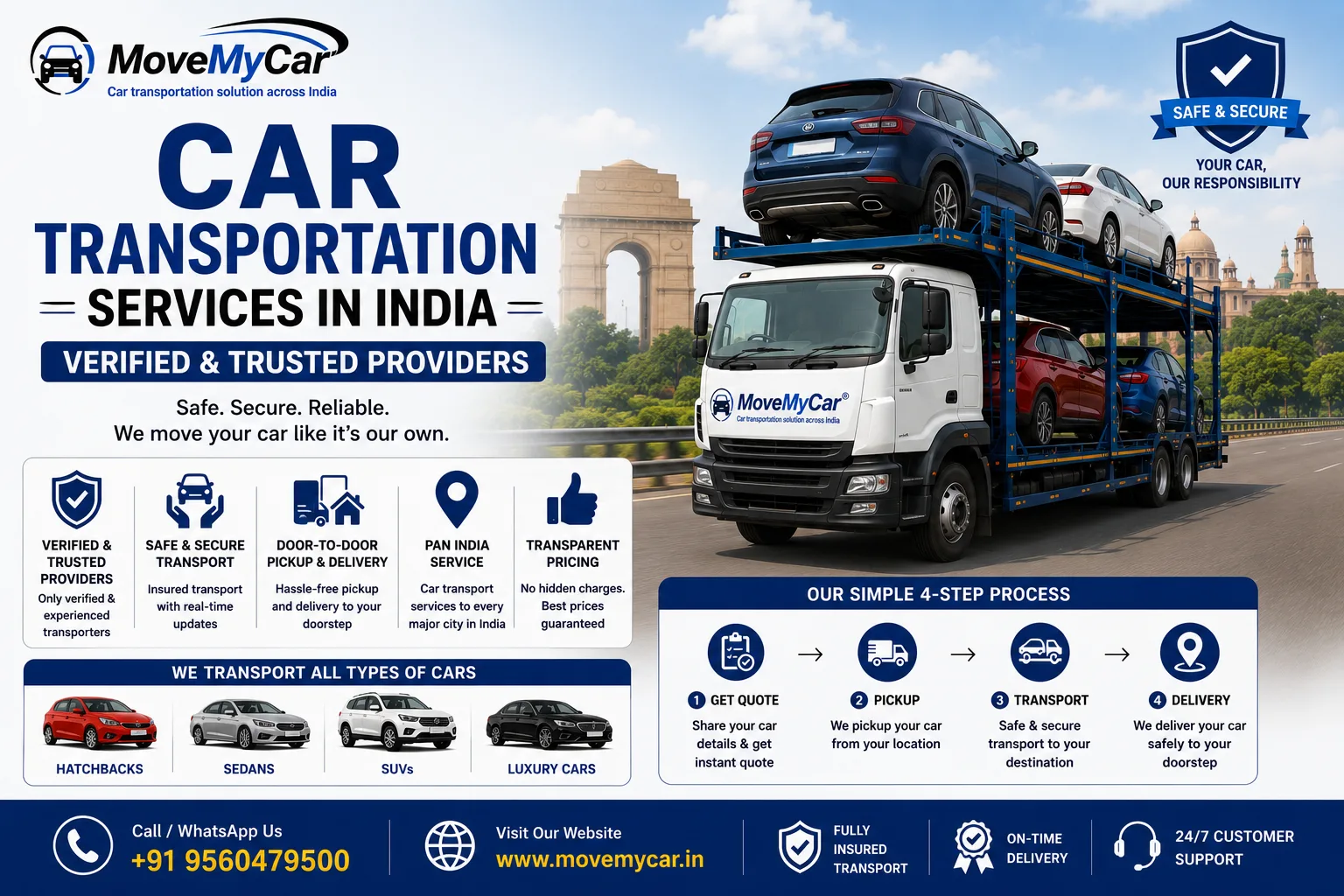
Transporting a car across cities sounds straightforward: hand over the vehicle, let the transporter load it onto a carrier, and collect it at the destination. But what happens when you discover a dent, scratch, broken component or other damage at delivery? This is where car transport in India can become complicated, particularly when the owner assumes that insurance will automatically cover every transit-related problem.
Transit protection can provide financial support for eligible losses, but the actual outcome depends on the policy terms, documented vehicle condition, exclusions and the evidence available when a claim is raised.
Why Transit Insurance Claims Can Become Difficult
A claim isn't simply a matter of saying, “My car was damaged during transportation.”
The insurer may want to establish:
- What condition was the car in before loading?
- When and where did the damage occur?
- Was the damage caused during transit?
- Was the particular risk covered?
- Was the damage already present?
- Were the required documents submitted?
- Was the incident reported within the applicable timeframe?
This is why documenting everything before the vehicle leaves your possession is so important.
1. Problem: Existing Car Insurance May Not Be Enough
One common assumption is that a regular motor policy automatically provides complete protection while the vehicle is being transported.
That's not necessarily true.
Coverage depends on the specific policy wording. Some comprehensive policies may cover certain transit-related accidental damage, while other situations or exclusions may apply. Separate vehicle transit insurance may therefore be appropriate depending on the route, transporter and existing coverage.
Smart solution
Before booking, ask your insurer in writing:
“Does my current policy cover damage to my car while it is being transported on a carrier?”
Don't rely solely on a verbal assurance from the transporter.
2. Problem: Pre-Existing Damage Creates Disputes
Imagine your car already has a small scratch on the rear bumper. After delivery, you discover another scratch nearby.
Without proper documentation, proving which damage occurred during transportation can become difficult.
Protect yourself before loading
Take clear photographs and videos of:
- Front and rear
- Both sides
- Wheels and tyres
- Bumpers
- Windows and mirrors
- Existing scratches or dents
- Interior and dashboard
- Odometer reading
Also ask the transporter to prepare and sign a vehicle condition report before loading. Such pre-loading documentation can become crucial evidence during a claim.
3. Problem: Damage Is Discovered After Signing Delivery
This is one of the easiest mistakes to avoid.
If you receive the vehicle and immediately sign a delivery document stating that everything is satisfactory, proving later that visible damage occurred during transit can become more difficult.
Your delivery-day checklist
STOP → INSPECT → PHOTOGRAPH → REPORT → SIGN
Before signing the delivery paperwork:
- Walk around the entire vehicle.
- Compare it with your pre-loading photographs.
- Check for fresh scratches, dents and broken parts.
- Record photographs and videos.
- Notify the transporter immediately if you find damage.
- Ensure the damage is recorded on the delivery document.
Current guidance also recommends documenting damage immediately and avoiding a clean delivery acknowledgment when visible damage has been found.
4. Problem: Missing Documents Can Slow or Hurt a Claim
Even a genuine claim can become frustrating when essential paperwork is missing.
Keep this claim file ready:
DocumentWhy It MattersInsurance policyEstablishes coverageRCConfirms vehicle ownership/detailsTransport receipt/LREstablishes the journeyPre-loading condition reportShows original conditionDelivery receiptRecords destination handoverPhotos/videosEvidence of damageRepair estimateHelps establish repair costFIR, where applicableUseful for theft or relevant incidentsInsurers may request additional documents depending on the circumstances, so keeping the entire transport record together is a smart move.
5. Problem: The Claim Gets Rejected
A rejected claim doesn't necessarily mean the matter is over.
First, read the rejection letter carefully and identify the exact exclusion or condition cited by the insurer. Don't immediately start arguing without understanding the reason.
If you believe the rejection is incorrect:
Ask for the decision in writing → submit supporting evidence → use the insurer's grievance mechanism → escalate through the appropriate insurance dispute-resolution channel if necessary.
Indian insurers have formal grievance processes, and escalation options may be available depending on the dispute and policy.
How to Make a Transit Claim Stronger
Think of your evidence as a timeline:
Before pickup
Photograph the car
↓
At loading
Complete the condition report
↓
During transport
Keep booking and insurance documents
↓
At delivery
Inspect before signing
↓
If damage appears
Photograph + notify immediately
↓
Claim stage
Submit complete documentation
This simple chain can make it much easier to demonstrate what happened.
Conclusion
Transit insurance is valuable, but insurance alone doesn't guarantee a successful claim. The real protection comes from combining suitable coverage with careful documentation, a proper vehicle inspection and prompt reporting of any damage.
Before booking Car Transportation Services in India, clarify the insurance arrangement, understand exclusions and insist on a documented vehicle condition report. A few minutes spent recording your car's condition can save considerable trouble if something goes wrong during transit.