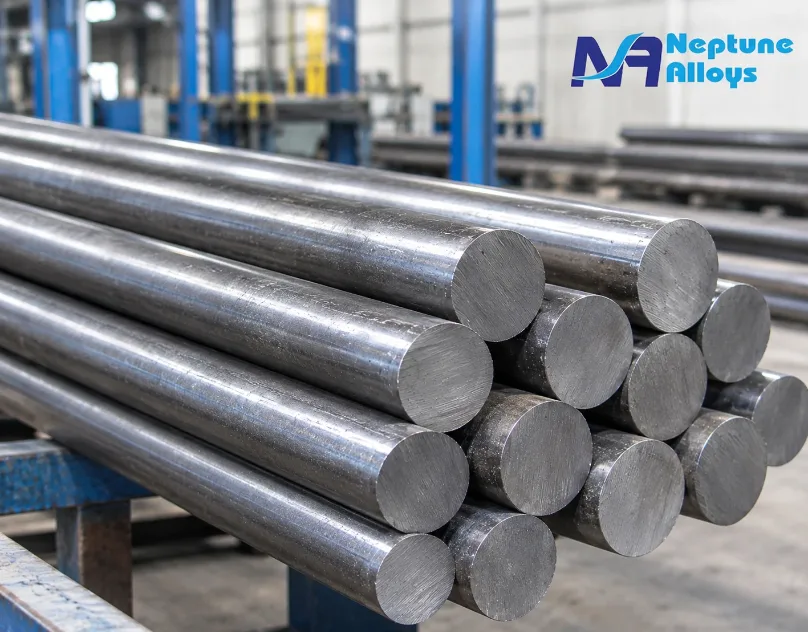
Carbon steel round bars are an important raw material in industries where strength, machinability, and dimensional consistency play a major role in manufacturing. Neptune Alloys caters to industrial material requirements with round bars suited to different engineering and fabrication applications. From automotive components to heavy machinery, the selection of the right grade affects how a finished component performs under load, friction, and regular operating conditions. Understanding the available grades, their properties, and their applications helps buyers make more informed material decisions.
What Makes Carbon Steel Round Bars Suitable for Industrial Work?
Carbon steel round bars are manufactured in cylindrical shapes and are available in different grades, diameters, and lengths. Their mechanical properties depend largely on carbon content, heat treatment, and manufacturing processes.
These bars are commonly selected because they offer a practical combination of strength, machinability, wear resistance, and fabrication flexibility. They can be processed into shafts, pins, fasteners, gears, machine components, and structural parts.
Industries generally consider the following factors before selecting a grade:
- Mechanical strength: Determines how much load the component can withstand.
- Hardness: Important for components exposed to friction and surface wear.
- Machinability: Influences how easily the material can be cut, drilled, and shaped.
- Heat treatment: Helps achieve the required hardness and mechanical properties.
- Dimensional accuracy: Ensures compatibility with the final component design.
Understanding Different Round Bar Grades
Not every round bar is suitable for the same application. EN9 and EN36, for example, have different compositions and are selected for different mechanical requirements. Hastelloy C276 belongs to a completely different alloy category and is used where corrosion resistance is a major consideration.
1. EN9 Carbon Steel Round Bar
EN9 is a medium-carbon steel grade known for its strength and ability to achieve good hardness through suitable heat treatment. It is commonly used in components that experience mechanical stress and moderate wear.
Applications include:
- Shafts and axles
- Industrial rollers
- Machine components
- Agricultural equipment
- Engineering parts requiring higher strength
Businesses sourcing from en9 carbon steel round bar Suppliers should consider the required hardness, heat treatment condition, and machining requirements before choosing the material.
2. EN36 Carbon Steel Round Bar
EN36 is a nickel-chromium case-hardening steel, rather than a conventional carbon steel grade. It is particularly useful when a component needs a hard, wear-resistant outer surface while retaining a tougher core.
Its properties make it suitable for:
- Heavy-duty gears
- Transmission components
- Pinions
- Automotive engineering parts
- High-load machinery components
An en36 carbon steel round bar is often considered for applications where surface durability and core toughness are both important. The final performance depends on the correct carburising and heat-treatment process.
3. Hastelloy C276 ASTM B574 Round Bar
Hastelloy C276 is a nickel-based alloy, not a carbon steel grade. It is recognised for its excellent resistance to corrosion, particularly in aggressive chemical environments.
It is used in chemical processing equipment, pollution control systems, pharmaceutical manufacturing, and industrial equipment exposed to corrosive media.
Hastelloy C276 ASTM B574 Round Bar is relevant when the application requires a specialised corrosion-resistant alloy rather than a conventional carbon steel material.
EN9 vs EN36 vs Hastelloy C276
The following comparison highlights why these materials should be selected according to their actual working conditions.
| Material | Main characteristic | Typical applications |
| EN9 | Strength and achievable hardness | Shafts, rollers, machinery |
| EN36 | Hard case with a tough core | Gears, pinions, transmission parts |
| Hastelloy C276 | Excellent corrosion resistance | Chemical processing, corrosive environments |
The important difference is that EN9 and EN36 are primarily selected for mechanical performance, whereas Hastelloy C276 is selected for its resistance to aggressive chemical conditions.
How to Calculate Round Bar Weight Before Purchasing?
Weight calculation is an important part of material purchasing, especially when ordering round bars in bulk. It helps estimate the required quantity, transportation costs, and overall material budget.
A standard approximate formula for calculating the weight of a steel round bar is:
Weight per metre (kg) = Diameter² ÷ 162.2
Here, the diameter is measured in millimetres.
For example, a round bar with a 25 mm diameter has an approximate weight of:
25 × 25 ÷ 162.2 = 3.85 kg per metre.
Referring to a Round bar Weight chart can make calculations easier when comparing different diameters and lengths. Actual weight may vary depending on material density and dimensional tolerances.
What Should Buyers Check Before Ordering Round Bars?
Working with experienced Carbon Steel Round Bar Manufacturers can help businesses identify suitable grades and specifications for their requirements. However, buyers should also pay attention to the following details:
- Confirm the material grade and chemical composition.
- Check diameter, length, and dimensional tolerances.
- Ask for material test certificates where required.
- Verify the heat treatment condition.
- Compare surface finish and manufacturing quality.
- Confirm stock availability and delivery schedules.
Reliable Round Bar Suppliers in India can help industrial buyers source materials for different engineering and manufacturing requirements. Choosing the right supplier also makes repeat purchasing and material planning easier.
Industrial Applications Where Round Bars Play an Important Role
Round bars are used across several sectors because they can be machined into components of different shapes and sizes.
Some common applications include:
- Automotive industry: Axles, shafts, gears, and transmission components.
- Heavy engineering: Machine parts, rollers, and industrial equipment.
- Construction: Fabricated components and mechanical assemblies.
- Agricultural machinery: Equipment parts, pins, and connecting components.
- General manufacturing: Fasteners, tools, shafts, and precision-machined parts.
The appropriate grade depends on the operating load, exposure conditions, required hardness, and expected service life of the finished component.
Frequently Asked Questions About Carbon Steel Round Bars
1. Which carbon steel grade is suitable for manufacturing shafts and gears?
EN9 is commonly used for shafts and mechanical components requiring good strength. EN36 is preferred for certain gears and transmission parts where a hard outer case and tough core are needed.
2. Does EN36 belong to the same category as EN9?
No. EN9 is a medium-carbon steel, whereas EN36 is a nickel-chromium case-hardening steel. Their compositions and heat-treatment requirements are different.
3. How does round bar diameter affect its weight?
The weight increases with the square of the diameter. For the same material and length, doubling the diameter results in approximately four times the weight.
4. Can Hastelloy C276 replace carbon steel round bars?
Not as a direct substitute. Hastelloy C276 is a specialised nickel-based alloy intended for demanding corrosive environments. Its selection depends on chemical exposure, temperature, and engineering requirements.
Conclusion
Selecting a round bar involves more than comparing grades or purchasing based on availability. Understanding the differences between EN9, EN36, and specialised alloys such as Hastelloy C276 helps businesses match materials to their actual operating requirements. Weight calculations, dimensional checks, heat-treatment conditions, and material certification also play an important role in purchasing decisions. With the right material specifications and a dependable supply source, manufacturers can maintain consistency in their production and engineering operations.