
Introduction
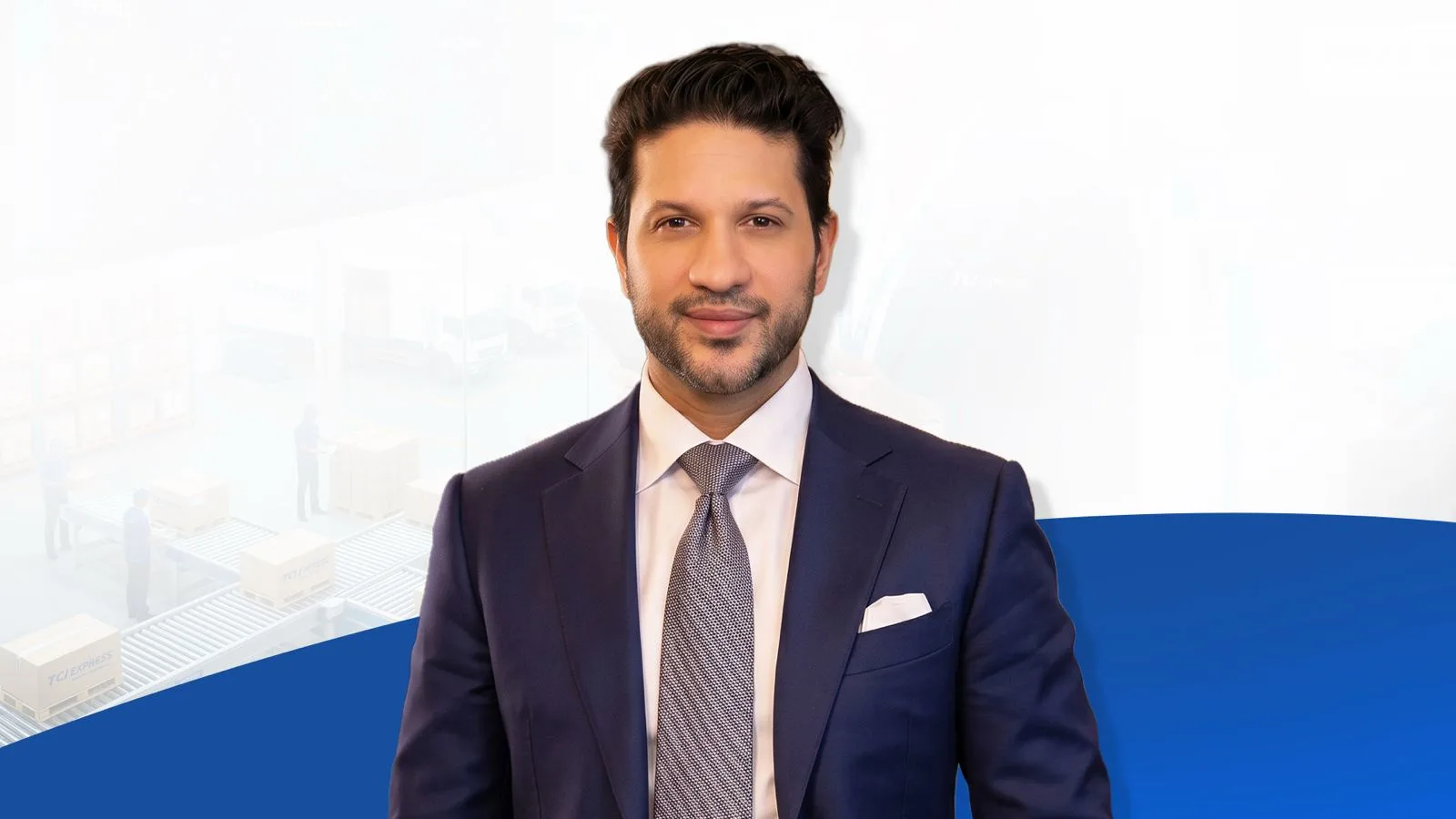
Chander Agarwal has built his professional career around an industry where reliability, connectivity and operational discipline are essential. As Managing Director of TCI Express, he operates within a logistics environment that is becoming increasingly important to India's economic development. Businesses today depend on supply chains that can connect manufacturers, distributors, retailers, e-commerce platforms and customers across a geographically diverse market. As these networks become more complex, logistics leadership increasingly requires an understanding of how infrastructure, technology, transportation and business continuity work together.
Chander Agarwal's professional background provides a useful perspective on this changing environment. His experience includes exposure to operations, logistics and marketing within the TCI Group, as well as international logistics experience with Transfreight USA, where he gained exposure to lean logistics and supply-chain management. His formal education and executive management programmes have complemented this practical experience. TCI Express Executive Leadership Dossier
At TCI Express, his responsibilities include strategic development and financial direction. The company's development has increasingly involved building an integrated express logistics platform supported by physical connectivity, multimodal transportation, technology-enabled services and modern sorting infrastructure. In this context, Chander Agarwal's leadership can be examined through a central theme: how a logistics organisation develops resilience by creating stronger connections between its people, processes, infrastructure and customers.
Understanding Resilience in Modern Logistics
Logistics resilience is sometimes associated only with responding to major disruptions, but its practical meaning is broader. A resilient logistics network is one that has the processes, infrastructure, information and alternatives required to continue serving customers as operating conditions change. It is therefore closely connected with planning and everyday execution rather than being limited to exceptional circumstances.
TCI Express Insights recently explored this subject in an article on building logistics resilience in a dynamic market. The article explains that resilience involves maintaining the movement of essential goods and information when costs, capacity or operating conditions change. It also highlights process discipline, planning, visibility and multimodal choices as important components of a resilient logistics approach. TCI Express Insights – Building Logistics Resilience
For an express logistics company, this approach has practical significance. Shipments move through multiple stages, and every stage has to connect with the next. A strong pickup network has limited value if processing capacity is insufficient. A sophisticated tracking platform cannot compensate for weak physical connectivity. Similarly, a large transportation network becomes more effective when it is supported by reliable information and well-defined operating processes.
This interconnected nature of logistics is central to understanding modern leadership in the sector.
Chander Agarwal's Foundation in Supply-Chain Management
The foundation of Chander Agarwal's professional approach can be traced to his early exposure to different parts of the logistics business. According to TCI Express's corporate material, he joined the TCI Group as a summer intern and subsequently worked across departments including operations, logistics and marketing. This gave him exposure to several key functions rather than limiting his experience to a single area of business management. TCI Express Managing Director Profile
His subsequent experience with Transfreight USA during 2001–2002 added an international dimension to this foundation. Transfreight specialised in third-party logistics and lean logistics for Toyota Motor Vehicles USA. This provided exposure to supply-chain processes where coordination, efficiency and disciplined execution were important considerations.
Such experience is relevant to express logistics because the industry depends on the efficient movement of both physical shipments and information. A parcel may pass through pickup, sorting, transportation, destination processing and delivery before the customer receives it. Each stage has to function as part of a connected process.
This operational understanding provides useful context for Chander Agarwal's subsequent leadership responsibilities. Strategic decisions in logistics ultimately have to work within the realities of physical operations.
From Process Discipline to Organisational Scale
One of the major challenges in logistics is maintaining process consistency as the network becomes larger. A small network can sometimes rely on relatively simple coordination, but a nationwide express system requires much more structured processes.
TCI Express has developed an extensive network serving more than 60,000 locations, supported by sorting stations, air gateways, vehicles and operating personnel. TCI Express Official Enterprise Portal
The significance of this network is not simply its size. Its value comes from the connections between its different components. A customer in one part of India needs to be able to send a shipment to a recipient in another part of the country through a coordinated sequence of activities. This requires branches and pickup points, transportation routes, sorting facilities, technology platforms and destination delivery capabilities to work together.
As Managing Director, Chander Agarwal's strategic responsibility includes helping guide this type of organisational development. The larger the network becomes, the greater the importance of standardised processes and coordinated decision-making.
This is where principles associated with lean logistics remain relevant. The tools and technologies may change, but the need to minimise unnecessary complexity, improve process flow and focus resources on customer requirements remains fundamental.
Infrastructure as the Foundation of Reliability
Technology has changed logistics significantly, but physical infrastructure remains fundamental. Goods still need to be collected, transported, sorted and delivered. The quality of this physical infrastructure directly influences the ability of a logistics company to process shipments efficiently.
TCI Express has continued to develop its sorting and transportation infrastructure as part of its broader operating network. The company has invested in automated sorting facilities, including its GIGA sorting centres in Pune and Gurugram, while also developing and upgrading other facilities across its network.
Its corporate information also highlights the importance of sorting stations and gateways in supporting express distribution. These facilities act as points where shipments are consolidated, processed and directed toward their next destination.
The development of such infrastructure requires long-term planning. Capacity has to reflect current demand while also providing room for future growth. Location is important because sorting facilities need to connect efficiently with transportation routes and major markets. Technology has to support the physical process rather than operate separately from it.
Chander Agarwal's role in strategic development therefore includes an infrastructure dimension. Building a resilient express network requires investment in physical capabilities that can support consistent operations over time.
Technology and the Visibility of Supply Chains
The modern logistics customer increasingly expects information to accompany the shipment. Knowing that a package has been dispatched is no longer enough. Businesses often need to understand its current status, obtain delivery confirmation and integrate shipment information into their own systems.
TCI Express has developed technology-enabled services including shipment tracking, electronic proof of delivery, automated management information systems, customer login facilities, online payment capabilities and API interfaces. These services provide customers with digital access to information associated with their logistics activity.
The importance of these systems becomes particularly clear for businesses managing large numbers of shipments. Manual communication becomes difficult to scale when shipment volumes increase. Digital systems can provide a more structured way of accessing information and connecting logistics activity with internal business processes.
Technology also supports resilience because visibility can help businesses understand what is happening within their supply chain. Better information does not remove operational challenges, but it can help organisations identify situations earlier and make informed operational decisions.
This makes digitalisation an important part of modern logistics leadership. The objective is not simply to introduce technology but to ensure that technology strengthens the underlying operating model.
Multimodal Capability and Supply-Chain Flexibility
Another important component of resilience is flexibility in transportation. Different businesses have different requirements, and even the same business may need different transportation options depending on shipment urgency, destination and cargo characteristics.
TCI Express has developed a multimodal service portfolio covering Surface Express, Domestic Air Express, International Air Express and Rail Express, alongside specialised offerings such as E-Commerce Express and C2C Express. TCI Express Express Services
The availability of multiple modes can provide businesses with greater flexibility in designing their transportation requirements. Surface transportation can support broad domestic movement, air services can support time-sensitive requirements, and rail provides another option for appropriate shipments. International air express extends the network into cross-border logistics.
Managing a multimodal platform requires coordination. Each mode has different operating characteristics, and the customer experience depends on how effectively shipments move between different stages.
This is why multimodal logistics is not simply a matter of offering several services. It requires an integrated operating system capable of connecting them.
E-Commerce and the Need for Distributed Logistics
The rise of e-commerce has changed the traditional relationship between businesses and logistics providers. Previously, many supply chains were designed primarily around movement between manufacturers, distributors and retail outlets. E-commerce has added millions of individual delivery destinations to the equation.
TCI Express has developed an E-Commerce Express service to support this environment. The company highlights coverage across more than 29,000 pin codes for its e-commerce operations. TCI Express E-Commerce Express
This kind of distributed logistics requires a fundamentally different approach to network planning. Deliveries may originate from different warehouses, move through different sorting locations and ultimately reach individual customers across a wide geographic area.
For businesses, the logistics provider becomes part of the customer experience. Delivery reliability, visibility and geographic coverage can influence how customers perceive the overall purchasing process.
The development of e-commerce logistics therefore demonstrates why network scale, technology and process discipline need to work together. Chander Agarwal's leadership at TCI Express takes place within this broader transformation of the Indian logistics ecosystem.
Supporting India's Manufacturing and Business Networks
Logistics also plays a central role in India's manufacturing and industrial development. Manufacturers increasingly operate through networks involving suppliers, production facilities, distributors and customers located in different parts of the country.
This creates demand for dependable business-to-business logistics. A component may need to move from a supplier to a manufacturing facility, finished products may need to reach distribution centres, and replacement parts may need to reach customers or service locations.
TCI Express provides logistics solutions across sectors including automotive, pharmaceuticals, retail, e-commerce, telecom and other business segments. Its specialised vertical approach allows the company to address different industry requirements through its express logistics capabilities.
The importance of this model lies in understanding that logistics requirements are not identical across sectors. Pharmaceutical shipments may involve different handling considerations from automotive components. E-commerce requires extensive last-mile connectivity, while telecom deployments may involve the movement of equipment to geographically distributed sites.
Strategic logistics leadership therefore requires awareness of the specific requirements of different customer segments.
International Connectivity and the Singapore Perspective
The increasing internationalisation of Indian business is creating another dimension of logistics demand. Companies entering overseas markets need dependable connections for goods, documentation and supply-chain coordination.
Chander Agarwal's international exposure provides context for this development. His professional experience includes international logistics, while TCI Express has developed international express capabilities as part of its service portfolio.
In September 2026, Chander Agarwal participated in the India-Singapore Business Forum in Singapore as part of an Indian business delegation. According to TCI Express Insights, his participation included discussion around cross-border movement, resilient supply chains and efficient trade corridors. TCI Express at the India-Singapore Business Forum
These subjects are closely connected to the future of international logistics. Trade depends not only on agreements between businesses but also on the practical ability to move products efficiently between markets.
For Indian companies seeking international growth, logistics connectivity can therefore become an important part of their broader business infrastructure.
A Leadership Perspective Shaped by International Experience
International exposure can broaden a logistics leader's understanding of how different supply-chain environments operate. Infrastructure, transportation systems, business practices and customer expectations vary between markets.
Chander Agarwal's experience with Transfreight USA provided an early opportunity to observe logistics within the United States. His subsequent professional association with international business has further contributed to this broader perspective.
His formal education also includes a Bachelor of Science from Bryant College in Rhode Island. His professional profile records participation in executive management programmes including Harvard Business School's Owner/President Management programme, as well as programmes associated with the National University of Singapore and INSEAD. TCI Express Executive Leadership Profile
This combination of international exposure, practical logistics experience and management education provides a broad foundation for leading a business operating in an increasingly connected industry.
Sustainability as Part of Responsible Growth
Sustainability has become an increasingly important consideration for logistics companies because the sector operates significant physical infrastructure and transportation networks. Responsible growth therefore involves considering not only commercial expansion but also the efficient use of resources, workplace practices and environmental management.
TCI Express's recent corporate disclosures identify sustainability and environmental stewardship among its areas of focus. The company has also received sustainability-related recognition, including the Times Now Sustainable Organization recognition listed in its corporate awards information. TCI Express Awards and Recognitions
For Chander Agarwal, sustainability forms part of a broader leadership environment that also includes financial discipline, operational development, technology and corporate governance.
The important point is that responsible growth is multi-dimensional. A logistics company needs to maintain efficient operations, invest in people and infrastructure, manage resources responsibly and continue developing its service capabilities.
Recognition for Leadership
Chander Agarwal's professional work has received recognition from established business platforms. TCI Express's official awards information identifies ET Young Industry Leader – 2025 (Mr. Chander Agarwal) among its individual leadership recognitions. tciexpress.in
The recognition is distinct from awards received by TCI Express as a company. This distinction is important when discussing professional achievements because corporate awards and individual leadership recognitions represent different forms of recognition.
The recognition also forms part of a broader professional record that includes industry participation, international engagement and long-term involvement in the express logistics sector.
Rather than viewing an individual award in isolation, it can be considered alongside the responsibilities associated with leading a nationwide express logistics business through a period of significant technological and structural change.
Industry Participation and the Wider Logistics Ecosystem
Logistics leadership extends beyond the boundaries of an individual company. Industry associations and professional forums provide opportunities for business leaders to engage with broader developments affecting transportation and supply chains.
Chander Agarwal's professional profile records his association with the Express Industry Council of India and participation in its management committee. This involvement adds an industry-level dimension to his corporate role.
Such participation is relevant because the express logistics sector operates within a larger ecosystem that includes transportation infrastructure, technology companies, airports, railways, manufacturers, retailers, e-commerce businesses and international trade partners.
Business leaders who participate in wider industry discussions gain an opportunity to understand developments beyond their own organisations. At the same time, their practical experience can contribute to discussions about the evolving needs of the sector.
The Importance of Long-Term Capability Building
A resilient logistics network cannot be created through one investment or one initiative. It develops over time through the combination of infrastructure, technology, people, processes and network design.
TCI Express's development reflects this long-term approach. Its network expansion has been accompanied by investment in sorting infrastructure, technology-enabled customer services and multimodal transportation capabilities.
In FY2026, the company reported handling more than one million tonnes of cargo while continuing to expand its logistics capabilities and infrastructure. Its corporate communications also highlighted continued adoption of digital logistics solutions and improvements to sorting infrastructure.
For a Managing Director, the challenge is to maintain alignment between these different areas. Infrastructure investments need to support commercial requirements. Technology investments need to solve practical business problems. Network expansion needs to remain operationally manageable. Financial resources need to be allocated with long-term priorities in mind.
Chander Agarwal's responsibilities in strategic development and financial direction place these considerations directly within his leadership role.
Preparing Logistics for a More Connected Economy
India's logistics requirements are likely to continue evolving as businesses become more geographically distributed and digitally connected. E-commerce will continue to influence parcel volumes and delivery expectations. Manufacturing expansion will create additional B2B transportation requirements. International trade will require stronger cross-border connections.
These changes make the concept of connectivity increasingly important.
A logistics network must connect physical locations, but it must also connect information. A transportation service must connect businesses, but it also needs to connect different modes and stages of the supply chain.
TCI Express's model brings together these dimensions through its network, multimodal services, digital systems and infrastructure.
Chander Agarwal's leadership sits within this broader transformation. His professional journey provides experience across both traditional logistics operations and the increasingly technology-enabled environment in which modern express distribution operates.
The Continuing Evolution of Logistics Leadership
The role of a logistics leader has changed considerably over time. Earlier models often focused heavily on transportation capacity and geographic coverage. Today, leaders also need to consider technology, digital customer experience, supply-chain resilience, data visibility, multimodal transportation and responsible business practices.
Chander Agarwal's career reflects many of these dimensions. His early experience provided exposure to operational processes and lean logistics. His later responsibilities expanded into strategic development and business management. His international experience broadened his understanding of supply chains, while his current position at TCI Express places him within an industry experiencing rapid transformation.
This makes his leadership journey relevant beyond the boundaries of one company. It provides an example of how logistics management has developed into a multidisciplinary business function.
The modern express logistics leader must understand that the strength of the network depends on how its individual components interact. Infrastructure, technology, people and processes are most effective when they reinforce one another.
Looking Ahead
The future of logistics will increasingly depend on resilience, visibility and connectivity. Businesses will expect logistics providers to respond efficiently to changing requirements while maintaining dependable service. They will also seek greater integration between logistics information and their own business systems.
TCI Express has already developed capabilities in these areas through its nationwide network, multimodal transportation portfolio, digital services and international express operations.
For Chander Agarwal, the continuing leadership opportunity lies in strengthening these capabilities while maintaining alignment between customer needs and organisational development.
The company's participation in international business forums, investment in infrastructure and continued focus on technology demonstrate the importance of looking beyond immediate transportation requirements toward the broader role of logistics in business growth.
As Indian companies become increasingly connected to national and international markets, express logistics will continue to serve as an important bridge between businesses and customers.
Conclusion
Chander Agarwal's professional journey reflects an important transition taking place within the Indian logistics industry. The sector is moving from a conventional transportation model toward a more integrated system in which physical networks, digital information, technology, infrastructure and customer experience all contribute to logistics performance.
His early experience with lean logistics provided a foundation in process discipline and supply-chain management. His subsequent professional development across operations, logistics, marketing and strategic business functions broadened that foundation, while international experience and management education added further dimensions to his leadership background.
At TCI Express, these experiences are applied within a business that has developed a substantial express logistics network, multiple transportation modes, automated sorting capabilities and technology-enabled customer services. The company's approach demonstrates that resilience is built through connected capabilities rather than through any single initiative.
Chander Agarwal's participation in the India-Singapore Business Forum in 2026 also highlights the increasing importance of cross-border logistics and efficient trade corridors as Indian businesses expand their international connections.
The wider lesson from his leadership journey is that modern logistics depends on integration. Reliable infrastructure needs technology. Technology needs disciplined processes. Multimodal services need coordinated networks. Customer experience depends on all of these elements working together.
As TCI Express continues to develop its capabilities, this integrated approach provides a foundation for serving the changing requirements of India's businesses and supply chains. Chander Agarwal's role as Managing Director places him within this continuing evolution, where the long-term objective is to build logistics systems that are increasingly connected, resilient, efficient and responsive to the needs of a growing economy.