
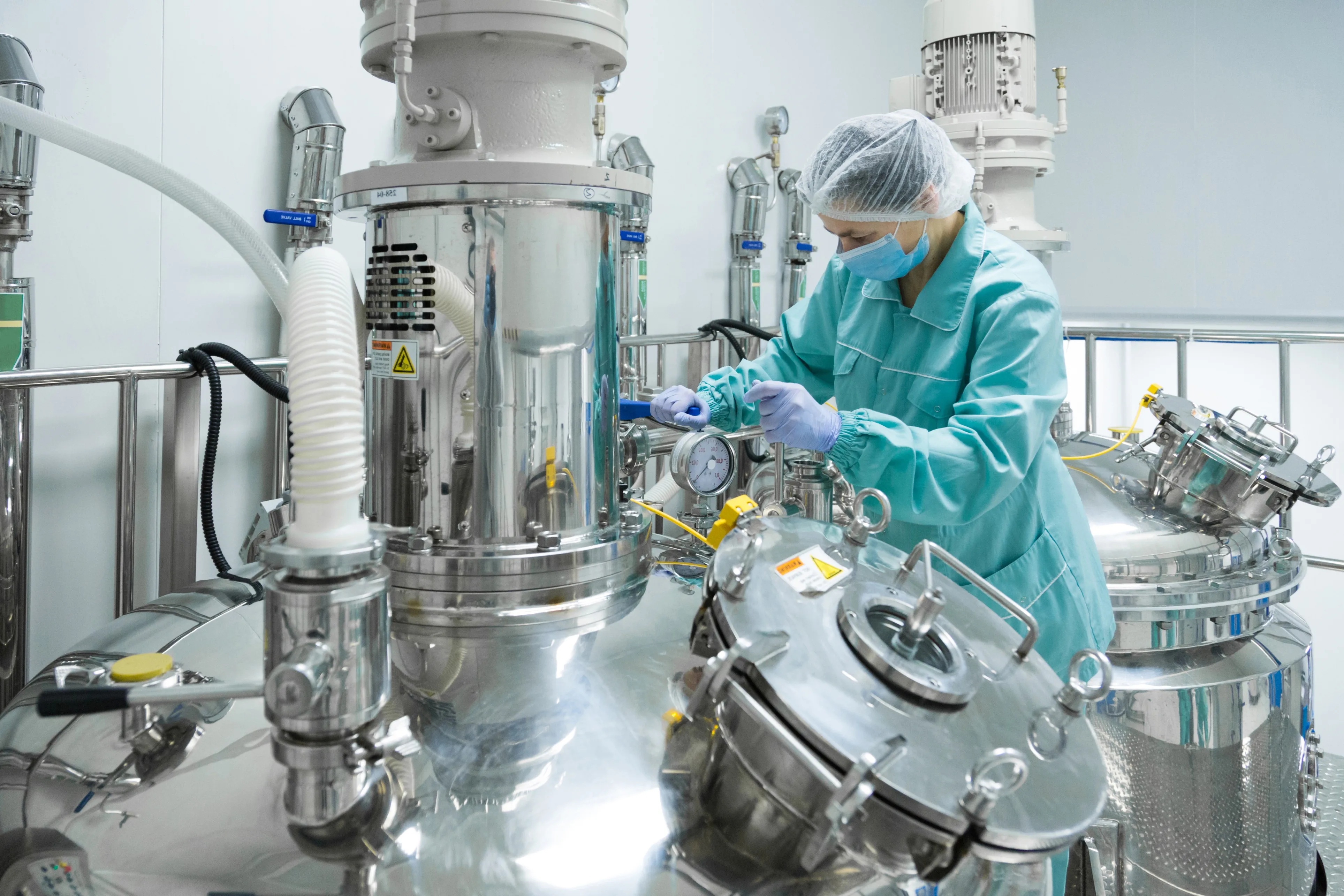
The chemical industry is becoming more specialized, competitive, and technology-driven. Manufacturers are no longer looking only for equipment that can handle a basic production process. They increasingly need machinery designed around their exact operating conditions, product characteristics, production capacity, safety requirements, and long-term business goals.
This shift is creating a growing role for customized process equipment. Reactors, pressure vessels, heat exchangers, storage tanks, columns, dryers, evaporators, filtration systems, and other equipment can be engineered to meet specific industrial requirements rather than relying entirely on standard designs.
Modern Chemical Manufacturing involves complex processes where even small differences in temperature, pressure, material composition, viscosity, residence time, or heat-transfer requirements can affect the final product. A standardized piece of equipment may work for one application but perform poorly in another. Customized equipment helps manufacturers address these differences more effectively.
At the same time, Global Demand for chemicals is creating opportunities for manufacturers to expand production, enter new markets, and improve existing facilities. As production requirements evolve, chemical companies are investing in equipment that provides greater flexibility, efficiency, safety, and process control.
For equipment manufacturers and exporters, this trend represents an important shift. Customers increasingly expect suppliers to understand the process behind the equipment rather than simply sell a machine.
Stalwart International – Chemical Process Equipment Manufacturer & Global Exporter is part of this evolving industrial landscape, providing process equipment solutions for chemical and other process industries.
This article explores why customized process equipment is becoming increasingly important, what benefits it provides, which equipment can be customized, and how this trend is shaping the future of the chemical industry.
What Is Chemical Manufacturing?
Chemical Manufacturing refers to the industrial production of chemical products by transforming raw materials through chemical reactions, physical processes, or a combination of both.
Depending on the application, a chemical production facility may manufacture:
- Industrial chemicals
- Specialty chemicals
- Petrochemicals
- Fertilizers
- Polymers
- Resins
- Solvents
- Dyes and pigments
- Pharmaceutical intermediates
- Agrochemicals
- Coatings
- Adhesives
- Performance chemicals
The production process may involve multiple stages. Raw materials are prepared, mixed, reacted, heated, cooled, separated, filtered, concentrated, dried, and stored before the finished product reaches the next stage.
Every stage can have different operating requirements.
For example, a chemical reaction may require high pressure and precise temperature control, while a separation process may require efficient heat transfer and controlled evaporation. A storage system may need corrosion-resistant construction because of the chemical properties of the stored material.
This complexity explains why customized equipment has become so important.
Why Customized Process Equipment Is Becoming Essential
The move toward customized equipment is not simply a trend. In many applications, it is a practical response to increasingly complex manufacturing requirements.
Several factors are contributing to this shift.
Changing Product Requirements
Customers increasingly expect specialized chemical products with specific performance characteristics. Producing these products can require unique processing conditions.
Greater Production Flexibility
Manufacturers may need to produce different products using the same facility. Equipment therefore needs to support multiple operating conditions.
Stricter Safety Requirements
Chemical plants handle materials that can be corrosive, toxic, flammable, reactive, or hazardous. Equipment must be designed around the risks associated with each application.
Energy Efficiency
Manufacturers are under pressure to reduce energy consumption. Equipment can be customized to improve heat transfer, recovery, and overall process efficiency.
Space Limitations
Existing facilities may have limited installation space. A standard machine may not fit properly, while a customized design can be engineered around the available footprint.
Process Integration
Modern plants rely on interconnected equipment. Customized machinery can be designed to work with upstream and downstream processes more effectively.
These factors are making customized equipment an increasingly important part of modern industrial development.
1. Customized Reactors for Specialized Chemical Processes
Reactors are at the heart of many chemical production facilities.
A reactor provides the environment in which chemical reactions take place. Depending on the application, the reaction may require precise control of temperature, pressure, agitation, feed rate, residence time, or heat removal.
A standard reactor may not provide the ideal conditions for every application.
Customized reactors can be designed according to:
- Required working volume
- Operating pressure
- Operating temperature
- Material compatibility
- Agitation requirements
- Heating and cooling needs
- Reaction time
- Product viscosity
- Corrosion conditions
- Batch or continuous operation
For example, a highly exothermic reaction may require an advanced cooling arrangement to remove heat quickly. A viscous product may require a specially designed agitator to achieve effective mixing.
Customized reactor design allows manufacturers to address these process-specific requirements rather than forcing their process to fit a generic machine.
2. Pressure Vessels Designed for Specific Applications
Pressure vessels are another important category of customized process equipment.
These vessels are used for storing or processing materials under pressure. Their design must consider pressure, temperature, material properties, corrosion, vessel geometry, and applicable engineering standards.
Customization can involve:
- Vessel dimensions
- Wall thickness
- Material selection
- Nozzle arrangement
- Internal components
- Heating or cooling jackets
- Supports
- Insulation
- Agitation systems
- Instrumentation connections
Proper engineering is particularly important when a pressure vessel is used in demanding chemical applications.
A well-designed vessel can improve process reliability while supporting safe and efficient operation.
For international projects, manufacturers must also consider the technical specifications and standards applicable to the target market.
3. Heat Exchangers for Better Energy Efficiency
Heat transfer is one of the most important functions in chemical processing.
Many plants need to heat raw materials, cool reaction mixtures, condense vapors, or recover energy from hot process streams.
Heat exchangers can be customized based on:
- Heat duty
- Flow rate
- Temperature range
- Fluid properties
- Pressure
- Corrosion resistance
- Fouling characteristics
- Available installation space
Customization can help optimize thermal performance for a particular process.
For example, two chemical plants may use similar fluids but have different flow rates and temperature requirements. The ideal heat exchanger design may therefore be different for each facility.
As energy efficiency becomes increasingly important, customized heat-transfer equipment can help manufacturers reduce energy losses and improve overall plant performance.
4. Customized Process Columns
Process columns are commonly used for separation, purification, absorption, stripping, and other operations.
Distillation columns are particularly important in industries where components must be separated based on differences in volatility.
Column design can depend on:
- Feed composition
- Product specifications
- Operating pressure
- Temperature
- Flow rates
- Separation efficiency
- Internal configuration
- Material selection
Customized columns can be engineered with suitable trays, packing, distributors, reboilers, condensers, and other components.
The goal is not simply to build a large column. The objective is to create a system that delivers the required separation performance under the actual operating conditions.
5. Customized Storage Tanks
Storage tanks may appear relatively simple compared with reactors or process columns, but their design can still require significant customization.
Different chemicals have different storage requirements.
Tank design may need to account for:
- Chemical compatibility
- Temperature
- Pressure
- Volume
- Corrosion
- Agitation
- Insulation
- Heating requirements
- Cleaning requirements
For example, a chemical that becomes highly viscous at lower temperatures may require a heating arrangement to maintain suitable flow characteristics.
Similarly, corrosive materials may require specific construction materials or protective systems.
Customized tanks allow manufacturers to address these requirements without compromising storage safety or operational efficiency.
6. Customized Equipment Improves Production Flexibility
One of the biggest advantages of customized process equipment is flexibility.
Modern chemical producers may not manufacture a single product continuously for years. Market conditions can change, customer requirements can shift, and new products may need to be introduced.
A flexible production system can help manufacturers respond to these changes.
Customized equipment can support:
- Multiple products
- Different batch sizes
- Variable feed materials
- Different operating conditions
- Faster changeovers
- Process experimentation
- Future capacity expansion
This flexibility can become a competitive advantage in markets where product demand changes quickly.
Instead of replacing an entire production system, manufacturers may be able to modify operating conditions or equipment configurations to support new requirements.
7. Better Material Selection Through Custom Engineering
Material selection is one of the most important aspects of process equipment design.
Chemical environments can be harsh. Certain substances can cause corrosion, erosion, cracking, contamination, or material degradation.
Customized equipment allows engineers to select materials based on the actual chemical and operating environment.
Potential considerations include:
- Chemical concentration
- Operating temperature
- Operating pressure
- Corrosion rate
- Abrasion
- Product purity
- Cleaning chemicals
- Expected service life
Depending on the application, manufacturers may use different grades of stainless steel, specialized alloys, lined vessels, or other suitable materials.
Choosing the right material can improve equipment reliability and reduce long-term maintenance costs.
The cheapest material is not necessarily the most economical choice. A lower-cost material that fails early can create far greater expenses through downtime, repairs, and replacement.
8. Customized Equipment Supports Automation
Automation is changing how chemical plants are operated.
Modern facilities use sensors, controllers, valves, instruments, and digital systems to monitor and control production.
Customized equipment can be designed with automation requirements in mind from the beginning.
For example, a customized reactor can include suitable connections for:
- Temperature sensors
- Pressure transmitters
- Level instruments
- Sampling systems
- Automated valves
- Control systems
This makes it easier to integrate the equipment into the wider plant automation system.
Rather than adding automation after equipment has already been manufactured, designing the equipment with automation in mind can produce a more integrated solution.
9. Customized Equipment Can Improve Process Safety
Safety is a major consideration in Chemical Manufacturing.
Chemical plants may involve high temperatures, high pressures, hazardous chemicals, flammable materials, and potentially dangerous reactions.
Equipment must therefore be designed around the specific hazards of the process.
Customized engineering can incorporate features such as:
- Pressure relief connections
- Emergency shutdown interfaces
- Temperature monitoring
- Specialized seals
- Appropriate material selection
- Inspection access
- Safety instrumentation
- Controlled heating and cooling
A customized design can also address unusual plant conditions that may not be covered effectively by generic equipment.
However, customization should never mean ignoring recognized engineering standards. Custom equipment must still be properly designed, fabricated, inspected, tested, and documented.
10. Energy Efficiency Is Increasing the Value of Custom Equipment
Energy consumption is a major concern for chemical producers.
Processes such as distillation, evaporation, drying, heating, and cooling can consume substantial amounts of energy.
Customized equipment can be designed to improve energy utilization.
Examples include:
- Improved heat exchanger designs
- Heat recovery systems
- Optimized insulation
- Efficient evaporation systems
- Better process integration
- Reduced pressure losses
In some cases, equipment can be designed so that waste heat from one process becomes useful energy for another.
This approach can reduce energy consumption while improving overall plant efficiency.
As energy costs and sustainability expectations continue to influence industrial decision-making, energy-efficient equipment is likely to remain a major area of investment.
11. Sustainability Is Driving Equipment Customization
Environmental responsibility is becoming an important part of industrial planning.
Chemical producers are increasingly looking for ways to reduce:
- Waste
- Emissions
- Water consumption
- Energy consumption
- Raw material losses
Customized equipment can support these objectives.
For example, specialized filtration equipment may improve product recovery. Advanced evaporation systems may recover useful materials from waste streams. Efficient heat exchangers can reduce energy losses.
Water recovery systems can also be designed around the specific characteristics of a plant's wastewater.
This demonstrates an important point: sustainability does not always require an entirely new production process. In many cases, better equipment design can make an existing process more efficient.
12. Customized Equipment Supports Process Intensification
Process intensification focuses on achieving better performance with more efficient processing systems.
Instead of simply increasing equipment size to increase output, engineers can look for ways to improve:
- Heat transfer
- Mass transfer
- Mixing
- Reaction efficiency
- Separation
- Energy utilization
Customized equipment is often well suited to process intensification because it can be designed around the specific characteristics of the process.
For manufacturers, this can potentially result in smaller equipment footprints, improved throughput, and lower resource consumption.
However, process intensification must be evaluated carefully. A more compact design is not automatically better if it creates maintenance, safety, or operational challenges.
13. Retrofitting Existing Chemical Plants
A large opportunity for customized equipment comes from existing plants.
Many chemical facilities have been operating for years or even decades. Their original equipment may no longer match current production requirements.
Replacing the entire facility is usually expensive and disruptive.
Instead, manufacturers can upgrade selected systems.
Customized equipment can be designed to fit into existing facilities while connecting with current infrastructure.
Examples include:
- Replacement heat exchangers
- New reactors
- Modified storage tanks
- Upgraded process columns
- New filtration systems
- Customized piping connections
- Equipment with modified dimensions
This approach allows manufacturers to modernize production without completely rebuilding the facility.
It is one reason why Global Demand for customized process equipment is not limited to greenfield chemical plants.
14. Customized Equipment Helps Optimize Limited Plant Space
Space is another practical consideration.
Not every chemical plant has the room to install standard equipment.
Existing buildings may have:
- Restricted access
- Low ceiling heights
- Limited floor space
- Existing structural constraints
- Fixed piping routes
- Existing equipment surrounding the installation area
Customized equipment can be designed around these constraints.
Dimensions, nozzle positions, supports, connections, and access points can be adjusted to suit the installation environment.
This is particularly valuable for plant expansion projects where companies want to increase production without constructing an entirely new facility.
15. Modular Customized Equipment for Faster Projects
Customized does not necessarily mean slow or complicated.
Modular process systems can combine customized engineering with standardized manufacturing approaches.
Equipment can be assembled on skids and delivered as integrated modules.
A modular system may include:
- Process vessels
- Pumps
- Valves
- Heat exchangers
- Filters
- Instrumentation
- Control panels
- Piping
The equipment can be tested before shipment and then installed at the customer's facility.
For international projects, modular systems can simplify transportation and installation planning.
As Global Demand for chemical production capacity expands across different regions, modular solutions can help manufacturers deploy processing systems more efficiently.
The Role of Stalwart International in Customized Process Equipment


6
Stalwart International – Chemical Process Equipment Manufacturer & Global Exporter serves industrial customers looking for process equipment for demanding manufacturing applications.
The company's role as a process equipment manufacturer and global exporter is particularly relevant as chemical producers increasingly seek equipment that matches specific process requirements.
Customized process equipment can involve several stages, from understanding application requirements to engineering, material selection, fabrication, inspection, testing, and delivery.
For industrial buyers, this approach can be more valuable than simply selecting equipment from a standard catalog.
Depending on the application, process equipment requirements may involve reactors, pressure vessels, heat exchangers, process columns, storage equipment, and other machinery used throughout industrial production.
The increasing Global Demand for specialized process equipment also makes international manufacturing and export capabilities important for customers developing or upgrading plants across different regions.
Customized Equipment vs. Standard Equipment
The decision between standard and customized equipment should be based on the application rather than assumptions.
FactorStandard EquipmentCustomized EquipmentInitial designFasterRequires engineeringApplicationGeneralProcess-specificFlexibilityLimitedHighInstallation constraintsMay be difficultCan be designed around siteIntegrationMay require modificationsDesigned for integrationSpecial materialsLimited optionsCan be specifiedProcess optimizationModerateHigher potentialInitial costOften lowerMay be higherLong-term optimizationVariablePotentially strongerStandard equipment can be the right choice for straightforward applications.
There is no reason to customize a machine simply for the sake of customization.
However, when process requirements are unusual or complex, forcing a standard machine into an unsuitable application can create bigger problems later.
The correct approach is to compare the total lifecycle cost and performance of both options.
Factors to Consider Before Ordering Customized Equipment
Customization should begin with a clear understanding of the process.
Before contacting an equipment manufacturer, buyers should prepare relevant technical information.
Process Data
Provide details about:
- Process type
- Chemical composition
- Flow rate
- Batch size
- Temperature
- Pressure
- Viscosity
- Required residence time
Material Requirements
Identify the chemicals and determine their compatibility with possible construction materials.
Production Requirements
Define current production capacity and expected future requirements.
Installation Information
Provide available dimensions, access restrictions, connection requirements, and site conditions.
Applicable Standards
Determine which design, fabrication, inspection, and testing standards apply to the project.
Automation Requirements
Identify instrumentation and control requirements in advance.
The better the technical information provided to the manufacturer, the easier it becomes to develop an appropriate equipment design.
The Economic Benefits of Customized Process Equipment
At first glance, customized equipment can appear more expensive than standard machinery.
That comparison is incomplete.
The correct question is not:
"Which machine costs less to purchase?"
The better question is:
"Which solution provides the best total value over its operating life?"
Customized equipment can potentially reduce costs through:
- Better energy efficiency
- Reduced waste
- Higher production efficiency
- Lower maintenance requirements
- Improved product recovery
- Longer equipment life
- Reduced downtime
- Better process control
For a chemical plant operating continuously, even a small efficiency improvement can become financially significant over several years.
This is why equipment buyers should evaluate lifecycle economics rather than focusing exclusively on the initial purchase price.
Challenges of Customized Process Equipment
Customized equipment offers many benefits, but it also creates challenges.
Longer Engineering Time
Custom designs require more engineering work than off-the-shelf equipment.
Higher Initial Cost
Engineering, specialized materials, fabrication, and testing can increase initial costs.
Greater Design Responsibility
The customer and manufacturer must communicate technical requirements accurately.
Complex Approval Processes
Projects may require engineering reviews, drawings, inspections, certifications, and documentation before manufacturing or shipment.
Delivery Coordination
Customized equipment may require careful planning for transportation, site preparation, installation, and commissioning.
These challenges can be managed through proper project planning and communication.
Customization is most successful when the buyer and manufacturer establish clear technical specifications at the beginning of the project.
Future Trends in Customized Chemical Process Equipment
The future of customized process equipment is likely to be shaped by several technologies and industrial trends.
Artificial Intelligence and Data Analytics
AI and analytics can help optimize process conditions and identify equipment performance issues.
Digital Twins
Digital models can help engineers simulate equipment and processes before physical manufacturing.
Advanced Materials
New materials and surface technologies may improve corrosion resistance and service life.
Greater Automation
Equipment will increasingly be designed for integration with automated plant control systems.
Modular Manufacturing
Modular equipment can make customized systems easier to manufacture, test, transport, and install.
Sustainable Engineering
Equipment design will increasingly consider energy efficiency, water consumption, emissions, and waste reduction.
Predictive Maintenance
Sensors and analytics can help identify potential equipment problems before failures occur.
These developments are likely to make customized equipment more intelligent and more closely integrated with the overall production process.
Why Customization Will Remain Important
The chemical industry is moving toward more specialized products, flexible production, efficient operations, and stricter environmental and safety requirements.
These conditions naturally increase the need for equipment designed around specific applications.
A chemical plant is not simply a collection of independent machines. Reactors, heat exchangers, columns, vessels, pumps, filters, tanks, and control systems must work together.
When equipment is properly customized, each component can be designed with the overall process in mind.
This integrated approach can help manufacturers improve efficiency and reduce operational limitations.
As Global Demand continues to evolve, companies that invest in flexible and efficient production systems will be better prepared to respond to market changes.
Conclusion
The role of customized process equipment in Chemical Manufacturing is becoming increasingly important.
Chemical producers face growing pressure to improve efficiency, control operating costs, enhance safety, reduce environmental impact, and respond quickly to changing market requirements. Standard equipment remains suitable for many applications, but increasingly complex processes often require a more tailored approach.
Customized reactors, pressure vessels, heat exchangers, process columns, storage tanks, filtration systems, and modular processing systems can be engineered around specific production requirements.
The biggest advantage of customization is not simply that equipment can be made to different dimensions. Its real value lies in designing the equipment around the process.
Material selection, operating conditions, energy requirements, automation, safety, maintenance, installation limitations, and future expansion can all be considered during the engineering stage.
This makes customized equipment particularly valuable for new facilities as well as modernization and retrofit projects.
The continued Global Demand for chemical products is expected to encourage investment in new production capacity and upgrades to existing plants. At the same time, sustainability and digitalization will push manufacturers toward more intelligent and energy-efficient processing systems.
For equipment suppliers, this changing market creates an opportunity to provide more than machinery. Customers increasingly need engineering knowledge, manufacturing expertise, quality assurance, customization, and international project support.
Stalwart International – Chemical Process Equipment Manufacturer & Global Exporter is positioned to serve this evolving requirement by providing process equipment solutions for chemical and other process industries.
Ultimately, customized equipment should not be viewed simply as a premium alternative to standard machinery. For the right application, it can be a strategic investment that helps a chemical plant operate more efficiently, safely, and flexibly.
As the industry continues to evolve, the ability to engineer equipment around real-world production requirements will become an increasingly important factor in successful chemical processing projects.