
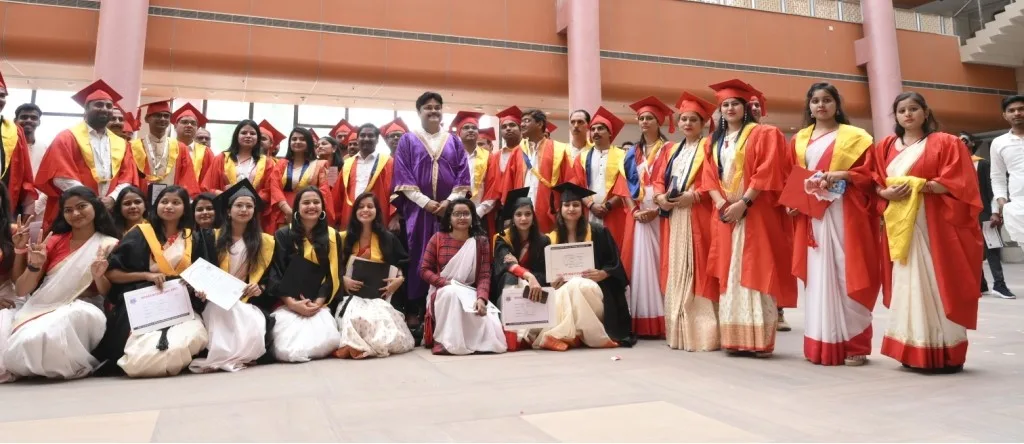
For years, management aspirants across Eastern Uttar Pradesh, Bihar, and neighbouring regions operated under a common assumption: to build a credible corporate career, relocating to tier-1 metro hubs like Delhi NCR, Mumbai, or Bengaluru was non-negotiable. While metropolitan B-schools certainly offer exposure, shifting economic dynamics and rising education costs are prompting students and parents to rethink that default path.
Today, regional commercial centres are experiencing steady industrial, infrastructural, and digital growth. At the heart of Purvanchal, Varanasi has evolved beyond its historic identity as a cultural and spiritual capital into an emerging educational and commercial hub. Enrolling in a well-structured MBA College in Varanasi, such as Microtek College of Management & Technology, enables students to build practical management capabilities, gain regional and national corporate exposure, and graduate with a healthy return on investment—all without taking on the heavy financial burden of metro living.
Whether you are a fresh graduate preparing for your next academic milestone or a young professional looking to accelerate into leadership roles, understanding the evolving landscape of management education in Varanasi can help you make a grounded, career-focused decision.
Why Varanasi Is Gaining Momentum as a Management Education Hub
Over the past decade, improved highway networks, rail connectivity, aviation links, and digital infrastructure have reshaped how businesses operate across Eastern Uttar Pradesh. As trade, logistics, retail, healthcare, hospitality, and financial services expand in the region, the demand for trained managers who understand both modern business frameworks and local market realities has grown significantly.
Studying management in a growing tier-2 economic centre offers distinct advantages:
- Proximity to Emerging Markets: While metro campuses often focus exclusively on large multinational corporations, studying in Varanasi exposes students to fast-scaling MSMEs, family-owned enterprises modernising their operations, and regional distribution networks. Understanding how businesses scale outside saturated metro markets is a valuable skill across banking, FMCG, telecom, and e-commerce sectors.
- Focused Academic Environment: Away from the distractions and long daily commutes of mega-cities, students can dedicate more energy to coursework, skill certifications, case competitions, and faculty mentorship.
- Stronger Regional Alumni Networks: Graduates from established local institutions frequently hold leadership roles across banks, corporate offices, and enterprises throughout Uttar Pradesh and North India, creating accessible networking opportunities for incoming batches.
The Financial Advantage: Measuring True Return on Investment (ROI)
One of the most practical reasons students explore management programmes in Varanasi is return on investment. Pursuing an MBA in a metropolitan city often involves high tuition fees paired with steep expenses for hostel accommodation, food, and daily transit. Many graduates spend the first three to five years of their careers simply servicing education loans.
By contrast, pursuing a management degree in Varanasi significantly lowers total cost of attendance while maintaining accredited academic standards. Graduating without overwhelming debt gives young professionals genuine career freedom—allowing them to choose roles based on long-term learning potential, pursue entrepreneurial ventures, or contribute to expanding a family business without immediate financial pressure.
Core Specialisations and Industry-Aligned Curriculum
Modern business environments rarely reward purely theoretical knowledge. Employers expect MBA graduates to step into roles equipped with analytical clarity, digital fluency, and problem-solving confidence from day one. Reputable management institutes in Varanasi—including Microtek Group of Institutions—structure their two-year curricula around foundational business core subjects in the first year, followed by targeted specialisations in the second year:
- Marketing Management: Covers consumer behaviour, brand strategy, digital marketing analytics, sales channel management, and rural-urban market dynamics.
- Financial Management: Focuses on corporate finance, investment analysis, banking operations, taxation, risk management, and financial modelling.
- Human Resource Management: Explores talent acquisition, organisational behaviour, labour laws, performance appraisal systems, and workplace culture.
- Operations & Supply Chain Management: Addresses inventory optimisation, logistics planning, quality control, vendor management, and process efficiency.
- Information Technology & Business Analytics: Bridges management decision-making with data interpretation, enterprise software tools, and digital transformation strategies.
Beyond classroom lectures, quality programmes integrate case-study discussions, live market research projects, financial simulation exercises, and mandatory summer internships that connect textbook frameworks with real workplace challenges.
Essential Criteria for Evaluating an MBA College in Varanasi
Not every institution delivers the same academic rigour or placement support. Before finalising admission, prospective students should evaluate prospective colleges against five practical benchmarks:
1. Statutory Approvals and University Affiliation
Always verify that the MBA programme holds valid approval from the All India Council for Technical Education (AICTE) and is affiliated with a recognised state or central university, such as Dr. A.P.J. Abdul Kalam Technical University (AKTU). Proper accreditation ensures your degree is recognised nationwide for corporate hiring, government examinations, and higher doctoral studies.
2. Faculty Experience and Mentorship
A strong management department balances experienced academic researchers with faculty members who bring real corporate or consulting exposure. Look for institutions that regularly invite industry practitioners, entrepreneurs, and corporate leaders for guest lectures, workshops, and panel discussions.
3. Practical Skill Development and Corporate Readiness
Technical knowledge alone rarely secures top placement offers. Check whether the institute runs structured training modules in business communication, Excel and data analytics, group discussion techniques, resume building, and mock interviews starting from the first semester rather than waiting until placement season arrives.
4. Internship and Placement Track Record
Look closely at the college’s Corporate Resource Centre or Training and Placement Cell. Institutions like Microtek College of Management & Technology focus on connecting students with recruiters across banking and financial services (BFSI), FMCG, IT services, retail, manufacturing, and consulting—along with dedicated support for securing meaningful summer internships between the second and third semesters.
5. Campus Infrastructure and Learning Resources
A productive management learning environment requires well-equipped computer labs, access to digital journals and business databases, modern seminar halls, and active student-led clubs. Participation in management fests, business plan competitions, and cultural committees builds teamwork and leadership confidence that recruiters value highly.
Preparing Yourself to Maximise the Two-Year MBA Journey
Choosing the right institution lays the foundation, but career outcomes ultimately depend on how proactively a student uses those two years. Aspirants entering an MBA programme can set themselves apart by:
- Building Digital and Analytical Skills Early: Complementing core subjects with certifications in advanced Excel, Power BI, digital marketing, or financial accounting makes a resume stand out immediately.
- Treating Internships Seriously: A six-to-eight-week summer internship often serves as an extended job interview. Delivering measurable results during an internship frequently leads to pre-placement offers (PPOs).
- Reading Business News Daily: Following economic trends, corporate mergers, policy shifts, and industry reports sharpens commercial awareness for interviews and group discussions.
Conclusion
Building a rewarding management career does not require relocating to an expensive metro city or taking on unsustainable financial debt. With the right academic environment, practical industry exposure, and consistent personal effort, students can develop strong leadership and analytical capabilities right in Eastern Uttar Pradesh. Taking the time to research accreditation, curriculum depth, faculty quality, and placement support will ensure you select an MBA programme in Varanasi—such as Microtek College of Management & Technology—that aligns with both your budget and your long-term professional ambitions.