
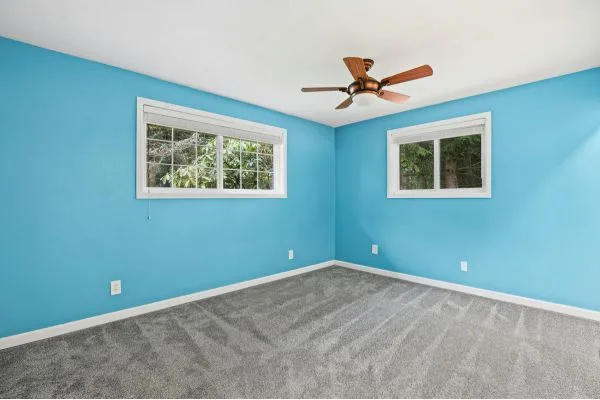
When floor and ceiling space are limited, choosing separate fixtures for lighting and air circulation can make a room feel unnecessarily crowded. Compact ceiling fans with lights combine both functions in one fixture, making them particularly useful for bedrooms, study areas, compact living rooms, apartments, and other spaces where efficient use of space matters.
However, choosing a small fan with an integrated light is not simply about finding the smallest available model. Blade span, motor performance, ceiling height, lighting quality, control options, and room dimensions all influence whether a particular model will work well.
Why Compact Fan-Light Designs Are Becoming Popular
Smaller homes and apartments often require a more thoughtful approach to fixture selection. A large ceiling fan may dominate the room visually, while a separate light fixture can consume additional ceiling space.
A compact fan with an integrated light addresses both requirements through a single installation point. This can create a cleaner ceiling appearance while providing airflow and illumination at the same time.
The combination can be especially practical in:
- Small bedrooms
- Study rooms and home offices
- Compact dining areas
- Children's rooms
- Studio apartments
- Small living spaces
- Corridors or transitional areas where suitable
The key is to select a fan based on the room rather than choosing a model simply because it has a smaller diameter.
What Makes a Ceiling Fan Truly Compact?
The term “compact” generally refers to a fan designed to work efficiently in spaces where a conventional large-blade fan may be unsuitable. Size is important, but it is not the only factor.
A compact ceiling fan may feature:
- A shorter blade span
- A streamlined motor housing
- Integrated LED lighting
- Minimalist blade designs
- Remote or smart controls
- Flush or low-profile installation options
The right size depends on the room's dimensions and layout. Installing an undersized fan in a larger room may result in insufficient air movement, while an oversized fan can look disproportionate in a small space.
How to Choose the Right Size for Your Room
Before purchasing, measure the room rather than relying on appearance alone.
Consider the following:
1. Room dimensions
Calculate the approximate floor area and consider how much of the room needs direct airflow. A small bedroom may need considerably less air circulation than an open-plan living area.
2. Ceiling height
Ceiling height affects both installation and perceived comfort. Low ceilings may benefit from a low-profile or flush-mount design, while rooms with higher ceilings may require an appropriate downrod configuration.
3. Furniture placement
A fan should ideally circulate air across the main occupied area. A beautifully designed fixture may still perform poorly if its position is dictated entirely by an existing light point.
4. Existing electrical points
If replacing an existing fixture, check whether the current mounting location and electrical arrangement are suitable for the new fan.
Don't Judge Performance by Blade Size Alone
One common mistake is assuming that a larger fan automatically provides better airflow. Motor technology, blade angle, blade design, rotation speed, and room conditions all contribute to performance.
For compact spaces, look for a model that balances:
Air circulation + motor efficiency + appropriate blade span + operating noise.
This is particularly important in bedrooms and workspaces, where excessive noise can become more noticeable.
Why Integrated LED Lighting Can Be Useful
The lighting component is one of the biggest advantages of a combined fan-and-light fixture.
Instead of installing a ceiling fan and separate central light, an integrated LED can provide illumination without requiring another ceiling fixture.
Depending on the model, useful lighting features may include:
- Adjustable brightness
- Different colour temperatures
- Dimmable operation
- Energy-efficient LED technology
- Remote-controlled lighting
- Memory functions
For bedrooms and study spaces, adjustable lighting can be more useful than simply choosing the brightest available fixture.
AC or DC Motor: Which Is Better for a Compact Fan?
Motor type is another factor worth researching before making a purchase.
Traditional AC motors are widely used and can offer straightforward operation. DC motor fans, on the other hand, are often designed with energy efficiency, quieter operation, and multiple speed settings in mind.
A DC model may be worth considering if you want:
- Lower energy consumption
- More speed control
- Quieter operation
- Reverse rotation on compatible models
- More precise airflow adjustment
The best choice ultimately depends on usage patterns, electricity costs, required features, and the specific fan's specifications.
Features Worth Looking For
Not every compact ceiling fan needs advanced technology. However, certain features can improve everyday convenience.
Remote control
A remote allows users to change fan speed or lighting without reaching for a wall switch.
Multiple speed settings
More speed options make it easier to adjust airflow according to the weather and room temperature.
Dimmable lighting
This is useful when the same fixture needs to provide bright task lighting and softer evening illumination.
Timer function
A timer can be useful in bedrooms, particularly when the fan is used while sleeping.
Smart controls
Wi-Fi or app-enabled models can integrate with compatible smart-home systems, although these features may not be necessary for everyone.
Where Should You Install a Compact Fan with Light?
Placement can significantly influence performance.
In a bedroom, position the fan so that airflow reaches the main sleeping area without creating an uncomfortable direct draft.
For a study room, the fan should support airflow around the desk and seating area while the integrated light provides adequate illumination.
In a compact dining area, consider how the fan interacts with the dining table, pendant lights, cabinets, and other fixtures.
The installation position should therefore be determined by airflow requirements and room usage, not just by the existing electrical point.
Compact Does Not Mean Basic
Modern small ceiling fans can offer many of the features found in larger models. A compact design may include remote controls, energy-efficient motors, LED illumination, multiple speeds, and contemporary styling.
This makes them suitable for homeowners who want to maximise functionality without making the ceiling visually busy.
For minimalist interiors, a compact fan-light combination can also become part of the overall design rather than looking like an additional utility fixture.
Common Mistakes to Avoid
Before purchasing, avoid these common mistakes:
Choosing purely by appearance:
A stylish fan may not provide sufficient airflow for the intended room.
Ignoring ceiling height:
The wrong mounting configuration can create safety and comfort issues.
Selecting excessive lighting output:
Very bright lighting is not always appropriate for bedrooms or relaxing spaces.
Overlooking noise:
Noise levels matter when the fan is installed near beds, desks, or quiet areas.
Buying without checking specifications:
Always review blade span, motor type, wattage, speed settings, installation requirements, and lighting specifications.
Are Compact Ceiling Fans with Lights Suitable for Small Bedrooms?
Yes, they can be particularly practical for bedrooms where both lighting and airflow are required but ceiling space is limited.
A suitable model can reduce visual clutter while providing two essential functions through one fixture. For a bedroom, however, prioritise quiet operation, controllable airflow, comfortable lighting, and an appropriate size rather than choosing solely based on the fixture's appearance.
A Practical Buying Checklist
Before making a purchase, compare models using this checklist:
- Measure the room
- Check the fan's blade span
- Confirm ceiling height compatibility
- Compare motor technology
- Review airflow performance
- Check noise information where available
- Examine LED brightness and colour options
- Look for dimming functionality if required
- Check remote or smart-control features
- Confirm installation requirements
- Compare energy consumption
- Consider warranty and after-sales support
Final Thoughts
The best compact ceiling fans with lights are not necessarily the smallest models available. They are the ones that provide the right balance of airflow, illumination, size, energy efficiency, and usability for the room.
For smaller interiors, combining two essential ceiling functions into one thoughtfully designed fixture can free up visual space while maintaining everyday comfort. By considering room dimensions, ceiling height, motor performance, lighting requirements, and control features before buying, you can choose a fan that fits the space instead of simply fitting the ceiling.