
Walk into any office today, and you'll still find a drawer full of pens nobody remembers buying, a notepad someone grabbed in a hurry, a stapler that's outlived three job changes. Offices have gone digital in almost every other way, yet corporate stationery hasn't disappeared — it's just changed what it needs to do.
Nobody hands over a chewed-up pen during a client meeting anymore and expects it to reflect well on the company. Small details like that can leave an impression, even when nobody says anything about them.
Linc has watched this shift happen up close, working with offices that range from five-desk startups to floors full of people who've never met each other in person. What used to be an afterthought — bulk-ordered, forgettable, purely functional — is now something businesses actually think about before they buy. The right choices can make everyday work feel a little more organised.
Why Corporate Stationery Still Matters in a Digital Workplace?
It would be easy to assume laptops and shared drives made corporate stationery irrelevant. That's not quite what happened. Meetings still involve notebooks, especially when ideas need to be captured quickly. Signing a contract still involves a pen someone actually notices, especially if it works properly on the first try.
In 2026, the expectation is less about having more stationery and more about having the right stationery — practical, presentable and suited to how people actually work. Small physical details still shape how a workplace feels day to day, even one that runs mostly online — and clients pick up on these details more than most companies realize.
Linc treats this as the point of good corporate stationery — not decoration, but quiet reliability that people stop noticing because it simply works when they need it. That reliability is harder to build than it sounds, and it's usually the first thing people notice once it's gone.
What Belongs in Every Office Supply List?
Ask five offices what they actually restock every month, and the list barely changes from company to company, no matter how different those businesses might otherwise look on paper. It's rarely flashy. It's just consistent, month after month, regardless of how digital the rest of the workflow has become. People notice the difference when those basics are dependable.
- Pens and markers that survive daily use without drying out
- Notebooks and sticky notes for meetings that still happen on paper
- Folders and organisers that keep client documents from turning into a pile
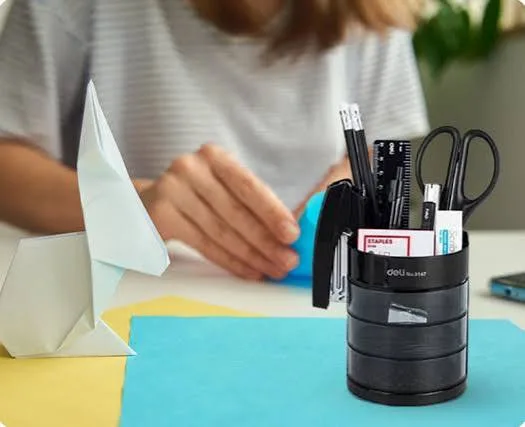
- Desk basics — staplers, clips, scissors — that quietly disappear when missing
These basics form the backbone of any office's corporate stationery order. They're rarely noticed when everything works, but running out of them mid-meeting makes their importance obvious very quickly.
Personalized Corporate Gifts Are Changing How Companies Present Themselves
A branded pen used to be the default gift at every conference table, handed out without much thought about whether anyone would keep it past the parking lot. That's shifted.
Businesses now lean toward personalized corporate gifts that feel considered rather than mass-produced off a shelf — something with a name, a specific colour, a finish that matches how the brand actually wants to be seen, not just whatever happened to be available in bulk that quarter.
For Linc, this shift also creates an opportunity to make corporate stationery more personal, with useful items that can work as personalized corporate gifts rather than one-off promotional pieces. The idea isn't to replace the basics with something fancier — it's to make sure the personal touch doesn't come at the cost of actual usefulness.
Choosing Corporate Gifts for Clients That Actually Get Used
Handing over a gift nobody uses says more about the giver than the receiver probably realizes, and most people can tell within a few seconds whether a gift was actually thought through. Good corporate gifts for clients need to strike a simple balance — professional enough for a business setting and useful enough to stay on someone's desk.
- Pick items with daily function, not just visual appeal
- Match the gift's quality to how the client relationship is actually valued
- Avoid anything that feels like leftover inventory dressed up for the occasion
Linc approaches corporate gifts for clients with this same logic — the goal isn't to impress for five minutes; it's to stay useful for months after the meeting's long forgotten. A gift that stays useful months after a meeting has a much better chance of keeping the brand or business behind it in the client's mind.
How Linc Approaches Corporate Stationery Differently?
Plenty of suppliers can print a logo on a pen. Fewer think about whether that pen will actually still be writing three months later, long after the branding is the last thing anyone remembers about the meeting it came from.
This is where Linc's approach to corporate stationery comes in. The focus is on genuine daily use first — consistent quality across every batch, not just the sample shown during a pitch. Branding and presentation matter too, but they work best when the product itself gets the basics right.
Conclusion
Corporate stationery in 2026 has quietly stopped being a line item nobody thinks twice about. It's part of how a workplace comes across, to the people working there and to clients who only see it for an hour.
Reliable pens, proper notebooks and organised desks still matter, while useful personalized corporate gifts are becoming part of how businesses stay visible beyond the meeting room. Linc's approach reflects this balance, treating function as the foundation and personalisation as the extra layer, not the other way around.
A beautifully branded item that stops working within a month does more damage to a company's image than no gift at all. Good corporate stationery was never about looking impressive — it's about holding up long after anyone's paying attention.