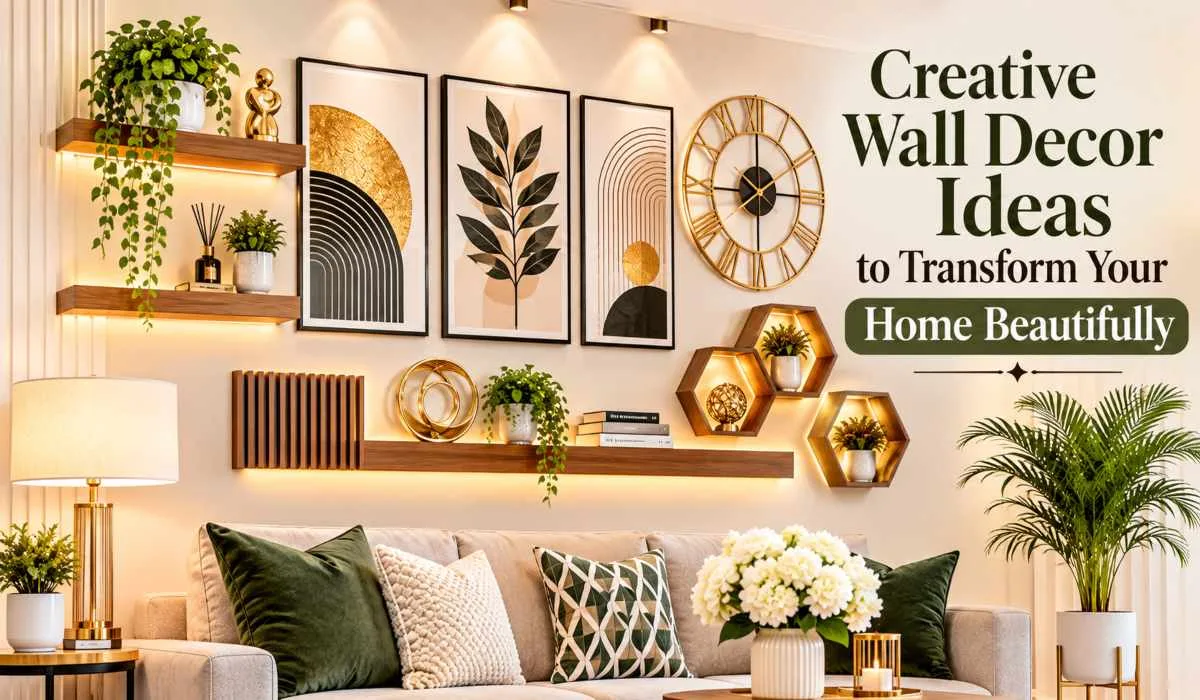

Walls make up most of the visible surface in any home, yet they are often the last thing people decorate. Floors get rugs, sofas get cushions and tables get centerpieces, while the walls stay bare or covered in the same builder-white paint they came with. That is a missed opportunity, because walls shape the first impression of a room and set its mood more than almost any other element.Thoughtful wall decor does several jobs at once. A room with good furniture and bare walls often feels unfinished, while a simpler room with well-chosen art, mirrors and shelves feels warm and complete.
Decorating walls is also one of the most flexible ways to express yourself. You can change a print in minutes, move a mirror to a new wall, or repaint one section over a weekend. Nothing about it needs to be permanent or expensive. This guide covers styles, color, living room and bedroom ideas, gallery walls, budget tips, DIY projects and common mistakes. If you would like more inspiration for styling your home, you can also explore Wall Decor ideas at Nest & Nurture.
Understanding Different Wall Decor Styles
Before hanging anything, it helps to know what style you are drawn to. A clear direction keeps your choices consistent and prevents the scattered, mismatched look that comes from buying pieces one at a time.
Modern and Contemporary
Modern style favors clean lines, simple frames and a limited palette. Walls are often left with plenty of empty space so that each piece can stand out. Abstract art, black-and-white photography and geometric shapes are common choices.
Bohemian
Bohemian decor is expressive and layered. Think woven wall hangings, mixed frames, patterned textiles and plants. This style rewards collecting, so pieces do not need to match as long as the overall feel is warm and relaxed.
Scandinavian
Scandinavian style is light, calm and practical. Walls are usually white or soft neutral, decorated with simple line drawings, botanical prints and light wood frames. The result feels airy and peaceful.
Rustic and Farmhouse
Rustic wall decor leans on natural materials such as reclaimed wood, metal and wicker. Farmhouse style adds cozy touches such as vintage signs, wooden shelves and framed landscapes.
Traditional and Classic
Traditional walls feature symmetrical arrangements, ornate frames, oil-style paintings and decorative molding. This style suits formal living rooms, dining rooms and entryways.
Eclectic
An eclectic home blends styles freely. A modern print can hang beside a vintage mirror and a handmade textile. The key is a unifying thread, such as a shared color, a repeated frame finish, or a consistent level of formality.
Modern Wall Decor Ideas for a Stylish Home
Modern wall decor is popular because it looks polished without feeling crowded. Here are ways to achieve it.
Choose Large-Scale Abstract Art
One large abstract canvas can transform a wall. Choose colors that already appear in the room, such as the tone of your sofa or curtains, so the piece feels connected rather than random.
Use Geometric Elements
Hexagonal shelves, circular mirrors and wall-mounted panels with clean shapes add structure. Repeating one shape across a wall, such as three circles of different sizes, creates a modern rhythm.
Try Textured Surfaces
Modern does not have to mean flat. Wood slat panels, plaster-style finishes and fluted wall panels add depth and shadow without any visible decoration. These work especially well behind a bed, sofa, or dining table.
Mix Metal and Wood Accents
Thin metal frames, brass wall sculptures and wooden floating shelves bring warmth and contrast. Keep finishes consistent. For example, use black frames and matte brass accents throughout one room rather than five different metals.
Embrace Negative Space
Leaving part of a wall empty is a design choice, not a failure. One well-placed piece with breathing room around it often looks more elegant than a crowded arrangement.
Creative DIY Wall Decor Ideas
DIY wall decor is a satisfying way to personalize your home and many projects need only basic tools and inexpensive materials. It also gives you art that is truly one of a kind.
Painted Geometric Shapes
Using painter’s tape and a small sample pot of paint, you can create arches, circles, or stripes directly on a wall. Arch shapes behind a bed or desk look especially popular and modern. Tape the shape carefully, press the edges down and paint with thin coats for crisp lines.
Abstract Canvas Art
Buy a blank canvas and experiment with acrylic paint. Choose three or four colors from your room, apply them in broad strokes or color blocks and let each layer dry. You do not need drawing skills, because abstract designs are forgiving.
Macrame and Woven Hangings
With a cotton cord and a wooden dowel, you can learn a few basic knots and make a textured wall hanging. These add softness and warmth, particularly in bohemian and cozy spaces.
Framed Fabric or Wallpaper Samples
Stretch a beautiful piece of fabric over a canvas frame, or place a wallpaper sample inside a standard frame. This gives you custom art in a pattern you love for very little money.
Pressed Flower Frames
Pressed flowers and leaves placed between two sheets of glass create delicate botanical art. They suit bedrooms, entryways and hallways.
Floating Shelves from Wood
A plain wooden board and sturdy brackets can become a stylish shelf. Sand the surface, apply stain or paint and mount it securely into wall studs or with proper anchors. Safe mounting matters, so check the weight limits of your hardware.
Up-cycled Mirror Frames
An old mirror with a dated frame can look new with a coat of paint, a rope wrap, or a covering of small mosaic tiles. This is a simple way to create a statement piece.
For more ideas on turning blank walls into creative focal points, you can browse more wall decor inspiration and practical home styling guides at Nest & Nurture.
Living Room Wall Decor Ideas
The living room is where guests gather and where you spend much of your free time, so it deserves walls that feel welcoming and well considered. Living room wall decor should balance style with comfort.
Anchor the Sofa Wall
The wall behind your sofa is usually the most visible. Fill it with a large piece of art, a gallery wall, or a pair of matching frames. A good rule is to make the artwork about two-thirds the width of the sofa, so the proportion feels balanced.
Highlight the Focal Point
If your living room has a fireplace or television wall, decide whether to emphasize or soften it. Shelves on both sides of a fireplace, or a framed print above the mantel, can make it a feature. For a television wall, surrounding the screen with shelves, plants and art helps it blend in.
Create a Statement Wall
A deeper paint color, wallpaper, or wood paneling on one wall gives the room depth and character. Choose the wall that your eye lands on first when you enter the room.
Use Mirrors to Bring in Light
A large mirror placed across from a window reflects daylight and makes the room feel brighter and larger. Arched or round mirrors soften the strong lines of furniture.
Add Texture with Hangings
Woven baskets, tapestries and fabric wall hangings add warmth and also help absorb sound, which can make a living room feel calmer.
Mix Art with Functional Pieces
Wall clocks, shelves, hooks and sconces are both useful and decorative. A row of hooks with a woven bag or a hat, for example, adds a casual, lived-in feel.
Bedroom Wall Decor Ideas
A bedroom should feel restful and the walls play a big part in that. Bedroom wall decor works best when it is calming, personal and not overly busy.
Make the Headboard Wall the Hero
The wall behind the bed is the natural focal point. Options include a large piece of art, a painted arch, wood paneling, a fabric headboard that extends upward, or a symmetrical pair of framed prints above matching bedside tables.
Choose Soothing Colors
Soft blues, sage greens, warm neutrals and muted earth tones create a relaxed mood. If you love bold colors, consider using them on a single wall or in small accents so the room still feels peaceful.
Keep Imagery Calm
Landscapes, botanical prints, abstract art in gentle tones and personal photographs suit a bedroom. Very busy or high-contrast images can feel stimulating when you want to wind down.
Add Soft Lighting Features
Wall-mounted reading lights or sconces free up bedside table space and add a cozy glow. Fairy lights draped across a wall or headboard add warmth.

Use Textile Wall Decor
A woven hanging, a framed scarf, or a large tapestry above the bed adds softness and sound absorption, making the room feel quieter and more enclosed.
Include a Personal Display
Photos of loved ones, framed postcards and small mementos make a bedroom feel like your own retreat. Keep arrangements tidy so the space still feels calm.
Gallery Wall Ideas for a Personal Touch
A gallery wall combines several frames into one arrangement and is one of the best ways to show off your personality. It works in living rooms, hallways, staircases, bedrooms and home offices.
Start with a Theme or Thread
A gallery wall looks best when something ties it together. This could be a color palette, a subject such as travel or nature, frame finishes, or a consistent mat style. The thread keeps different sizes and subjects from feeling chaotic.
Plan Before You Hammer
Lay your frames on the floor and arrange them until you like the composition. You can also trace each frame onto paper, cut out the shapes and tape them to the wall to test the layout. This saves you from extra nail holes.
Choose a Layout Style
Grid layout:
Frames of equal size are arranged in neat rows and columns. It is clean and modern.
Salon style:
Frames of many sizes are clustered closely together. It is lively and eclectic.
Linear layout:
Frames sit along a horizontal line, which is good for hallways and above furniture.
Ladder layout:
Frames lean on a long narrow shelf, which makes changing them easy.
Keep Spacing Consistent
A gap of about two to three inches between frames usually looks neat. Consistent spacing makes even a mixed collection feel intentional.
Hang at the Right Height
Aim for the center of the arrangement to sit around eye level, roughly 57 to 60 inches from the floor. If the gallery sits above furniture, leave about six to eight inches between the furniture and the bottom frames.
Mix Art with Objects
Add a small mirror, a woven piece, a shelf with a plant, or a ceramic plate. Variety in material makes the wall more interesting than frames alone.
Let It Grow
A gallery wall does not have to be finished in one day. Start with a few pieces and add to it as you find new items you love.
Affordable Wall Decor Ideas on a Budget
Beautiful walls do not require a large budget. Affordable wall decor depends on creativity and smart choices.
Start with Paint
Paint is among the least expensive ways to change a room. A fresh color, a painted accent wall, or a painted border can create a big impact for the price of a few cans.
Print Your Own Art
Digital art, personal photographs and printable posters can be printed at a local print shop and placed in simple frames. Black-and-white prints in matching frames look polished and cohesive.
Shop Secondhand
Thrift stores, flea markets and online marketplaces often have frames, mirrors and artwork at low prices. A dated frame can be repainted and an unremarkable print can be replaced with something you prefer.
Use What You Already Own
Scarves, fabrics, baskets, hats, vintage plates and old maps can all become wall decor. Items with sentimental value often make the most meaningful displays.
Try Peel-and-Stick Options
Removable wallpaper and wall decals can transform a wall without a permanent commitment, which makes them great for rentals. Follow the manufacturer’s instructions to avoid damage when removing them.
Build Gradually
Rather than buying everything at once, add pieces slowly. Waiting until you find something you truly love gives better results than rushing to fill space.
Frame Creatively
Even simple items such as sheet music, children’s drawings, or pages from old books look intentional in a good frame. A consistent frame style raises the look of inexpensive content.
Choosing the Right Colors and Wall Art
Color and art work together and a few guiding principles make both choices easier.
Understand Color Moods
Warm shades such as terracotta, mustard and soft peach create cozy, energetic spaces. Cool shades such as blue, green and gray create a calm, spacious feel. Neutrals offer flexibility and let art and furniture take center stage.
Match Colors to Room Use
Calm tones suit bedrooms and reading nooks. Livelier tones suit dining rooms and entertainment areas. Light colors help in rooms with limited natural light.
Pairing Wall Colors with Styles
Modern rooms look good with white, gray, or deep charcoal. Scandinavian rooms suit soft whites and pale wood tones. Bohemian rooms can handle richer colors such as deep green, rust and plum. Traditional rooms often pair well with creams, deep blues and warm neutrals.
Test Paint Samples
Colors change with light. Paint a large sample on the wall and look at it in the morning, afternoon and evening before committing.
Choose Art That Feels Right
Wall art ideas are endless, from paintings and prints to photography, textiles and sculpture. Choose pieces that you respond to emotionally, not only ones that match the sofa. Art you love will always feel right in your home.
Consider Scale
Large walls need large pieces or well-planned groupings. Small art on a big wall can look lost. As a general guideline, artwork should cover roughly half to two-thirds of the width of the furniture beneath it.
Pick Frames Carefully
Frames affect the mood. Thin black frames feel modern, natural wood feels warm and gold frames feel classic. Matching frames across a group create a unified look.
Using Mirrors and Shelves for Wall Decoration
Mirrors and shelves are both decorative and practical and they work in almost every room.
Mirrors Add Light and Depth
A mirror reflects light and views, making rooms feel larger and brighter. Place it opposite a window or a pleasing view rather than facing clutter.
Pick Interesting Shapes
Round, arched and organic-shaped mirrors soften straight lines. A cluster of small mirrors can also form a unique wall display.
Mirrors in Specific Rooms
In entryways, a mirror gives you a last check before leaving. In dining rooms, a large mirror adds elegance. In bedrooms, a mirror near a window can brighten the room without feeling like a showpiece.
Floating Shelves for Display
Floating shelves hold books, plants, candles and small art while keeping floor space free. Choose shelf depth based on what you plan to display. Shallow shelves suit picture frames, while deeper ones suit books and plants.
Style Shelves with Care
Group items in odd numbers, vary heights and leave empty space. A balance of books, a plant, a framed photo and one decorative object looks styled without being crowded.
Picture Ledges
A narrow ledge lets you lean frames instead of hanging them. You can swap art without making new holes, which is helpful for renters and for people who like frequent changes.
Pair Mirrors and Shelves
A mirror above a console shelf, or a shelf beneath a mirror, creates a ready-made vignette in hallways and living rooms.
Minimalist Wall Decor Ideas
Minimalist decor is about doing more with less. It focuses on calm, simplicity and intention.
Choose One Focal Piece
One carefully chosen artwork, mirror, or wall hanging often has more impact than a dozen small items. Let it breathe with empty wall space around it.
Stick to a Restricted Palette
Use two or three colors across the wall, art and nearby furniture. Neutral tones such as white, beige, gray and black work well, with a single accent color if you like.
Use Simple Line Art
Single-line drawings, minimal botanical sketches and black-and-white photography suit minimalist rooms. Simple frames in a consistent finish keep the look clean.
Select Natural Materials
A wooden shelf, a woven basket, or a linen wall hanging adds warmth to a minimalist space so it does not feel cold.
Keep Surfaces Clear
Minimalism relies on order. Hide cables, avoid overcrowded shelves and display only items that you love or use.
Edit Regularly
Every few months, remove anything that no longer fits. Minimal walls stay fresh when they are curated carefully.
Wall Decor Ideas for Small Spaces
Small rooms can look stylish and open if you choose and place wall decor wisely.
Go Vertical
Tall shelves, hanging planters and long vertical art direct the eye upward and make ceilings feel higher. Walls are valuable storage and display space when floor space is limited.
Use Mirrors Generously
A large mirror reflects light and creates a sense of depth. Leaning a floor-length mirror against a wall is an easy way to brighten a small bedroom or entryway.
Choose Light Colors
Light shades reflect light and help walls recede, making the room feel more open. If you like dark colors, use them on one wall as an accent.

Keep Art Scaled Appropriately
One medium or large piece usually works better than many tiny ones, which can look cluttered. If you want a collection, hang it as one organized group.
Use Slim Shelves
Narrow floating shelves, picture ledges and wall-mounted hooks save space. They keep items organized without taking up floor space.
Try Multi-Purpose Wall Decor
A wall-mounted desk, a pegboard organizer, or a decorative rack with hooks gives you storage and style together. This is ideal in apartments and studio homes.
Avoid Overcrowding
In a small room, leave some blank wall to give the eye a place to rest. Balance is more important than filling every inch.
Common Wall Decorating Mistakes to Avoid
A few common errors can weaken even a beautiful wall. Knowing them in advance saves time and money.
Hanging Art Too High
Art placed too high feels disconnected from the furniture and the people in the room. Center the artwork around eye level, roughly 57 to 60 inches from the floor.
Choosing the Wrong Scale
Pieces that are too small look lost, while pieces that are too large can overwhelm. Measure the wall and the furniture and cut paper templates to test the size.
Skipping the Plan
Hammering nails before planning can leave unnecessary holes. Arrange the layout on the floor or on paper first.
Ignoring Lighting
Art and shelves need good light. Avoid hanging delicate pieces in direct sunlight, which can fade colors over time and consider a picture light or well-placed lamp for important pieces.
Overcrowding Walls
Too many items create visual noise. Edit your selection and leave space for the eye to rest.
Mixing Too Many Styles Without a Link
Variety is good, but without a common color, frame style, or theme, the result can feel chaotic. Choose one connecting element.
Using Weak Hardware
Heavy mirrors and shelves need proper anchors or wall studs. Always check weight ratings and follow safety guidelines for mounting.
Forgetting the Surrounding Space
Wall decor should relate to the furniture, rugs and curtains near it. A beautiful piece can still look wrong if it clashes with its surroundings.
Tips for Maintaining Beautifully Decorated Walls
Once your walls look the way you want, a little care keeps them that way.
Dust Regularly
Dust frames, shelves and mirrors with a soft cloth every week or two. Dust gradually dulls even the nicest decor.
Clean Gently
Use a slightly damp cloth for painted walls and follow the manufacturer’s directions for special finishes and wallpaper. Clean mirrors with a streak-free glass cleaner applied to the cloth, not directly on the mirror, so liquid does not seep behind the glass.
Protect Art from Damage
Keep artwork away from damp areas, direct heat and strong sunlight. Use glass or acrylic covers where appropriate and check frames occasionally to make sure hangers are secure.
Touch Up Paint
Keep a small amount of leftover paint for scuffs and marks. Prompt touch-ups prevent small flaws from becoming noticeable.
Refresh Seasonally
Swap one or two pieces with the seasons. A botanical print for spring, warmer tones for autumn, or a different throw and wall hanging can make a room feel new without a full redecoration.
Check Hardware Periodically
Make sure nails, screws and brackets remain firm, especially on heavy items such as shelves and large mirrors.
Review and Edit
Every few months, step back and look at each wall. Remove what no longer feels right and move pieces around. A wall should keep evolving along with your life.
Conclusion
Wall decor does not need to be complicated or expensive to make a real difference. By understanding your style, choosing colors and art with care, using mirrors and shelves wisely and avoiding common mistakes, you can turn plain walls into the most personal part of your home. Whether you prefer a clean minimalist look, a layered gallery wall, or a handmade DIY project, the best results come from decorating with intention and patience.Begin with one wall. Hang a mirror, paint a simple shape, or arrange a handful of frames you love and see how the room changes. Each small improvement builds confidence and gives you ideas for the next one. If you want more inspiration, tips and practical guidance as you continue your decorating journey, you can find helpful Wall Decor resources at Nest & Nurture.
Frequently Asked Questions (FAQs)
What are the best wall decor ideas for a modern home?
Modern homes suit large abstract art, geometric shelves, circular or arched mirrors and textured surfaces such as wood slats or plaster-style panels. Keep the palette simple, use clean-lined frames and leave some wall space empty so each piece stands out.
How can I decorate my walls on a budget?
Start with paint, since it offers a big change for a low price. Print your own photos or digital art and place them in matching frames, shop secondhand for mirrors and frames and use items you already own, such as scarves, baskets, or fabric. Building your wall slowly lets you choose pieces you truly love.
How can I make a small room look bigger with wall decor?
Use a large mirror, especially across from a window, to reflect light. Choose light wall colors, hang tall or vertical art to draw the eye upward and use slim shelves instead of bulky furniture. Avoid clutter and leave some open wall space.
Which wall colors work best with different decor styles?
Modern styles pair well with white, gray and charcoal. Scandinavian rooms suit soft whites and pale neutrals. Bohemian rooms can handle richer tones such as deep green, rust, or plum, while traditional rooms often look good in cream, warm neutrals and deep blues. Always test a sample in your own lighting first.
How do I choose the right wall art for my living room?
Choose art that you love and that matches the room’s scale and color palette. A good guideline is to make artwork about half to two-thirds the width of the sofa or furniture beneath it. Hang it so the center sits around eye level and use consistent frames if you are grouping several pieces.