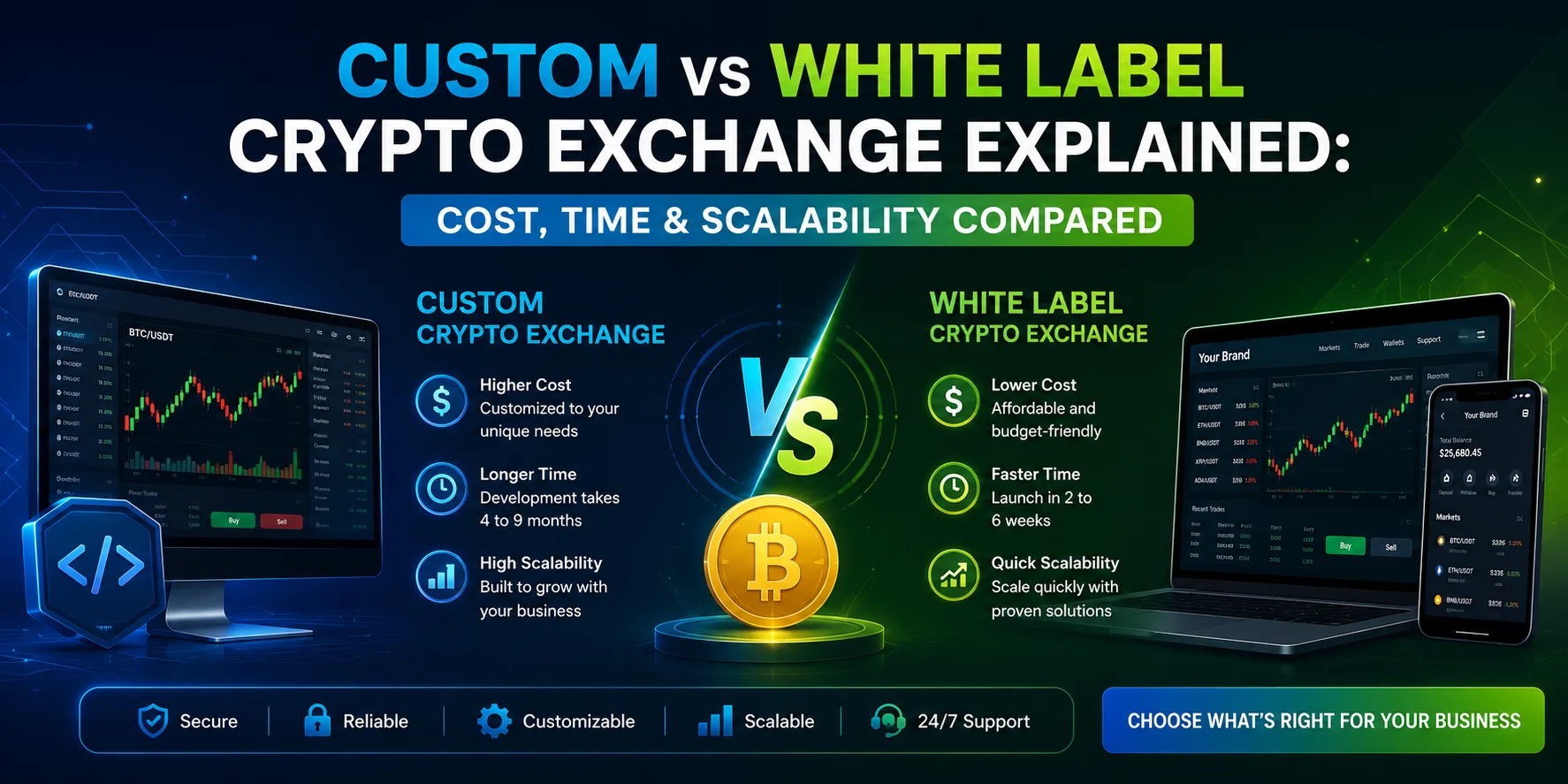
Building a crypto exchange starts with one big choice: go custom and build it from scratch, or go white label and launch on a ready-made platform. Both routes can get you to a successful exchange, just in very different ways. This guide breaks down custom vs white label crypto exchange development in plain language, so you can pick the model that actually fits your business.
What is a Custom Crypto Exchange?
A custom crypto exchange is built entirely around your business, with no shared code from any other platform. The trading engine, wallet system, and admin panel are all designed to your exact specifications.
This option suits businesses that want a unique trading model, full ownership of their source code, and complete control over future upgrades.
What is a White Label Crypto Exchange?
A white label crypto exchange is a pre-built platform that gets rebranded with your name and design. The core trading engine, liquidity setup, and basic security features are already developed and tested.
Many startups choose a custom vs white label crypto exchange development solution to launch quickly, then build out custom features once the business starts gaining traction.
Key Differences Between Custom and White Label
FactorCustom ExchangeWhite Label ExchangeBuild approachBuilt from scratchRebranded existing platformOwnershipFull source code ownershipLicensed softwareDevelopment timeSeveral monthsA few weeksCostHigher upfront investmentLower upfront costCustomizationUnlimitedLimited to provider's setupBest fitUnique business modelsFast market entry
Cost Comparison
White label platforms cost less to launch since the core engine and security layers already exist, ready to be rebranded. Custom exchanges need a bigger initial budget because every module is designed and tested from the ground up.
Over the long run, custom development can balance out, since there are no ongoing licensing fees tied to a third-party provider.
Time to Market Comparison
White label is the faster option by a wide margin. A rebranded platform can be live within weeks. Custom development takes longer, often several months, due to the planning, coding, and security testing involved.
If getting to market quickly is the priority, white label wins this comparison easily.
Scalability Comparison
Custom exchanges are usually built with long-term scalability in mind, since the architecture is shaped around your specific growth plans from the start. Adding new markets or features later is more straightforward.
White label platforms can scale too, but growth is often limited by what the provider's infrastructure supports. This matters most for businesses planning rapid expansion.
Pros and Cons
Custom Development Pros: full control, unlimited customization, strong long-term scalability. Cons: higher cost, longer build time, needs an experienced technical team.
White Label Solutions Pros: fast launch, lower cost, tested security features out of the box. Cons: limited customization, possible dependency on the provider.
How to Choose the Right Option
Think through these points before deciding:
- How soon you need to launch
- How much budget you have available
- Whether your trading model needs unique features
- How important full ownership is to your long-term plans
If speed and lower cost matter most right now, white label is the practical starting point. If long-term control and a unique platform matter more, custom development is worth the extra time.
Conclusion
There is no one-size-fits-all answer in the custom vs white label crypto exchange development decision. It depends entirely on your timeline, budget, and business goals.
Many founders start white label to test the market, then move to custom once demand is proven. Whichever path you choose, the right development partner makes all the difference.