Electricity powers modern living. From homes and hospitals to factories and office towers, every system depends on reliable wires and cables. Safe electrical transmission is no longer just a technical requirement.
It directly affects productivity, safety, and energy efficiency. That is why industries and builders today prefer trusted wire and cable manufacturers in Noida for dependable electrical infrastructure.
Recognised as the lifeblood of global progress, electricity supports every advancement around us.
What Are Electrical Wires and Cables?
People often use the words wire and cable together, but they are different products.
- A wire usually contains a single electrical conductor.
- A cable includes multiple insulated conductors bundled together.
Both products are designed to transfer electricity safely across different environments. Their design and material quality directly influence electrical performance.
According to the International Energy Agency, global electricity demand has grown by nearly 2.2% every year over the past decade. This increasing demand has pushed electrical cable manufacturers to focus more on efficiency, insulation quality, and long-term durability.
Main Components of Cable Construction
Modern electrical cables are carefully engineered for safety and performance. Most cables include four important layers.
1. Conductor
The conductor carries electric current. Copper and aluminium are the most commonly used materials because of their high conductivity.
2. Insulation
The insulation layer prevents electrical leakage and protects users from electric shocks. PVC and XLPE materials are widely used in residential and commercial wiring.
3. Protective Sheath
The outer sheath protects the cable from moisture, dust, chemicals, and external damage.
4. Armouring
Industrial cables often include steel armouring for additional protection in rough working conditions.
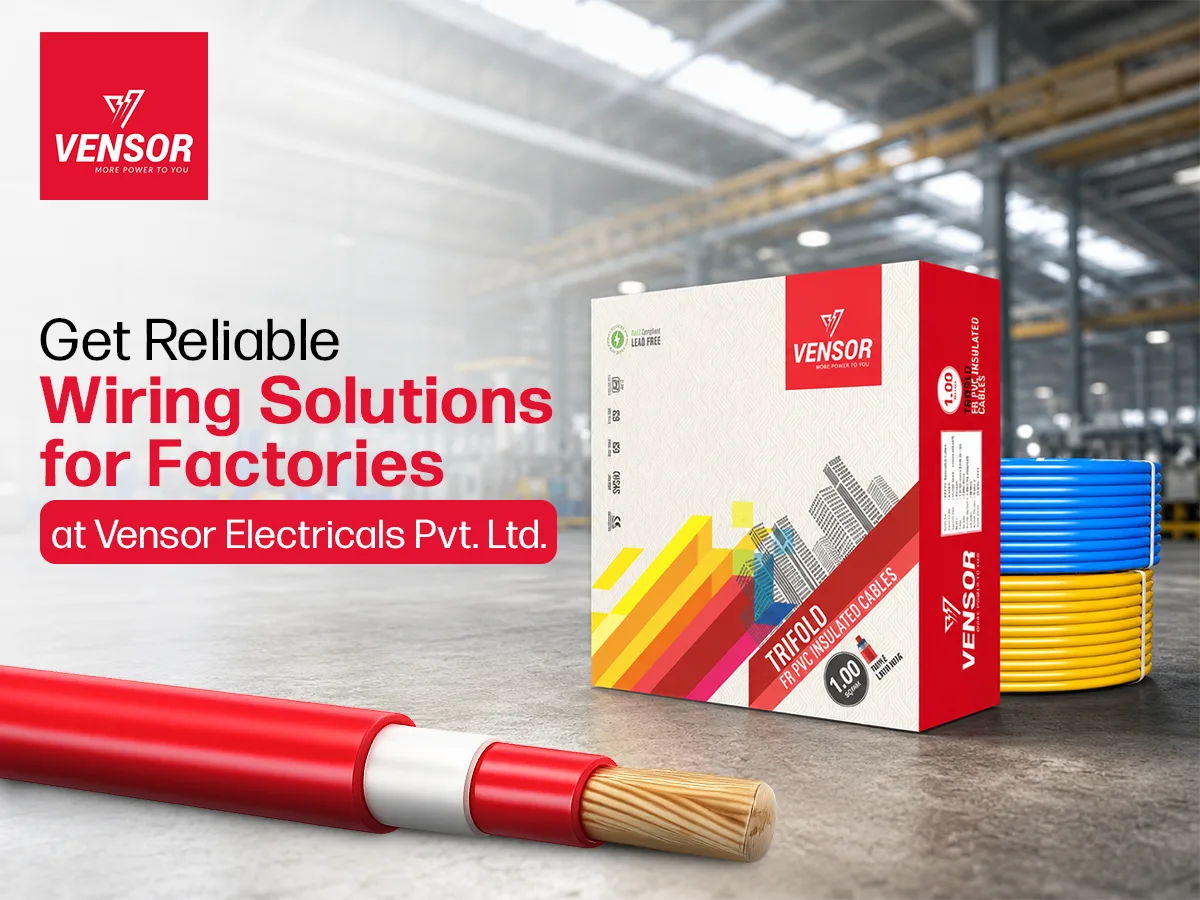
Vensor India Pvt Ltd. focuses heavily on electrical product quality assurance by manufacturing cables that support safer power distribution and long operational life.
Common Categories of Electrical Cables
Different applications require different cable types. Using the correct cable improves safety, reduces maintenance, and increases system efficiency.
PVC Insulated Cables
These cables are widely used in homes, offices, and retail spaces. They offer good flexibility and moisture resistance.
Armoured Cables
Factories, warehouses, and industrial plants use armoured cables because they withstand physical impact and harsh environments.
Flexible Cables
These cables support portable machines, electrical tools, and equipment that require movement during operation.
Fire-Resistant Cables
Hospitals, malls, and commercial towers install fire-resistant cables to maintain electrical supply during emergencies.
Trusted industrial electrical suppliers often recommend cable types based on load capacity, installation conditions, and environmental exposure.
Applications Across Residential and Industrial Sectors
Electrical wires and cables are essential in nearly every industry today.
Residential Use
- Internal house wiring
- Modular switches
- LED lighting systems
- Power distribution boards
Commercial Use
- Office electrical systems
- HVAC connections
- Elevator systems
- Data and communication networks
Industrial Use
- Heavy machinery
- Manufacturing equipment
- Power plants
- Automation systems
Rising demand has increased dependence on reliable wire and cable manufacturers in Noida that deliver certified and high-performance products.
Wrapping Up
Reliable wires and cables form the backbone of every electrical system. Whether powering homes, offices, factories, or commercial buildings, high-quality cables ensure safe, uninterrupted electrical flow.
With advanced products, strong safety standards, and dependable performance, Vensor India continues to support modern electrical requirements across multiple industries.