Direct-to-Film (DTF) printing has become a popular choice for custom apparel businesses, clothing brands, and printing professionals. It offers flexibility, vibrant prints, and the ability to transfer designs onto different types of fabrics. However, one question that often comes up is: Can you use DTF printing without white ink?
The answer is yes, but there are a few things you should understand before choosing DTF without white ink for your printing projects.
At DTG PRO, we understand that getting the right print quality while keeping production costs under control matters to every printing business. Let's take a closer look at how DTF printing without white ink works, where it can be used, and what results you can expect.
What Is DTF Printing Without White Ink?
DTF printing without white ink means printing a design using CMYK colors without adding a white ink layer underneath. In standard DTF printing, white ink acts as a base layer that helps colors appear bright and clear, especially when printing on dark-colored fabrics.
When you remove white ink from the process, the final appearance depends heavily on the fabric color.
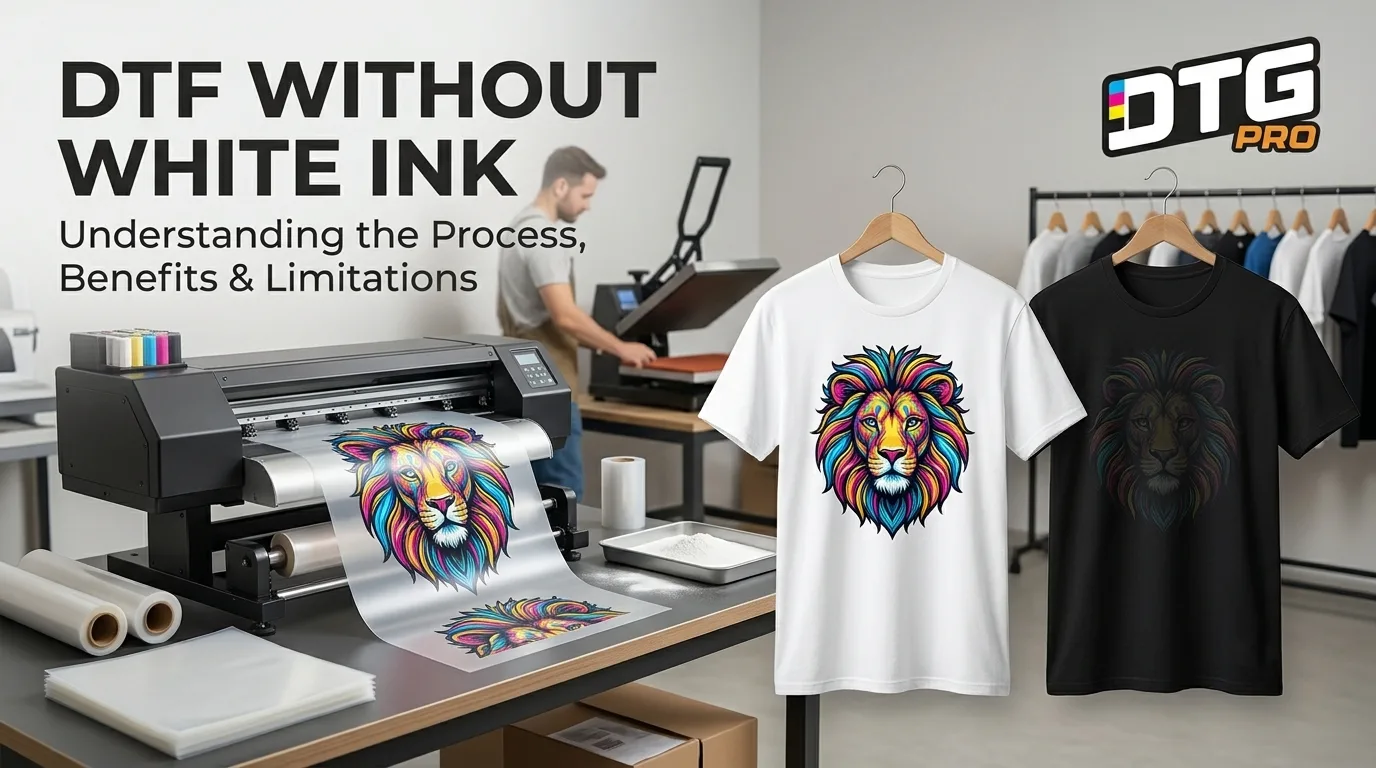
For example, printing a colorful design on a white T-shirt can still produce good results because the white fabric works as a natural background. However, the same design may look dull or almost invisible on a black or dark-colored garment.
This makes DTF without white ink a practical option for specific printing applications rather than every type of garment.
How Does DTF Printing Work Without White Ink?
The DTF printing process without white ink is quite similar to regular DTF printing, except that the white ink layer is not used.
Here is how the process generally works:
1. Prepare Your Design
Create your artwork using a suitable graphic design or printing software. Make sure the design is properly sized and has the correct colors before sending it to the printer.
2. Print Using CMYK Ink
Instead of using CMYK plus white ink, the printer uses only cyan, magenta, yellow, and black inks to produce the design.
3. Apply DTF Adhesive Powder
After printing, the appropriate hot-melt adhesive powder is applied to the wet ink. The powder helps the printed design bond with the fabric during heat transfer.
4. Cure the Transfer
The printed film is heated to cure the adhesive powder according to the recommended temperature and time for your materials.
5. Transfer the Design
Place the transfer onto the garment and use a heat press with the correct settings. Follow the film and powder manufacturer's instructions for peeling and any required post-pressing.
The result is a DTF transfer without a white ink underbase.
Can You Print DTF Without White Ink on Dark Fabrics?
This is one of the most important things to consider.
DTF printing without white ink is generally not suitable for dark fabrics when you want bright, accurate colors.
Since there is no white base layer to separate the CMYK colors from the garment, the fabric color can show through the printed design.
For instance:
- On a white T-shirt, colors can appear clear and vibrant.
- On a light grey T-shirt, colors may look slightly different.
- On a black T-shirt, the design may become very dark or difficult to see.
- On navy blue or other dark fabrics, the original colors may lose their brightness.
If your main goal is printing colorful designs on black or dark garments, standard DTF printing with white ink is usually the better option.
Benefits of DTF Without White Ink
Although white ink plays an important role in traditional DTF printing, there are situations where printing without it can be useful.
1. Reduced White Ink Consumption
One of the biggest advantages of DTF printing without white ink is that it eliminates white ink consumption for those jobs. This can help reduce ink usage when printing suitable designs on light-colored garments.
2. Useful for White Garments
If most of your customers order custom designs on white T-shirts, printing without white ink may be a convenient option.
3. Simplified Printing Process
Without a white ink layer, there is one less printing layer to manage. This can make certain print jobs easier to prepare.
4. Suitable for Selected Printing Applications
Businesses producing custom apparel, promotional clothing, and light-colored fabric products may find DTF without white ink useful for specific designs.
DTF Without White Ink vs. Regular DTF Printing
Understanding the difference between these two methods can help you choose the right printing setup.
| Feature | DTF Without White Ink | Regular DTF Printing |
|---|---|---|
| Ink used | CMYK | CMYK + White |
| White underbase | No | Yes |
| Printing on white fabric | Suitable | Suitable |
| Printing on dark fabric | Limited results | Better results |
| White ink consumption | None for the job | Required |
| Color appearance on dark fabric | Less vibrant | More vibrant |
| Application | Selected light fabrics | Light and dark fabrics |
The right choice depends on your customers, garment colors, design requirements, and production needs.
Is DTF Without White Ink Good for Small Printing Businesses?
For small printing businesses, controlling production costs is always important. If your regular orders mainly involve white or light-colored garments, DTF without white ink may help reduce unnecessary ink consumption.
However, it is important not to choose this method just to save money.
If your customers expect bright colors on black hoodies, dark T-shirts, or colored fabrics, removing the white ink layer can affect the final product. Poor color visibility can lead to customer complaints and reprints.
Before making it part of your regular production process, test the method on different fabrics and designs.
When Should You Use White Ink in DTF Printing?
White ink is essential when you need an opaque base for designs printed on dark or colored garments.
You should consider using white ink when:
- Printing colorful artwork on black T-shirts.
- Creating designs for navy, maroon, or dark green garments.
- Printing white elements in your artwork.
- Maintaining accurate colors across different fabric shades.
- Producing transfers that need strong color visibility.
If your design includes white text, logos, or graphics, remember that CMYK printing alone cannot reproduce those white areas as opaque white ink.
Final Thoughts
DTF without white ink can be a useful printing option, especially for white and light-colored garments. It can reduce white ink consumption and simplify certain printing jobs. However, it is not a complete replacement for standard DTF printing.
The most important thing is to understand where this method works best and where it has limitations.
At DTG PRO, we believe that choosing the right printing method starts with understanding your production requirements. Whether you are running a small custom apparel business or managing a larger printing operation, selecting the right DTF printing process can make a real difference in your results.
If you are exploring DTF printing without white ink, test it with your regular designs and fabric types before using it for bulk production.
DTG PRO – Making Every Print Count.