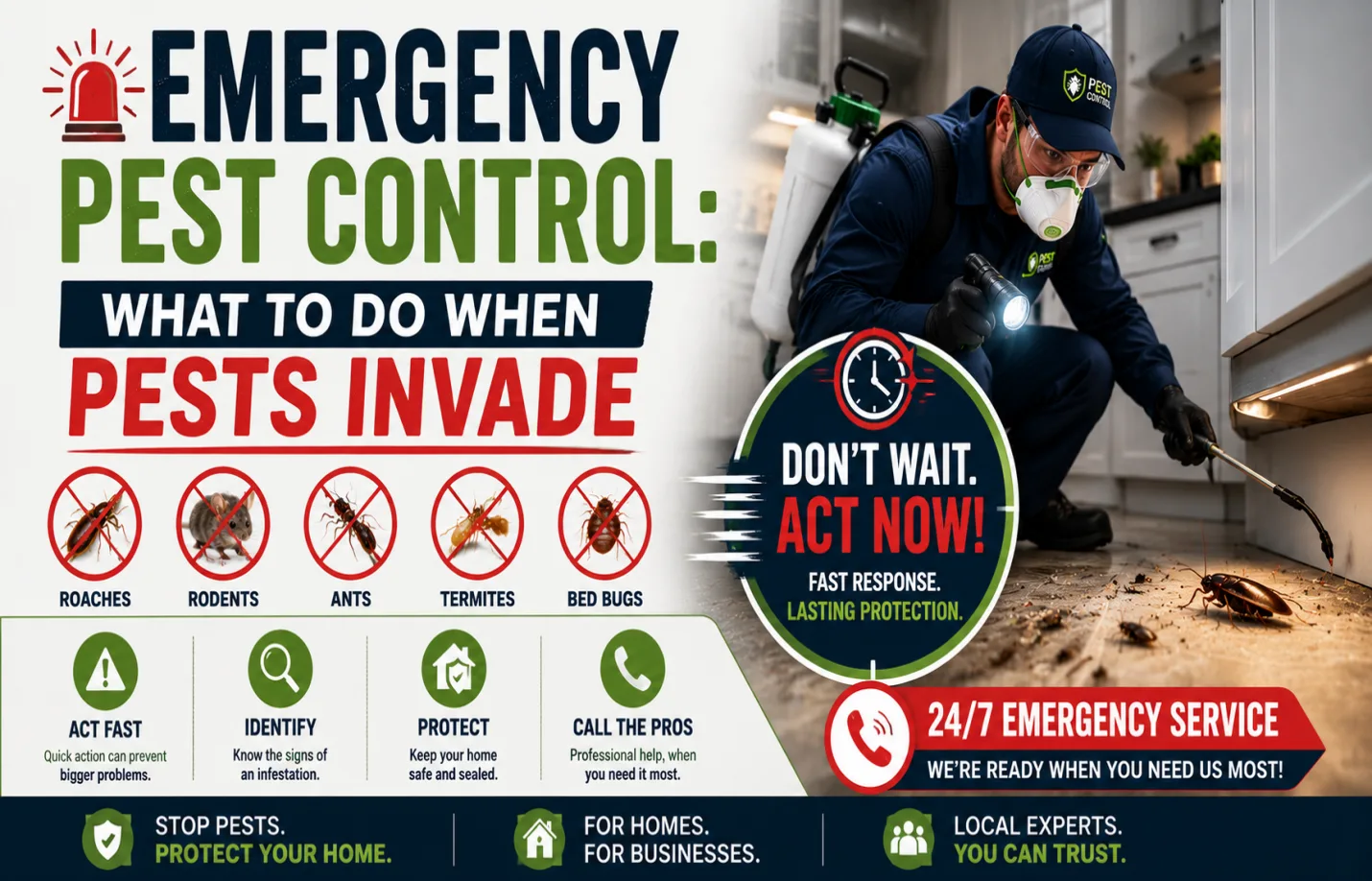
Discovering a pest infestation in your home can be stressful, unsettling, and sometimes even dangerous. Whether you're dealing with rodents in the attic, a swarm of wasps near your front door, or a sudden cockroach infestation in the kitchen, quick action is essential. In situations where pests pose an immediate threat to health, safety, or property, Emergency Pest Control services can provide the fast response needed to address the problem before it escalates.
Knowing what to do when pests unexpectedly invade your home can help minimize damage, protect your family, and ensure the issue is handled efficiently. This guide explains the steps homeowners should take during a pest emergency and why professional assistance is often the best solution.
What Is Considered a Pest Emergency?
Not every pest sighting requires immediate intervention. However, certain situations call for urgent attention due to the risks involved.
Common pest emergencies include:
● Large rodent infestations
● Aggressive wasp or hornet nests
● Bed bug outbreaks
● Cockroach infestations spreading rapidly
● Termite swarms
● Flea infestations affecting pets and family members
● Wildlife entering living spaces
● Venomous spiders inside the home
These situations can quickly worsen if left untreated, making prompt action critical.
Stay Calm and Assess the Situation
The first step during any pest emergency is to remain calm. Panic can lead to poor decisions and increase the likelihood of injury.
Take a moment to evaluate:
● What type of pest is present?
● How many pests are visible?
● Where are they located?
● Is there an immediate threat to people or pets?
● Has property damage already occurred?
Gathering this information will help you communicate effectively with pest control professionals and determine the urgency of the situation.
Protect Family Members and Pets
Safety should always be the top priority during a pest emergency.
Depending on the type of infestation, consider taking the following precautions:
For Stinging Insects
If you discover a wasp, hornet, or bee nest near your home:
● Keep children and pets away from the area.
● Avoid disturbing the nest.
● Close nearby windows and doors.
Attempting to remove a nest without proper equipment can provoke aggressive behavior and lead to painful stings.
For Rodents
If rodents are present:
● Store food securely.
● Avoid contact with droppings or urine.
● Keep pets away from affected areas.
Rodents can spread bacteria and diseases through contamination.
For Cockroaches and Bed Bugs
Limit movement of infested items throughout the home to prevent pests from spreading to new areas.
Avoid DIY Solutions During Severe Infestations
Many homeowners immediately reach for sprays, traps, or store-bought pesticides when pests appear. While these products may provide temporary relief, they often fail to address the underlying problem.
DIY methods can be particularly risky when dealing with:
● Large infestations
● Stinging insects
● Wildlife
● Venomous pests
● Hidden colonies
Improper treatment may scatter pests, worsen the infestation, or expose family members to unnecessary chemical risks.
Professional pest control services are trained to identify the source of the problem and implement effective treatment strategies.
Identify Potential Entry Points
While waiting for professional assistance, inspect your property for possible entry points.
Common pest access points include:
● Cracks in foundations
● Gaps around windows and doors
● Damaged screens
● Roof openings
● Utility line penetrations
● Vents and crawl spaces
If safe to do so, temporarily seal obvious openings to reduce additional pest activity.
However, avoid sealing entry points if active pests may become trapped inside walls or structures.
Document the Infestation
Taking photos or notes about the infestation can be helpful when speaking with a pest control company.
Document:
● Areas where pests were seen
● Damage caused
● Nest locations
● Droppings or evidence of activity
● Approximate number of pests observed
This information can help technicians develop a more effective treatment plan upon arrival.
Contact a Professional Pest Control Service
One of the most important steps in a pest emergency is contacting a qualified pest control provider as soon as possible.
Professional exterminators can:
● Identify the pest species
● Assess infestation severity
● Locate hidden nesting sites
● Recommend appropriate treatments
● Implement safe removal procedures
● Prevent future infestations
Many companies offer same-day or 24-hour emergency services for urgent situations.
The sooner treatment begins, the easier it is to control the infestation and minimize damage.
Common Pest Emergencies and Their Risks
Rodent Infestations
Mice and rats reproduce quickly and can cause significant problems.
Risks include:
● Contaminated food
● Disease transmission
● Chewed electrical wiring
● Structural damage
Rodents often remain hidden until infestations become severe, making professional intervention essential.
Cockroach Infestations
Cockroaches thrive in warm, moist environments and can spread rapidly throughout a home.
Potential dangers include:
● Food contamination
● Allergy triggers
● Bacterial transmission
● Unsanitary living conditions
Prompt treatment is crucial to prevent population growth.
Termite Swarms
Termites can silently destroy wooden structures for months or years before detection.
Warning signs include:
● Swarming insects
● Discarded wings
● Mud tubes
● Hollow-sounding wood
Immediate inspections can help prevent costly structural repairs.
Stinging Insects
Wasps and hornets can become highly aggressive when their nests are disturbed.
Their stings may cause:
● Painful reactions
● Severe allergic responses
● Medical emergencies for sensitive individuals
Professional nest removal is the safest approach.
What to Expect During an Emergency Pest Control Visit
When technicians arrive, they typically follow a structured process.
Inspection
The exterminator evaluates the infestation and identifies affected areas.
Identification
Accurate pest identification ensures the most effective treatment method is selected.
Treatment
Depending on the pest, treatment may include:
● Baits
● Traps
● Insecticide applications
● Exclusion techniques
● Nest removal
● Wildlife relocation
Prevention Recommendations
Technicians often provide guidance on reducing future infestations through sanitation, maintenance, and structural improvements.
How to Prevent Future Pest Emergencies
While emergencies can't always be avoided, preventive measures significantly reduce the risk of infestations.
Maintain Cleanliness
Regular cleaning removes food and water sources that attract pests.
Seal Entry Points
Inspect and repair gaps, cracks, and damaged screens.
Address Moisture Issues
Many pests are attracted to moisture. Fix leaks and improve ventilation where needed.
Store Food Properly
Use sealed containers and avoid leaving food exposed.
Schedule Routine Inspections
Professional inspections can detect early signs of pest activity before emergencies develop.
Why Quick Action Matters
Pest populations can grow surprisingly fast. A small problem today may become a major infestation within weeks.
Delaying treatment can lead to:
● Increased property damage
● Higher extermination costs
● Greater health risks
● Larger pest populations
● More complicated treatment plans
Fast response minimizes these risks and helps restore a safe, comfortable living environment.
Conclusion
Pest emergencies can happen without warning, creating stress and potential dangers for homeowners and their families. Whether you're dealing with rodents, termites, cockroaches, stinging insects, or other unwanted intruders, taking immediate action is the key to minimizing damage and protecting your property.
By staying calm, prioritizing safety, avoiding risky DIY methods, and contacting professional pest control experts promptly, you can effectively manage pest emergencies and prevent them from becoming long-term problems. When pests invade your home, a swift response is often the best defense against costly repairs, health concerns, and ongoing infestations.