
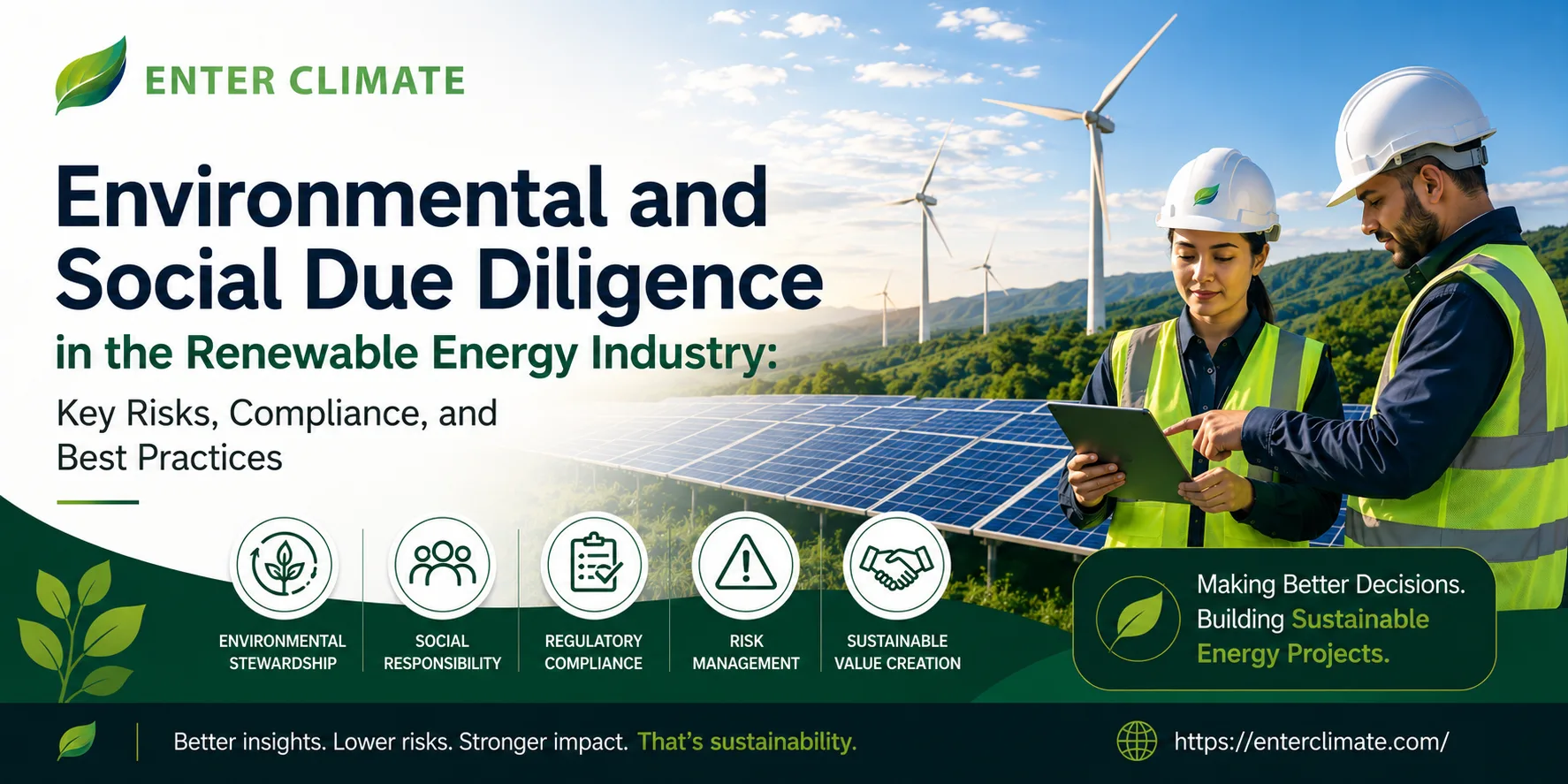
The world is moving towards clean energy. Today, many companies are investing in solar parks, wind farms, hydro projects, and other renewable energy sources. These projects help reduce pollution and fight climate change. However, every project can also affect people, land, water, forests, and wildlife. This is why Environmental and Social Due Diligence in the Renewable Energy Industry is so important.
Environmental and social due diligence is a careful study done before starting a project. It helps businesses understand possible environmental and social risks and find the best ways to reduce them. It also ensures that the project follows government rules and supports sustainable development.
What is Environmental and Social Due Diligence?
Environmental and social due diligence is a process that checks whether a project may harm the environment or local communities. It helps companies identify risks before construction begins.
The process usually examines:
- Air, water, and soil quality
- Forests and wildlife
- Local communities and livelihoods
- Health and safety concerns
- Land ownership issues
- Government approvals and environmental regulations
By identifying these risks early, companies can avoid delays, legal problems, financial losses, and damage to their reputation.
Why Renewable Energy Projects Need Due Diligence
Renewable energy is clean, but building renewable energy projects still requires land, infrastructure, and natural resources.
For example:
- A solar power plant may require large areas of land.
- A wind farm may affect birds or nearby villages.
- A hydroelectric project may change river flow and impact local communities.
Without proper planning, these projects can create environmental and social challenges. Environmental and social due diligence helps companies balance clean energy goals with environmental protection and community welfare.
Key Environmental Risks
Some common environmental risks include:
- Loss of forests or vegetation
- Disturbance to wildlife and bird habitats
- Water pollution during construction
- Soil erosion
- Waste generation
- Noise and dust pollution
Companies should identify these risks early and prepare suitable environmental management plans.
Key Social Risks
Renewable energy projects may also affect people living near the project site.
Common social risks include:
- Land acquisition disputes
- Displacement of families
- Impact on farming activities
- Worker health and safety
- Community concerns and objections
- Cultural or heritage site disturbance
Open communication with local communities helps build trust and reduces future conflicts.
Compliance Requirements
Every renewable energy project must comply with environmental laws and regulatory requirements before construction begins.
Depending on the project, companies may need:
- Environmental clearances
- Pollution control approvals
- Forest-related permissions
- Wildlife approvals
- Water usage permissions
- Labour and occupational safety compliance
Following these requirements not only ensures legal compliance but also improves investor confidence and project sustainability.
Best Practices for Environmental and Social Due Diligence
A successful due diligence process follows a few simple but effective practices.
Start Early
Risk assessment should begin during the planning stage instead of after construction starts.
Collect Reliable Information
Use accurate environmental studies, site inspections, and technical reports to understand the project location.
Engage Local Communities
Talk with local residents and stakeholders. Their feedback often helps identify concerns that technical studies may overlook.
Follow Environmental Laws
Stay updated with government regulations and obtain all required approvals before starting work.
Monitor Throughout the Project
Environmental and social monitoring should continue during construction and operation to ensure ongoing compliance.
Work with Experienced Consultants
Professional environmental consultants can identify hidden risks, prepare compliance reports, and guide businesses throughout the approval process.
Why Investors Focus on Due Diligence
Banks and financial institutions now pay close attention to environmental and social performance before funding projects.
Strong due diligence demonstrates that a company:
- Manages risks responsibly
- Follows environmental regulations
- Protects local communities
- Reduces future legal issues
- Supports sustainable business practices
This increases the chances of receiving investment and financial support.
Due Diligence Across Different Industries
Although renewable energy is one of the fastest-growing sectors, environmental and social due diligence is important across many industries.
For example, Environmental & Social Due Diligence in the Aerospace Industry helps companies evaluate pollution risks, hazardous materials, manufacturing impacts, and worker safety before expanding facilities or launching new projects.
Similarly, Environmental and Social Due Diligence in the Financial and Banking Sector allows banks, investors, and lenders to assess environmental and social risks before financing infrastructure, industrial, or energy projects. This approach promotes responsible investment and reduces financial exposure.
Another important area is Environmental and Social Due Diligence in the Dairy Industry, where businesses evaluate wastewater management, waste disposal, water consumption, worker welfare, and community impacts to maintain sustainable operations and regulatory compliance.
These examples show that environmental and social due diligence is becoming an essential part of responsible business across different sectors.
How Enterclimate Supports Businesses
Managing environmental compliance can be complex without expert guidance. Enterclimate helps businesses understand environmental regulations, prepare technical documentation, obtain statutory approvals, and conduct environmental and social due diligence for projects across various industries.
With experienced professionals and a practical compliance approach, Enterclimate supports organizations in reducing risks, meeting legal requirements, and building sustainable projects that benefit both businesses and communities.
Conclusion
Renewable energy is helping create a cleaner and greener future. However, every project should be planned responsibly. Environmental and Social Due Diligence in the Renewable Energy Industry helps companies understand environmental and community impacts before work begins.
By identifying risks early, following legal requirements, engaging local communities, and adopting best practices, businesses can complete projects more efficiently while protecting people and nature. Good due diligence is not just about compliance—it is about building sustainable projects that create long-term value for everyone.
Author Profile
Upendra Sharma is an Environmental Compliance Consultant with extensive experience in environmental approvals, sustainability, regulatory compliance, and industrial project advisory. He has worked with businesses across manufacturing, renewable energy, infrastructure, waste management, and other sectors, helping them obtain statutory approvals and maintain environmental compliance. Through his informative articles and practical guidance, Upendra simplifies complex environmental regulations so businesses can make informed decisions. He is associated with Enterclimate, where he supports organizations in achieving responsible and sustainable growth through expert environmental consulting.