If you've started researching ways to upgrade your garage, basement, or commercial floor, you've probably run into two names again and again: epoxy and polyaspartic. Both are popular concrete coating systems, but they're not interchangeable - and picking the wrong one can mean redoing the job sooner than you'd like. Here's what actually sets them apart.
Epoxy has been the go-to concrete coating for decades, and for good reason. It's affordable, comes in a wide range of colors and flake patterns, and creates a hard, glossy surface that holds up well to everyday foot traffic and light vehicle use.
That said, epoxy has a few limitations worth knowing about:
- Cure time. Epoxy typically needs 24–72 hours to cure before you can walk on it, and up to a week before it can handle vehicle weight.
- UV sensitivity. Direct sunlight can cause epoxy to yellow or fade over time, which matters if your garage door is often open or you're coating an outdoor space.
- Hot tire lift. In colder climates like Michigan, hot tires pulling onto a cold epoxy floor can occasionally cause the coating to lift or peel at the edges.
Polyaspartic is the newer technology, and it addresses many of epoxy's weak points:
- Fast cure. Most polyaspartic floors are walkable within hours and ready for vehicles the next day - a big advantage if you can't have your garage out of commission for days.
- UV stable. It won't yellow or fade in sunlight, making it a better fit for garages, driveways, and patios exposed to the elements.
- Built for temperature swings. Polyaspartic handles hot tires and Michigan's freeze-thaw winters better than standard epoxy, reducing the risk of peeling or lifting.
- Durability. It's generally more resistant to chemicals, abrasion, and impact, which matters in commercial or heavy-use settings.
The trade-off is cost - polyaspartic systems usually run higher upfront than epoxy. But for most homeowners and businesses, the added durability and faster turnaround make up the difference over the life of the floor.
- Choose epoxy if: you want a budget-friendly upgrade for a low-traffic space and can accommodate a longer cure time.
- Choose polyaspartic if: you want a floor that holds up to Michigan winters, hot tires, and heavy use - and you want it done fast.
Here's something that doesn't get talked about enough: even the best coating will fail early if the concrete underneath isn't prepped correctly. Diamond grinding to open the concrete's pores, patching cracks and imperfections, and controlling moisture levels are what make a coating bond and last. A rushed or skipped prep step is the number one reason coatings peel, bubble, or wear unevenly within the first year or two.
This is where working with an experienced local installer pays off. At Royal Coatings, every job starts with proper surface preparation - diamond grinding, crack repair, and moisture testing - before any coating goes down. That groundwork is what separates a floor that looks great for a season from one that looks great for 15+ years.
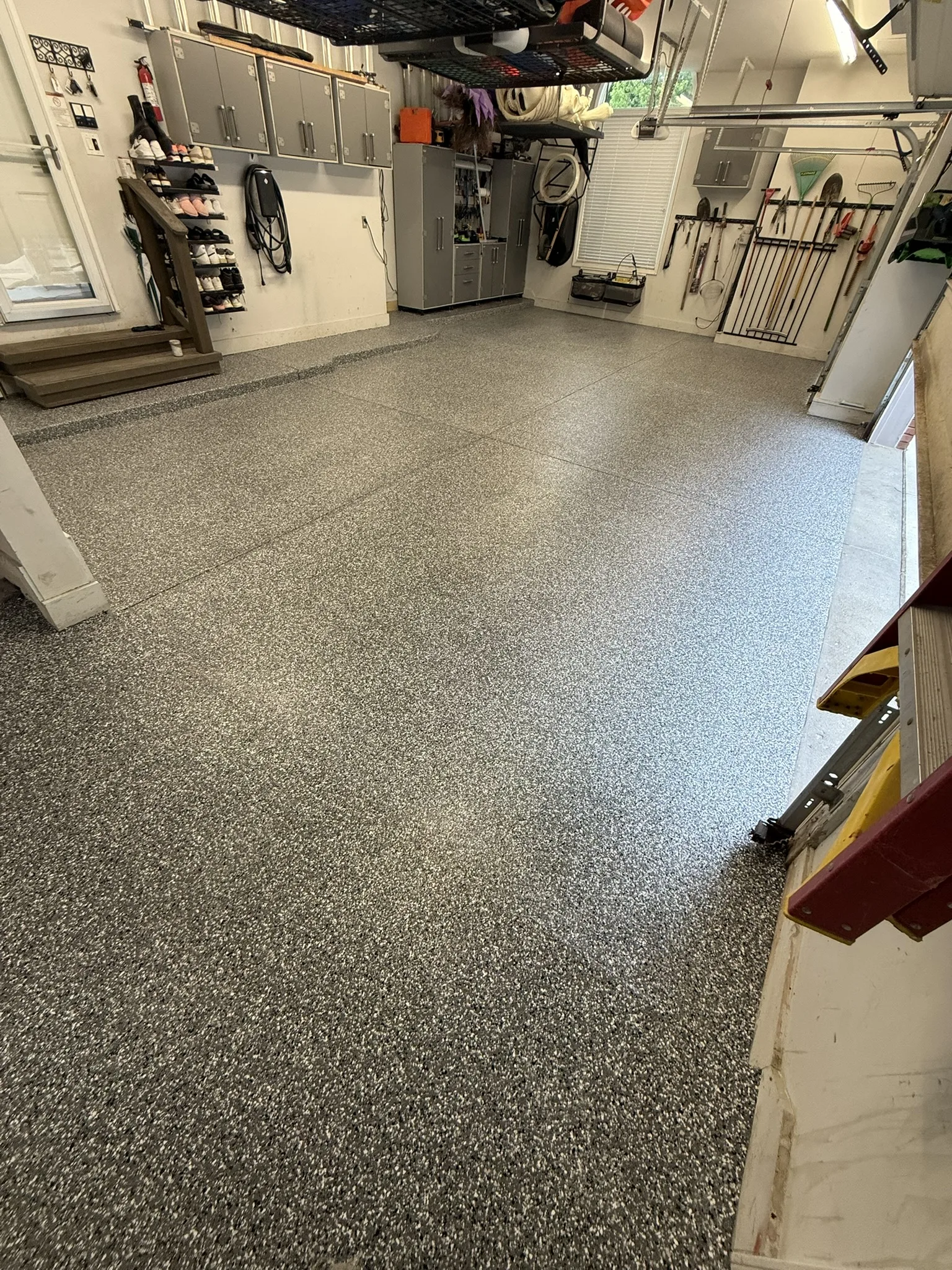
Whether you're finishing a residential garage, a basement, or a commercial warehouse, choosing the right coating system - and the right installer - makes all the difference. Royal Coatings proudly serves Oak Park, MI and the surrounding area with epoxy and polyaspartic flooring for residential and commercial spaces alike.
Get in touch with Royal Coatings today for a free estimate and find out which coating system is the right fit for your space.