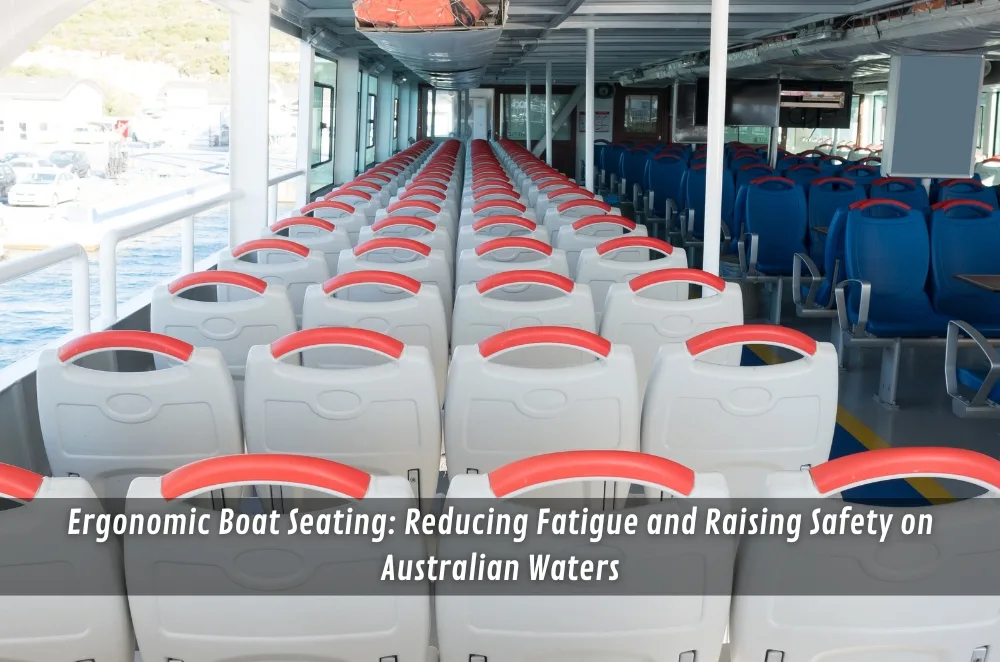
From weekend anglers cruising the Hawkesbury to commercial crews running daily ferry routes across Bass Strait, everyone on board counts on one deceptively simple feature to keep bodies protected: the seat beneath them. Yet many vessels still rely on dated or budget seating that was never designed for Australia’s punishing UV, sudden chop or long distances. Over time the toll shows up as sore backs, slower reaction times and, in worst-case scenarios, safety incidents that could have been avoided with better ergonomics.
This article unpacks why seating matters more than many skippers realise, how modern design principles translate into real-world comfort and safety, and when upgrading makes economic sense.
Why Seating Matters More Than Many Skippers Realise
Boats throw a unique mix of forces at the human body—vertical shocks from pounding into waves, lateral sway while crossing wakes and whole-body vibration on extended runs. Add strong sun, occasional cold fronts and long hours on the helm, and fatigue can set in quickly.
Research cited by the Australian Maritime Safety Authority highlights that physical tiredness can reduce situational awareness and decision-making speed—two qualities no skipper or deckhand can afford to lose. Properly engineered seating addresses three core ergonomic objectives:
- Shock mitigation: Reducing peak forces that travel through the spine and joints.
- Postural support: Encouraging a neutral seated position that limits muscular strain.
- Vibration damping: Smoothing the constant low-level buzzing that accelerates fatigue over hours.
Ignoring these factors doesn’t just lead to aches; it can compromise crew alertness, increase slip-and-trip risk when standing and shorten the working life of professional seafarers.
From Sunday Cruises to Commercial Runs: Different Boats, Different Needs
Not every craft faces the same loading or duty cycles. A half-day blue-water game-fishing charter sees sporadic high-speed bursts, while a harbour water-taxi clocks hundreds of passenger movements and near-continuous engine vibration. Matching seat design to real-world use cases is therefore critical.
For a practical look at durability under Australia’s fierce sun and salt, readers can revisit the related guide Choosing boat seats that survive Australian conditions which explains material choices and weathering. Building on that foundation, below we explore the specific ergonomic features that help crews stay sharp, trip after trip.
Recreational day-trippers
• Prioritise UV-stable fabrics and supportive foam that stays comfortable after long periods at anchor.
• Look for quick-dry drainage ports to avoid damp cushioning after a swim stop.
Commercial operators
• Require heavy-duty frames, often aluminium or stainless, that withstand continuous movement.
• Suspension or pedestal seats can significantly cut fatigue on repetitive routes.
Offshore or defence craft
• Need certified shock-mitigation systems designed for high-speed impacts.
• Harness points and adjustable bolsters maintain crew stability in rough seas.
Suspension Seating: What Makes It Different?
Traditional fixed seats rely on a combination of padding and posture alone to deal with wave impact. Suspension models, by contrast, incorporate mechanical or pneumatic dampers that actively absorb forces before they reach the spine.
If you are exploring the latest options, take a moment to explore quality boat seats for sale that integrate multi-stage suspension, adjustable lumbar support and marine-grade finishes. Key differentiators include:
• Shock-absorbing columns or scissor mechanisms rated for specific G-forces.
• Fore-aft and height adjustments to suit different crew members.
• Modular cushions that can be swapped when worn, reducing long-term costs.
Field data from patrol vessels show crews remain more alert after multi-hour transits when seated on suspension systems, thanks to reduced cumulative loading.
Quick Checklist: Is Your Current Seating Letting the Crew Down?
Use the indicators below during your next pre-departure check or maintenance window:
- Cracked vinyl, fading or foam collapse after pressing with a thumb.
- Complaints of lower-back pain or stiff necks reported by multiple crew.
- Visible corrosion on pedestal bases or loose seat-to-deck fastenings.
- Instruments or beverages vibrating off nearby consoles—often a sign the seat is transmitting the same frequency to the body.
- Crew leaning forward or constantly shifting position to stay comfortable.
If two or more points ring true, an assessment of seating ergonomics is overdue.
Comparison Table: Traditional vs Suspension vs Modular Seating
The table below summarises how common marine seat categories perform against key criteria.
Seat TypeShock MitigationPostural SupportTypical Lifespan (with care)Best ForPotential DrawbacksFixed cushioned benchMinimal – relies on foam aloneLow–Medium5–7 yearsShort recreational trips, sheltered watersFatigue on choppy runs, limited adjustabilityPedestal swivel seatLow–MediumMedium – some height/rotation help6–8 yearsSmall fishing boats, mixed-use cabinsShock still transmitted through baseSuspension seatHigh – mechanical dampers absorb vertical G-forcesHigh – multi-axis adjustability supports varied users8–12 yearsCommercial craft, offshore, long passagesHigher upfront investment, weight considerationsModular suspension seatHighHigh & easily re-configurable10–15 years+ (swap-out cushions)Fleets needing quick turnaround maintenanceRequires inventory of spare modulesA quick note on lifespan: exposure to saltwater, UV and chemical cleaners will shift these ranges up or down. Regular rinse-downs and periodic inspections remain essential, regardless of seat type.
Maintenance and Care Tips to Preserve Ergonomics
- Rinse with fresh water after each salty or muddy trip—especially around hinges and sliders.
- Apply UV-protective sprays recommended by the manufacturer every three months.
- Tighten fixings during scheduled servicing; loose bolts amplify vibration.
- Replace worn dampers promptly—waiting until a complete failure defeats the purpose of shock mitigation.
- Log any crew comfort complaints. A trend across different operators often signals a mechanical issue, not personal preference.
When Replacement Beats Repair
Patch-up jobs can extend life, but there is a tipping point where cumulative foam breakdown or obsolete parts make refurbishment a false economy. For commercial operators, downtime itself carries a cost. Benchmark the yearly maintenance spend against a pro-rata cost of installing new ergonomic seats; the upgrade often pays for itself in fewer injury claims and improved crew morale.
Final Thoughts
Ergonomically sound seating is no longer a luxury reserved for high-speed rescue boats. As evidence mounts linking impact and vibration to crew fatigue, Australian recreational and commercial skippers alike are re-evaluating the humble boat seat. By understanding how shock mitigation, posture and material durability intersect, owners can make informed choices that lift safety, comfort and even vessel resale value. If several signs from the checklist match your current setup, investing in modern seating can be the difference between ending the day energised or exhausted.