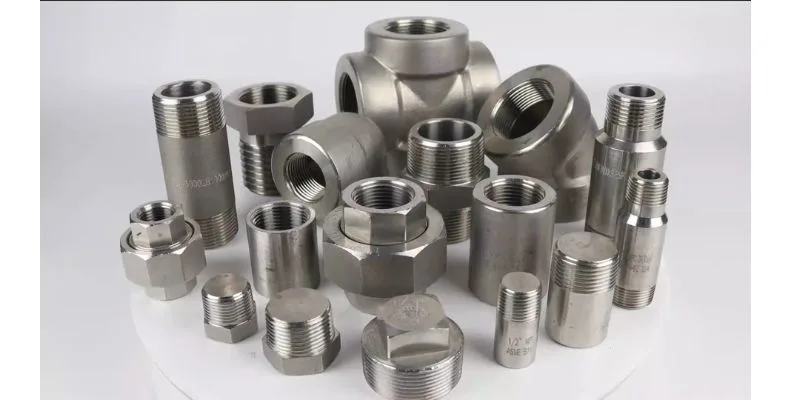
New Era Pipes & Fittings is a trusted Forged Fittings Manufacturer in India, supplying industrial piping components designed to meet specific requirements for strength, durability, pressure resistance, and dimensional accuracy. Forged fittings are essential components of industrial piping systems used to connect pipes, change flow directions, create branch connections, and join different pipeline sections.
Industries such as oil and gas, petrochemicals, power generation, chemical processing, construction, and water treatment use forged fittings for various applications. These components are manufactured through controlled forging processes to achieve the required mechanical properties and dependable performance.
Understanding different fitting types, material grades, manufacturing standards, and applications helps buyers select suitable products for their industrial projects.
What Are Forged Fittings?
Forged Fittings are industrial piping components manufactured by shaping metal under controlled heat and mechanical pressure. They are widely used in piping systems where mechanical strength, reliable connections, and pressure-handling capabilities are important.
These fittings are available in different shapes, sizes, pressure classes, and connection types. Socket weld and threaded connections are commonly used depending on installation requirements.
Common materials include stainless steel, carbon steel, alloy steel, duplex steel, and specialised alloys. Each material offers different properties depending on the operating environment and application.
Different Types of Industrial Forged Fittings
Forged fittings are available in various designs to support different pipeline configurations. Some commonly used products include:
1. Forged 45° Degree Elbow Fittings
Forged 45° Degree Elbow Fittings are designed to change the direction of fluid flow by 45 degrees. They are suitable for pipeline arrangements requiring a gradual directional change.
These fittings are commonly used in oil and gas facilities, chemical processing plants, refineries, and industrial piping installations. Their selection depends on pipe dimensions, pressure requirements, material specifications, and connection types.
2. Forged 90° Degree Elbow Fittings
Forged 90° Degree Elbow Fittings are used when a pipeline needs to change direction by 90 degrees. They are commonly installed in compact piping systems where a right-angle connection is required.
These fittings are available in different material grades and pressure classes. Buyers should verify the dimensions, connection specifications, and operating conditions before purchasing.
3. Forged Union Fittings
Forged Union Fittings are used to connect two compatible pipe sections while allowing convenient disconnection during maintenance or replacement.
They are useful in industrial piping systems where regular inspection and servicing are required. Material grade, thread compatibility, dimensions, and pressure ratings are important purchasing considerations.
4. Forged Barrel Nipple Fittings
Forged Barrel Nipple Fittings are cylindrical connectors with external threads at both ends. They are used to join two compatible threaded fittings or pipe components.
These fittings are commonly used in industrial piping, plumbing systems, and equipment connections. Buyers should consider the required length, diameter, thread type, and material grade when selecting barrel nipples.
5. Forged Swage Nipple Fittings
Forged Swage Nipple Fittings are designed to connect piping components of different diameters. They provide a transition between larger and smaller pipeline connections.
They are used in process piping, industrial equipment, and fluid transportation systems. The appropriate configuration and dimensions should be selected according to the pipeline design.
6. Forged Reducing Tee Fittings
Forged Reducing Tee Fittings create branch connections from a main pipeline while providing a smaller outlet diameter.
They are commonly used in industrial piping systems where fluid needs to be distributed through smaller branch lines. Buyers should check the main run size, branch size, material grade, and pressure class before ordering.
7. Forged Coupling Fittings
Forged Coupling Fittings are used to connect two compatible threaded pipe sections. They are available in different designs, including full couplings, half couplings, and reducing couplings.
These components are commonly used in industrial piping, plumbing, process equipment, and utility installations. Correct thread specifications and material compatibility are essential for reliable connections.
Material Grades Available for Forged Fittings
Material selection is an important factor in determining the strength, corrosion resistance, and service performance of forged fittings.
Different industrial applications require different material grades depending on pressure, temperature, and environmental conditions.
Stainless Steel Forged Fittings
Stainless steel forged fittings are commonly selected for applications requiring corrosion resistance, durability, and mechanical strength.
Some commonly specified grades include:
- ASTM A182 F304
- ASTM A182 F304L
- ASTM A182 F316
- ASTM A182 F316L
- ASTM A182 F321
- ASTM A182 F347
- ASTM A182 F904L
These materials are used in chemical plants, food processing facilities, water treatment plants, pharmaceutical industries, and other industrial applications.
Carbon Steel Forged Fittings
Carbon steel forged fittings are widely used in general industrial piping systems. ASTM A105 is a commonly specified material for carbon steel forged components.
They offer suitable mechanical properties for applications involving specified pressure and temperature conditions. Their selection should follow the relevant piping design requirements.
Alloy Steel Forged Fittings
Alloy steel forged fittings are designed for applications requiring specific mechanical properties and elevated-temperature performance.
Common grades include ASTM A182 F5, F9, F11, F21, F22, and F91.
They are commonly used in power plants, refineries, petrochemical facilities, and industrial processing units.
Duplex Steel Forged Fittings
Duplex steel forged fittings offer a combination of mechanical strength and corrosion resistance.
Common grades include ASTM A182 F51, F53, and F55. They are considered for applications in offshore installations, marine environments, chemical processing, and selected oil and gas projects.
Special Alloy Forged Fittings
Special alloy forged fittings are used in demanding environments where resistance to corrosion, chemicals, and elevated temperatures is required.
Some commonly specified materials include:
- Monel – UNS N04400 and N05500
- Inconel – UNS N06600, N06625, and N08825
- Hastelloy – UNS N10276 and N06022
- Nickel – UNS N02200 and N02201
- Copper Nickel – UNS C70600 and C71500
- Titanium and other specialised alloys
The final material grade should always be selected according to engineering specifications and operating conditions.
Forged Fittings Specifications and Manufacturing Standards
Before purchasing forged fittings, buyers should understand the applicable manufacturing standards, pressure classes, dimensions, and connection requirements.
Important specifications include:
| Parameter | Common Specifications |
| Manufacturing Standard | ASME/ANSI B16.11 |
| Branch Outlet Standard | MSS-SP-97, where applicable |
| Pressure Classes | 3000, 6000, 9000 |
| Size Range | 1/2" NB to 4" NB |
| Connection Types | Socket Weld and Threaded |
| Material Options | Stainless Steel, Carbon Steel, Alloy Steel, Duplex Steel, and Special Alloys |
Actual availability depends on the fitting type, material grade, and project requirements. Buyers should confirm applicable specifications before placing an order.
Industrial Applications of Forged Fittings
Forged fittings are used across different industries because of their mechanical strength, versatile connection arrangements, and availability in multiple material grades.
Major applications include:
- Oil and Gas Industry: Used in compatible pipeline connections, refineries, processing facilities, and industrial equipment.
- Petrochemical Industry: Used in process piping systems handling different industrial fluids.
- Power Generation: Used in piping systems designed for specified pressure and temperature conditions.
- Chemical Processing: Used in pipelines handling chemicals and process fluids.
- Water Treatment: Used in compatible water distribution and treatment installations.
- Pharmaceutical Industry: Used in suitable process and utility piping systems.
- Food Processing: Used in selected industrial fluid-handling applications.
- Automotive Industry: Used in manufacturing equipment and industrial machinery.
- Construction Industry: Used in plumbing systems, utility connections, and industrial infrastructure.
The suitability of each fitting depends on material composition, operating pressure, temperature, and connection requirements.
How to Choose Reliable Forged Fittings Suppliers in India
Finding suitable Forged Fittings Suppliers in India is important for maintaining product quality and meeting industrial project requirements. Buyers should evaluate suppliers based on their manufacturing capabilities, material availability, product specifications, and quality procedures.
Consider these important factors before finalising an order:
- Product Range: Check the availability of elbows, unions, nipples, tees, and coupling fittings.
- Material Grades: Confirm the required stainless steel, carbon steel, alloy steel, or special alloy grades.
- Manufacturing Standards: Verify compliance with applicable ASTM, ASME, ANSI, and MSS specifications.
- Pressure Classes: Ensure the selected fittings meet the pipeline's design requirements.
- Dimensional Accuracy: Check nominal pipe sizes, fitting dimensions, and thread compatibility.
- Quality Documentation: Request Material Test Certificates and relevant inspection reports.
- Product Availability: Confirm stock availability and manufacturing lead times.
- Packaging and Delivery: Review packaging quality, transportation arrangements, and dispatch schedules.
These factors help buyers select suitable forged fittings for their applications while reducing the possibility of material mismatches and installation issues.
Important Factors Before Purchasing Forged Fittings
Selecting the correct forged fitting requires careful evaluation of technical and operational requirements.
- Application Requirements: Identify the purpose and location of the fitting within the piping system.
- Operating Conditions: Consider working pressure, temperature, and fluid characteristics.
- Material Compatibility: Select a material suitable for corrosion exposure and operating conditions.
- Connection Type: Determine whether socket weld or threaded fittings are required.
- Product Dimensions: Verify pipe size, fitting dimensions, and connection specifications.
- Inspection Requirements: Confirm the necessary testing procedures and quality documents.
Following these guidelines helps ensure that the selected products are compatible with the overall piping system.
Conclusion
Forged Fittings are important components of industrial piping systems where mechanical strength, reliable connections, and suitable pressure performance are essential. Different types, including 45-degree elbows, 90-degree elbows, unions, barrel nipples, swage nipples, reducing tees, and couplings, serve specific purposes in industrial installations.
Choosing the right material grade, pressure class, connection type, and manufacturing standard helps maintain piping system reliability and operational safety.
Working with experienced Forged Fittings Suppliers can help buyers source products that meet their technical specifications, quality requirements, and delivery expectations.
Frequently Asked Questions (FAQs)
1. What are the different types of forged fittings?
Common types include 45-degree elbows, 90-degree elbows, unions, barrel nipples, swage nipples, reducing tees, couplings, plugs, and bushings.
2. Which materials are commonly used for forged fittings?
Forged fittings are available in stainless steel, carbon steel, alloy steel, duplex steel, copper nickel, Monel, Inconel, Hastelloy, nickel, and other specialised alloys.
3. What is the standard for forged socket weld and threaded fittings?
ASME/ANSI B16.11 is a commonly used dimensional and rating standard for forged socket weld and threaded fittings.