Forklift Laser Safety Lights on UK Oil & Gas Sites: A Risk Manager's Overview
Fit the wrong warning device in a classified hazardous area, and you haven't just created a visibility gap — you've potentially introduced an ignition source into an environment specifically designed to eliminate them. That's the layer of risk oil and gas sites carry that general warehousing simply doesn't, and it's why equipment decisions here need far more scrutiny than a standard site fitment.
If you're responsible for risk management across an onshore terminal, offshore support base, or processing facility, you already know that pedestrian-vehicle visibility is only part of the equation. A forklift laser light specified for this environment has to satisfy hazardous-area compliance before it satisfies anything else.

Hazardous-Area Handling Risks Specific to Oil and Gas
Forklift operations on oil and gas sites routinely intersect with material handling around flammable substances, pressurised equipment, and classified atmospheres where a stray spark carries consequences far beyond a standard workplace incident. Pallet handling near tank farms, drum storage, and pipeline maintenance areas means your vehicle fleet is operating in or adjacent to zones governed by DSEAR and, in many cases, the ATEX Directive.
This changes the calculus for any electrical device fitted to a truck. A forklift safety laser light that would be perfectly acceptable in a general warehouse becomes a compliance liability if it's fitted without the correct ATEX rating for the zone it's operating in. Sites across the North Sea's offshore support infrastructure and onshore terminals along the Humber and Milford Haven corridors deal with this reality daily — equipment specification here isn't a preference, it's a hard compliance gate.
Beyond ignition risk, these sites also carry the standard pedestrian-vehicle interaction risks of any industrial floor: contractors unfamiliar with site layout, shift handovers, and vehicle movements around temporary storage that shifts week to week during turnaround periods.
Laser Lights Alongside Other Visual and Audible Warning Systems
A laser light for forklift shouldn't operate in isolation on a hazardous site. Oil and gas facilities typically already run audible reversing alarms, amber beacons, and radio-based permit-to-work systems governing vehicle movement in and out of classified zones. A projected warning device needs to complement that existing stack, not introduce a conflicting or redundant signal.
Where visibility is compromised by weather — a genuine factor on exposed onshore terminals and offshore platforms — visual warning systems earn their keep precisely because audible alarms can be lost to wind and machinery noise. Pairing a Forklift Laser Warning Light with existing audible controls gives pedestrians two independent cues rather than relying on just one, which matters when environmental conditions can degrade either signal on their own.
Site-Specific Risk Assessment Considerations
Generic risk assessments don't hold up well on oil and gas sites, where zone classification varies significantly across a single facility. Before specifying any warning device, confirm:
- The DSEAR zone classification of every area the truck will operate in, including temporary storage zones during maintenance periods
- Whether ATEX-rated equipment is mandatory for that specific zone, and to what category
- How the device interacts with existing permit-to-work procedures governing vehicle access
- Whether contractor-operated trucks entering the site meet the same equipment standard as your own fleet
A Forklift Laser Guidance Light fitted without this zone-by-zone assessment risks becoming a compliance gap discovered during an HSE inspection rather than caught during specification. Treat this as a live document, reviewed whenever site layout or zone classification changes, not a one-off sign-off.
Vendor Selection for Hazardous Industrial Environments
Not every supplier of visual warning equipment understands hazardous-area compliance, and that distinction matters more here than almost anywhere else in industrial safety procurement. When evaluating vendors for oil and gas applications, prioritise:
- Documented ATEX certification for the specific zone category you need, not a general claim of "industrial-grade" build
- Evidence of prior fitment on comparable hazardous sites, ideally within UK oil and gas or maritime terminal operations
- Clear technical support that understands DSEAR terminology, not just general product specifications
- Straightforward compliance documentation you can hand directly to your HSE inspector or internal compliance team
A Forklift Fork Laser Light without verifiable hazardous-area certification isn't a viable option here, regardless of how well it performs on visibility metrics alone.

SharpEagle Forklift Laser Safety Lights Supplier UK
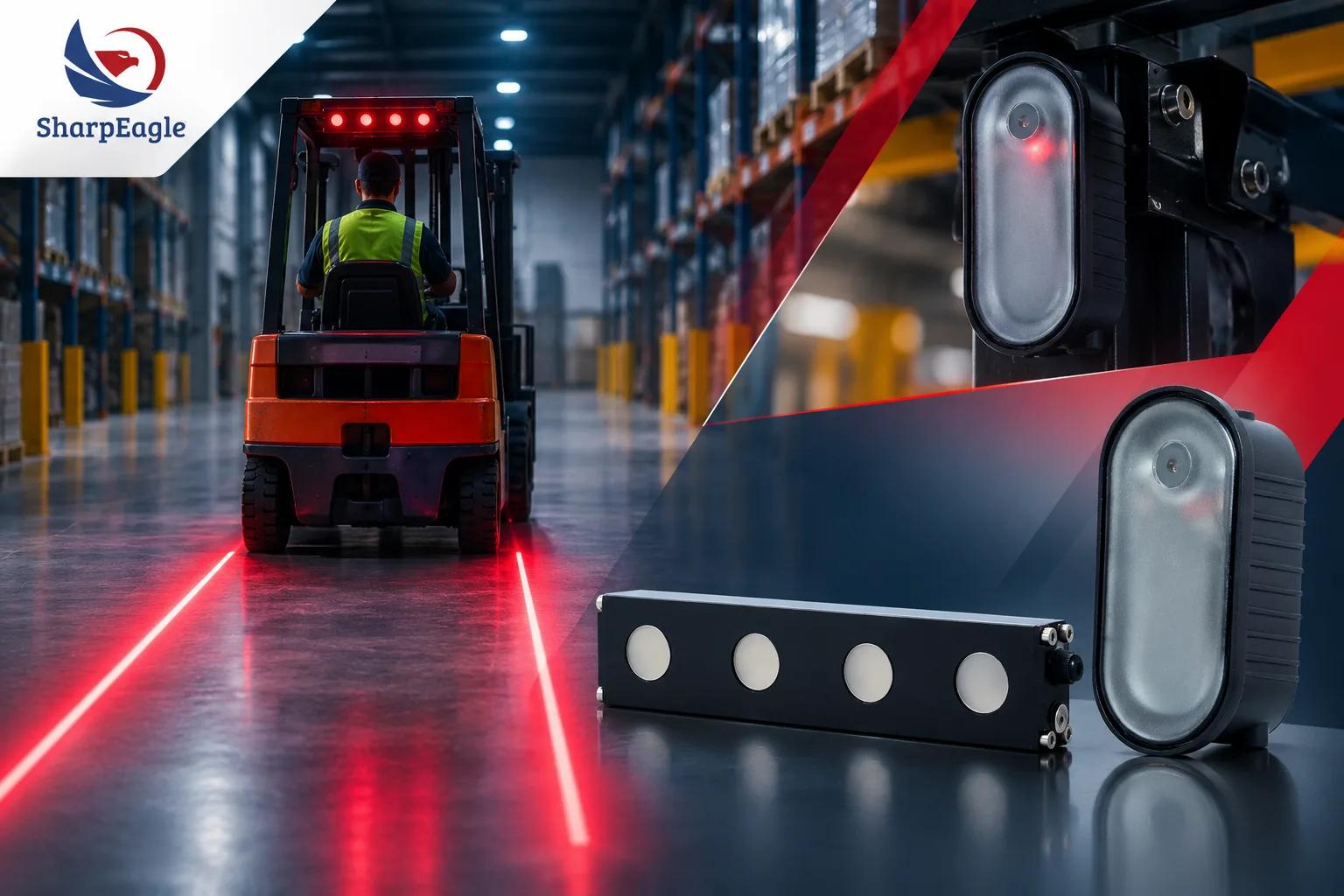
SharpEagle Technology supplies forklift laser safety lights with the documentation and certification oil and gas risk managers need for hazardous-area specification. Their range is built to support compliant fitment across classified and unclassified zones alike.
Key features include:
- Clear compliance documentation suited to DSEAR and ATEX Directive review
- Robust construction for exposed onshore and offshore environments
- Reliable performance alongside existing audible and visual warning systems
- UK-based technical support familiar with hazardous-area terminology
Review the Forklift Laser Light specification before your next hazardous-area equipment review.
Staying Ahead on Hazardous-Site Compliance
As zone classifications and equipment standards continue to tighten across the UK's oil and gas sector, compliance-first specification will separate sites that pass inspection smoothly from those facing costly remediation. Build your equipment decisions around zone-specific certification from the outset. Contact SharpEagle Technology to discuss a compliant fitment for your site.