Forklift Red Danger Light for UK Cold Stores: Improving Visibility Around Moving Forklifts
Step into a working cold store and you'll notice the problem within seconds: condensation fog visors, breath clouds hang in the air, and the lighting rarely matches what you'd find in a standard ambient warehouse. Now add a forklift working a narrow aisle at pace, because cold-store labour costs make dwell time expensive. Pedestrians picking orders or checking stock share that same tight space, often wrapped in cold-weather gear that limits peripheral vision and muffles sound. It's a combination that makes standard warehouse safety controls noticeably less effective the moment temperatures drop below zero.
Unique Operating Conditions Inside Cold-Storage Facilities
Cold stores operate under conditions that most workplace transport guidance wasn't originally written with in mind. Sub-zero temperatures affect everything from equipment performance to human reaction time, and staff working extended shifts in these conditions fatigue faster than their counterparts in ambient areas. Racking is often taller and aisles narrower, since cubic storage efficiency matters more when refrigeration costs scale with volume. Your safety controls need to account for a workforce that's physically less comfortable and equipment that behaves differently in the cold.
Reduced Visibility and Enclosed Working Environments
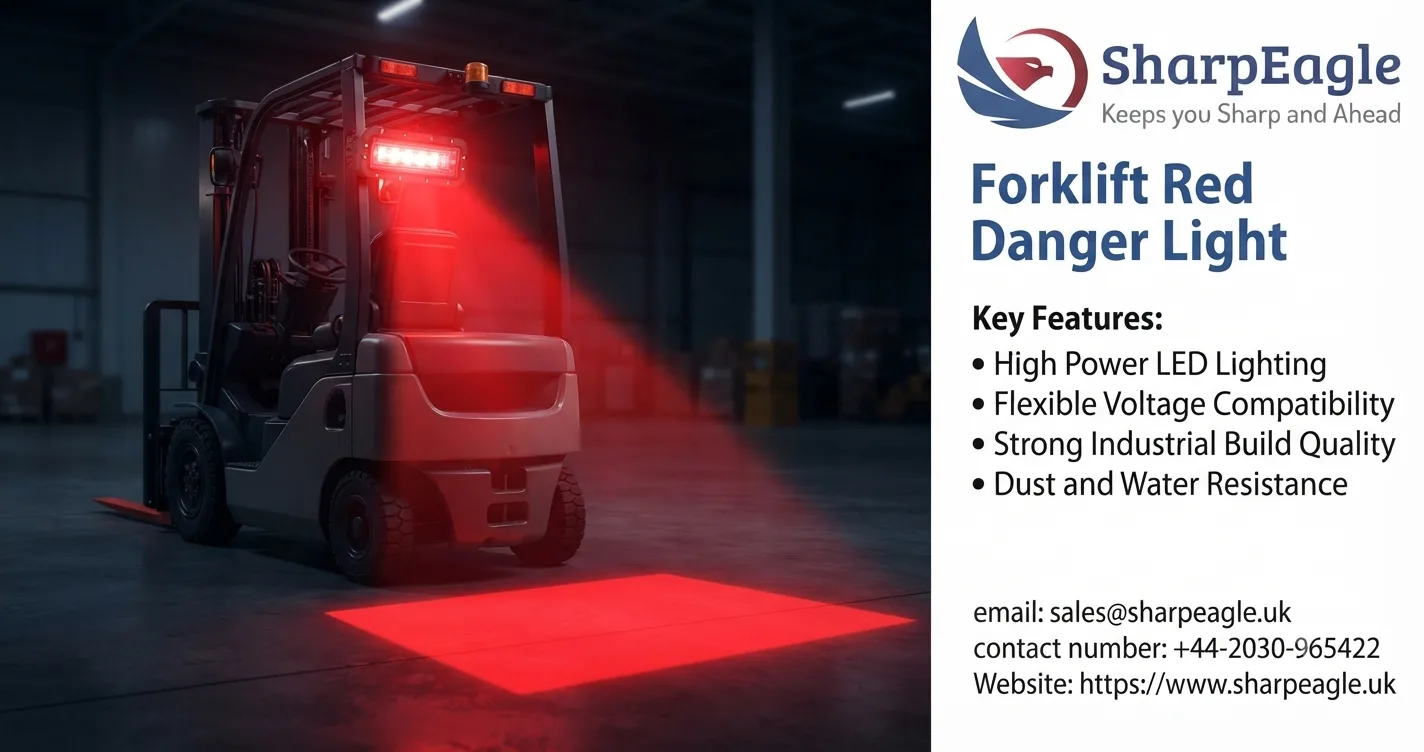
Low temperatures create condensation on eyewear, visors, and camera lenses, and the lighting inside many cold stores is deliberately kept lower than ambient warehouses to manage energy costs. Combine that with frost building up on surfaces and packaging, and you've got a working environment where visibility is compromised in ways a standard risk assessment might not fully capture. Forklift red zone warning lights cut through this by projecting a warning that doesn't depend on ambient brightness, giving pedestrians a clear signal even where general visibility is poor.

Forklift and Pedestrian Interaction in Narrow Cold-Store Aisles
Narrow aisles mean forklifts and pedestrians share less space with less margin for error than almost anywhere else in a facility. A picker turning a corner at the end of a racking run has minimal time to react to an approaching truck, and the acoustic dampening effect of insulated walls and refrigeration equipment noise means audible alarms carry less effectively than they would outdoors or in an open warehouse. Common friction points include:
- Aisle-end blind corners where sightlines are naturally restricted
- Cross-aisle picking routes that intersect main forklift thoroughfares
- Doorways between chilled and ambient zones, where staff movement is frequent
- Areas near loading docks where cold and ambient traffic overlap
Each of these benefits from a warning that doesn't rely on sound alone.
Why Visual Warnings Can Complement Other Controls
Visual warning lights aren't a substitute for barriers, mirrors, or speed limits — they're a layer that addresses what those controls can't cover on their own. A forklift red zone light projects ahead of the vehicle regardless of what a pedestrian is wearing or how much ambient noise is present, which matters considerably in an environment where hi-vis gear is often layered under thermal clothing and hearing protection reduces audible warning effectiveness further still.
Selecting Equipment Suitable for Demanding Environments
Standard warehouse-rated equipment frequently underperforms in cold-storage conditions. Components not designed for repeated thermal cycling — moving between a -25°C chamber and a loading dock at ambient temperature multiple times a day — can fail prematurely through condensation ingress or material fatigue. When specifying equipment for facilities across the UK's major cold-chain logistics regions, including sites near Corby, Bristol, and the East Midlands "golden triangle," ask suppliers directly what testing has been done at genuine sub-zero operating temperatures, not just standard industrial tolerances.
Temperature, Moisture and Durability Considerations
Moisture management is the single biggest durability factor in cold-store equipment specification. Repeated freeze-thaw cycling causes condensation to form inside poorly sealed housings, which then freezes and expands, damaging internal components over time. Look for a high IP rating specifically validated for low-temperature use, sealed connectors, and materials that won't become brittle at sustained sub-zero temperatures. Equipment that performs well in a standard warehouse can fail within weeks in a genuine blast-freezer environment.
Battery-Powered Versus Vehicle-Powered Equipment Considerations
Battery performance degrades significantly in cold conditions, which makes vehicle-powered installation the more reliable option for most cold-store applications. red forklift safety lights wired directly into the forklift's power system avoid the capacity loss and unpredictable runtime that battery units face in sustained sub-zero use, and they remove the maintenance burden of monitoring and replacing batteries across a fleet working in difficult-to-access chilled zones.
Procurement Checklist for Cold-Storage Operators
Before committing to a supplier, confirm:
- Genuine sub-zero temperature testing, not just standard IP-rated claims
- Vehicle-powered wiring options suited to your existing forklift fleet
- Sealed housing design proven against freeze-thaw condensation damage
- Warranty terms that specifically cover cold-storage operating conditions
SharpEagle forklift red danger light supplier UK
SharpEagle Technology's forklift red danger light is engineered to perform in genuinely demanding conditions, including the sub-zero environments found across UK cold-storage and cold-chain logistics sites. Its sealed housing is built to resist condensation ingress and freeze-thaw cycling, addressing the most common failure point in standard warehouse-rated lighting. The unit projects a sharp, clearly visible red warning even under the lower ambient lighting typical of chilled facilities, and vehicle-powered installation removes the battery reliability concerns that affect performance in sustained cold. For cold-store operators managing narrow aisles and reduced visibility, it's a durable, purpose-suited addition to your pedestrian safety controls.
Conclusion
As cold-chain logistics continues to expand across the UK to meet demand for temperature-controlled goods, the safety equipment protecting workers inside those facilities needs to match the environment's genuine demands, not just general industrial standards. Purpose-tested visual warning systems give cold-store operators a control that actually holds up where it matters most. Contact SharpEagle Technology to discuss equipment suited to your facility's operating conditions.