
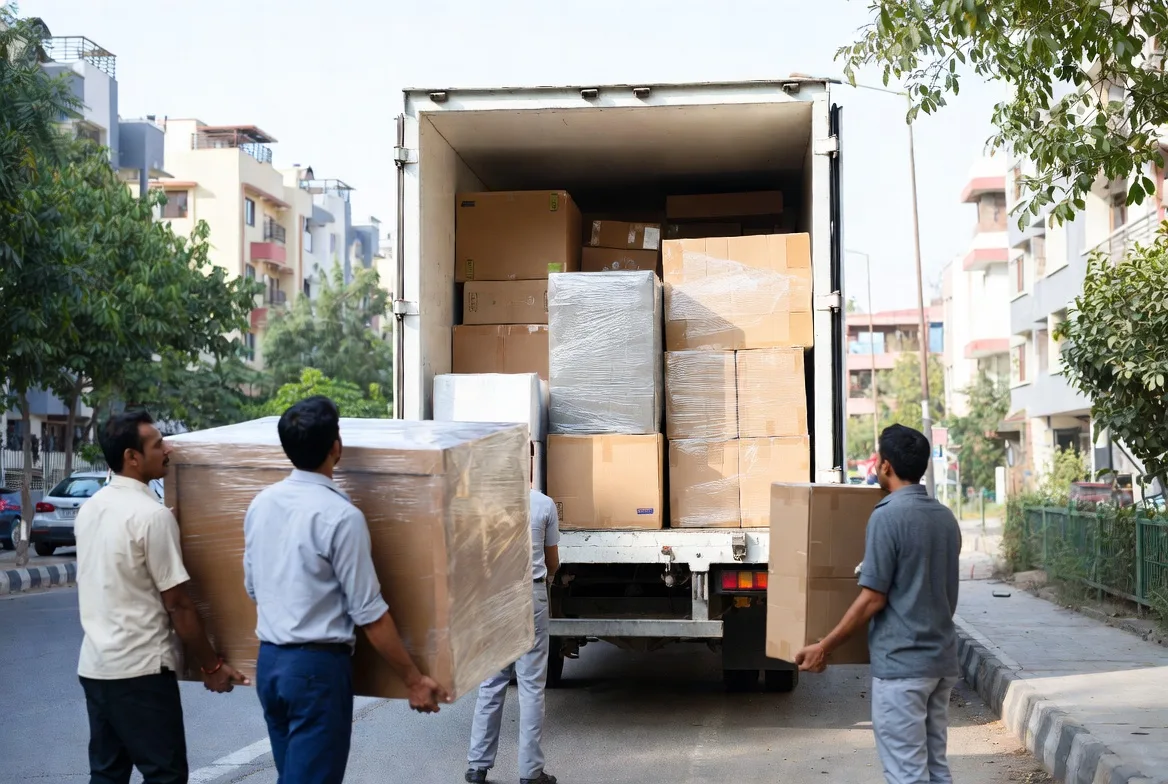
Moving delicate household belongings requires more attention than transporting ordinary boxes. Glassware, mirrors, artwork, electronics, crockery, and decorative items can be damaged by impact, vibration, or poor packing during relocation. This becomes even more important when several fragile items are being moved together.
Hiring packers and movers in Lucknow can make the process more organized, but homeowners should still understand how delicate belongings need to be prepared and handled. Proper packing, careful loading, and clear labeling can significantly reduce avoidable risks during transportation.
6 Best Ways to Protect Fragile Items During Shifting
1. Identify Fragile Items Before Packing
Start by separating everything that requires extra care. Glass tables, mirrors, crockery, lamps, decorative pieces, framed photographs and electronic devices should not simply be mixed with ordinary household goods.
Create a separate list of fragile belongings so the moving team knows which boxes require additional attention. This also makes it easier to inspect these items after reaching the new home.
2. Use Appropriate Protective Packaging
Different items require different types of protection. Bubble wrap, foam sheets, sturdy cartons, corrugated materials and suitable cushioning can help reduce the impact of movement during transportation.
Glassware and crockery should have enough cushioning between individual pieces, while mirrors and framed artwork need protection around their edges and surfaces.
Avoid filling fragile boxes with too many items. Excessive weight can increase the chance of damage when the box is lifted or stacked.
3. Don't Leave Empty Space Inside Boxes
Loose items can move around inside a box during transportation. This can cause delicate objects to collide with one another.
After placing the belongings inside, fill suitable gaps with appropriate cushioning material. The objective is to keep the contents relatively stable without applying excessive pressure.
At the same time, avoid making boxes unnecessarily heavy, particularly when they contain glass or other breakable objects.
4. Clearly Label Every Fragile Box
Labelling is a simple but important step. Mark boxes containing delicate belongings clearly so that everyone involved in loading, transportation and unloading knows that they require additional care.
You can also indicate which side should remain upright where appropriate. This helps reduce accidental mishandling when several boxes are being moved at once.
If you are working with Packers and Movers in Lucknow, discuss your fragile-item inventory with the team before packing begins.
5. Load Fragile Goods Carefully
Packing alone cannot guarantee safety. The way boxes are arranged inside the moving vehicle also matters.
Fragile cartons should not be placed underneath extremely heavy boxes. They should be positioned in a way that minimises unnecessary pressure and movement during transportation.
Large delicate items such as mirrors, glass panels and artwork may require individual positioning rather than being treated like ordinary cartons.
6. Inspect Delicate Items After Delivery
Once you reach your new home, check fragile belongings before completely discarding the packaging. Look for cracks, dents, scratches or other visible damage.
It is particularly useful to inspect expensive electronics, mirrors, glass furniture and artwork individually. If something appears damaged, photograph it and retain the relevant packaging until the matter is resolved.
What Should You Keep With You?
Some delicate or valuable belongings may be better transported personally. Jewellery, important documents, small valuables and highly sentimental items are examples of possessions that you may prefer to keep under your direct supervision.
For larger fragile belongings that cannot conveniently be carried yourself, discuss the appropriate packing and handling method with the moving team before the relocation.
Why Planning Matters for Fragile Shifting
Fragile shifting is not simply about wrapping an item in bubble wrap and placing it inside a carton. Every stage of the move can affect the safety of delicate belongings. Planning beforehand helps reduce avoidable damage by deciding how each item should be packed, handled, transported and unloaded.
Here’s why proper planning makes a major difference:
1. Identify Items That Need Extra Protection
Start by making a separate list of everything that could break, crack, scratch or get damaged easily. This may include:
- Glassware, crockery and decorative items
- Mirrors and glass-top furniture
- Paintings, photographs and artwork
- Televisions, monitors and other electronics
- Marble, ceramic or crystal items
- Antique or delicate wooden furniture
- Musical instruments and collectibles
This list helps you and the movers understand which belongings should not be treated like ordinary household goods.
2. Choose Packaging According to the Item
Different fragile items require different levels of protection. Instead of using the same carton and wrapping material for everything, consider:
- Bubble wrap: For cushioning small glass, ceramic and decorative items.
- Foam sheets: Useful for electronics and surfaces that can scratch easily.
- Corrugated cardboard: Adds an extra protective layer around larger fragile objects.
- Corner protectors: Helpful for mirrors, frames, tables and other sharp-edged items.
- Strong, appropriately sized cartons: Prevent excessive movement inside the box.
The objective is not to use the maximum amount of packaging but to provide the right protection for the specific item.
3. Inform Movers About Special Items in Advance
If you own an unusually large mirror, expensive artwork, antique furniture or specialised electronic equipment, tell the moving team before moving day. This allows them to prepare appropriate materials, manpower and handling methods.
Do not wait until loading begins to mention an unusually fragile or oversized item.
4. Check the Moving Route
A fragile item can be damaged even before it reaches the vehicle. Check whether:
- The item can pass through the main door.
- Staircases are wide enough for bulky furniture.
- A lift is available and suitable for the item.
- There are narrow corridors or sharp turns.
- The item needs partial disassembly before moving.
Identifying these obstacles beforehand helps movers plan how the item will be carried without unnecessary tilting, dragging or impact.
5. Plan How Fragile Boxes Will Be Loaded
Loading is another critical stage. Fragile cartons should ideally be clearly labelled and positioned where heavy boxes or furniture cannot crush them. They should also be secured properly so they do not slide or topple during transportation.
A simple system such as marking boxes “FRAGILE – HANDLE WITH CARE” and maintaining a separate inventory can make identification easier during unloading.
6. Prepare for Unloading Too
Planning should not stop once the vehicle leaves your old home. Decide where fragile belongings will be placed at the new property and ensure the pathway is clear.
This prevents situations where a delicate item is left temporarily in a crowded passage, moved repeatedly or placed underneath heavier belongings.
In short, planning gives every fragile item a clear protection strategy—from packing and loading to transportation and final placement. It reduces last-minute decisions and gives movers a better understanding of which belongings require the most careful handling.
Final Checklist for Delicate Goods
Before the moving team starts loading, make sure:
- Fragile items have been identified separately.
- Suitable protective packaging has been used.
- Empty spaces inside boxes have been properly cushioned.
- Fragile boxes are clearly labeled.
- Heavy items are not placed carelessly over delicate cartons.
- Valuable items are photographed before transportation.
- Fragile belongings are inspected after delivery.
Conclusion
Delicate goods require careful attention at every stage of a home relocation. Proper packaging, clear labeling, careful loading, and post-delivery inspection can all help minimize the possibility of damage.
With the right preparation and assistance from packers and movers in Gomti Nagar, fragile household belongings can be handled in a more organized and controlled manner, making the overall shifting experience easier for homeowners.