
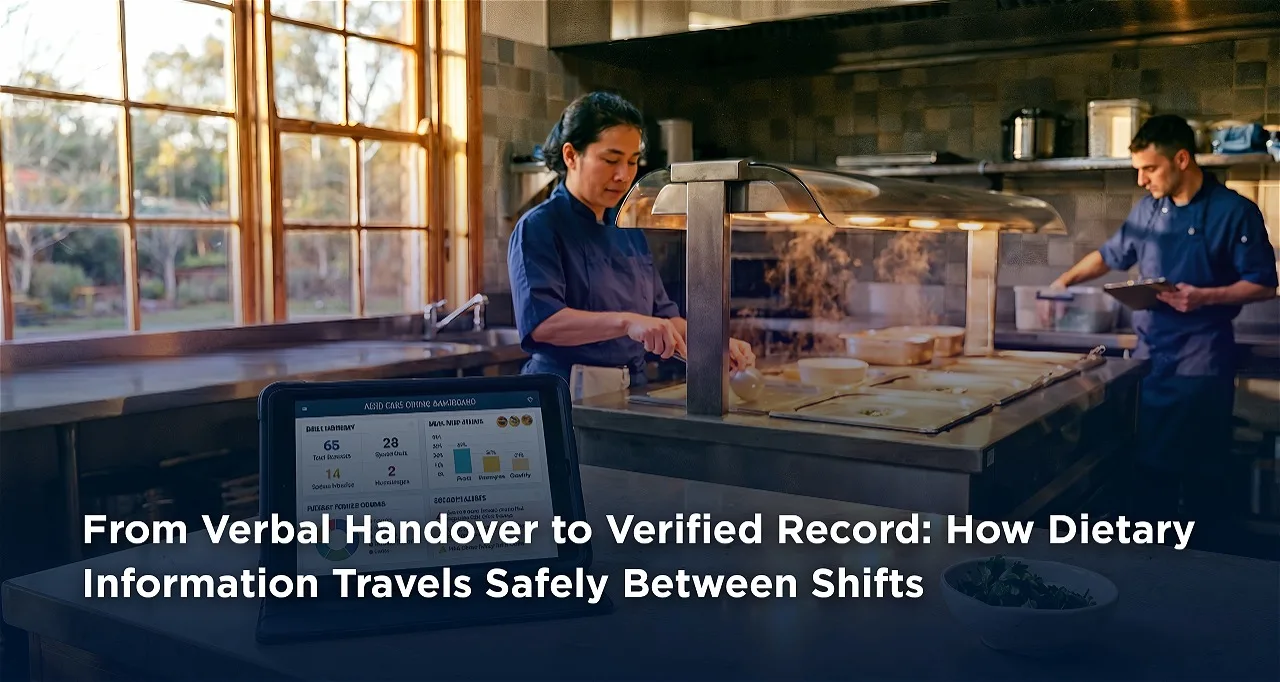
It is 2:47pm at an aged care facility in regional Victoria. The afternoon cook walks into the kitchen for handover. The morning lead is already halfway out the door, late for school pickup. Between the swing of the freezer door and a quick wave goodbye, she calls out: "Mavis is on thickened fluids now. And Bill's allergic to shellfish."
The afternoon cook nods. She thinks she has it. By 5pm, the dinner trolley is rolling and Mavis receives her usual cup of tea, regular consistency. By the time the error is caught, an incident report is already being drafted and the Facility Manager is being briefed.
No one was careless. The information just did not survive the handover.
For most aged care facility managers, that scene captures the dietary safety problem in a single afternoon.
Where dietary information actually goes missing
The chain a single dietary update has to travel through is longer than it looks. A speech pathologist updates a resident's swallowing assessment during a Tuesday visit. The clinical team enters the change in the care record. A printout goes to the kitchen at the next handover. Sometimes the same day. Sometimes Thursday.
In between sit agency cooks who started yesterday, casual servers who do not read the clinical system, and a whiteboard that was wiped clean during the morning deep-clean. By the end of each shift, a lot of what the kitchen knows is sitting in someone's head rather than a record.
The Strengthened Aged Care Quality Standards, which commenced on 1 November 2025, lifted what aged care facilities have to demonstrate here. Standard 6 covers food and nutrition specifically. Standard 5 covers clinical care, including the clinical risks tied to texture modification and aspiration. The Aged Care Quality and Safety Commission (ACQSC) expects providers to show that dietary needs are recorded, communicated to the kitchen, and met at every meal. Verbal handovers and printed sheets do not produce that evidence cleanly, which is the gap food safety software is built around.
The risk facility managers are tracking
A dietary error that causes choking, aspiration, or a serious allergic reaction is reportable under the Serious Incident Response Scheme (SIRS). For the facility manager, that triggers internal investigation, family communication, and a notification on the clock. It also follows the facility into the next ACQSC performance assessment.
There is a financial dimension as well. Unplanned weight loss is one of the National Aged Care Mandatory Quality Indicators reported quarterly. When dietary records sit in someone's head rather than a system, weight-loss patterns get noticed late and the indicator score reflects it.
This is part of why kitchen management software has moved from the back-of-house clipboard onto the facility manager's desk.
Why manual processes keep failing
When the regular kitchen lead takes leave, agency cooks arrive without a reliable source of truth. A resident's texture-modified diet might be updated by a speech pathologist on Monday and not reach the kitchen until Thursday because the printout schedule fell behind. The clinical team holds one allergen record, the kitchen holds another, and a family member's call to reception about a new intolerance takes two days to filter through. When ACQSC follows the thread from a specific resident's care plan to the meal served on a specific date, paper trails rarely connect cleanly.
For multilingual catering teams, written-English handovers add another layer of risk. Dietary instructions buried in clinical notes are easy to miss when English is a second language and the shift is busy.
Closing the gap with connected records
Most aged care facilities reach a point where the conversation stops being about working harder around the gaps and starts being about whether the gaps need to exist at all. That tends to be the moment food safety software comes onto the table, working alongside the existing clinical record.
The right setup carries dietary information from the speech pathology assessment to the kitchen bench, with a clear record of every step.
Centrim Life's Dining module was built for this. It connects resident profiles, allergens, texture modifications, cultural preferences, and meal choices into one live record that the clinical team and kitchen team see together. When a dietitian visit note updates a resident's plan, the kitchen sees it the same shift. When agency staff log in at 6am on a Saturday, the information is already there.
Read more From Verbal Handover to Verified Record: How Dietary Information Travels Safely Between Shifts here: https://centrimlife.com.au/blog/from-verbal-handover-to-verified-record-how-dietary-information-travels-safely-between-shifts/