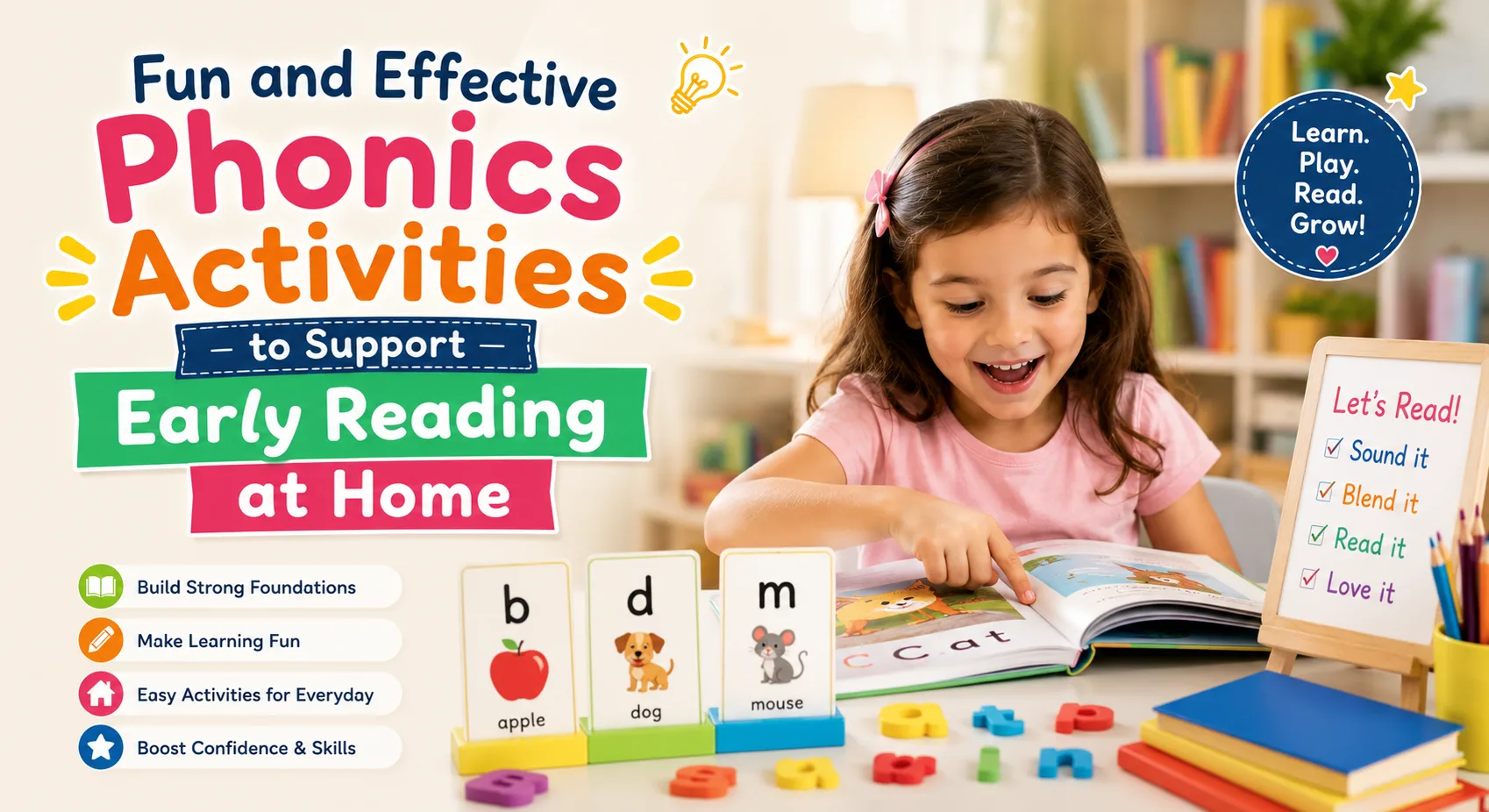
Learning to read is an important step in a child’s early education. Phonics helps children understand the connection between letters and sounds, making it easier for them to recognize, pronounce, and read words. When children learn through enjoyable activities, they are more likely to stay interested and develop confidence in their reading abilities.
For families looking to strengthen foundational literacy skills, Phonics and Early Reading in Dubai can be supported through simple and engaging activities at home. Parents do not need complicated teaching materials to encourage early reading. Regular practice, positive encouragement, and age-appropriate activities can make a meaningful difference in a child’s progress.
Why Phonics Is Important for Early Reading
Phonics teaches children how written letters represent spoken sounds. Instead of memorizing every word, children learn to break unfamiliar words into smaller sound units. For example, a child learning the sounds represented by “c,” “a,” and “t” can combine them to read the word “cat.”
This approach supports both word recognition and pronunciation. As children become familiar with common letter sounds, they can begin to decode new words independently. Phonics can therefore provide an important foundation for developing reading fluency and comprehension.
Make Letter Sounds Part of Everyday Learning
Parents can introduce phonics naturally during daily activities. While preparing meals, shopping, or getting ready for school, they can point out familiar letters and ask children what sounds they make. Short conversations about sounds can turn ordinary moments into useful learning opportunities.
For younger children, it is helpful to begin with simple and familiar sounds. Parents can say a sound clearly and encourage the child to repeat it. Over time, children can be introduced to more letters and sounds as their confidence grows.
Try Sound Matching Games
Sound matching games are a simple way to help children recognize similar sounds. Parents can place pictures or objects in front of the child and ask them to identify items that begin with the same sound.
For example, a child might group a ball, book, and banana because they all begin with the /b/ sound. These activities encourage children to listen carefully and notice the sounds within words.
Games can also be adapted to suit different ages. Younger children may focus on identifying beginning sounds, while older children can work with ending sounds or sounds in the middle of words.
Use Rhymes and Songs to Build Awareness
Rhymes and songs can make phonics practice more enjoyable. Rhyming activities help children notice similarities between words and develop an awareness of how words sound.
Parents can read simple rhyming books aloud and pause before the final word in a familiar rhyme. The child can then try to predict the missing word. This encourages active listening while helping children recognize sound patterns.
Clapping along with syllables is another useful activity. Children can clap the individual parts of words such as “sun-shine” or “ap-ple.” Such activities gradually improve their awareness of how spoken words are structured.
Practice Blending Sounds Into Words
Once children know several letter sounds, blending becomes an important next step. Parents can pronounce individual sounds slowly and ask the child to combine them into a word.
For instance, saying /m/ /a/ /p/ and then blending the sounds can help the child read “map.” It is useful to begin with short, simple words before moving to longer ones.
Children may need repeated practice before blending becomes automatic. Parents should allow them enough time to think rather than immediately providing the answer. Gentle guidance can help maintain confidence.
Create a Positive Reading Routine
A consistent reading routine can help children associate books with enjoyment rather than pressure. Setting aside a short period each day for reading can be more effective than occasional long sessions.
Parents can allow children to choose books based on their interests. Reading the same favorite story several times is also beneficial because repetition helps children become familiar with vocabulary, sentence patterns, and common words.
During shared reading, parents can point to words, discuss pictures, and ask simple questions about the story. These conversations support comprehension alongside phonics development.
Encourage Progress Without Pressure
Every child develops reading skills at a different pace. Some children quickly understand letter sounds, while others need more repetition and encouragement. Comparing children can reduce motivation and make reading feel stressful.
Instead, parents can celebrate small achievements, such as recognizing a new sound, blending a short word, or reading a sentence independently. Positive feedback can encourage children to continue practicing and become more confident learners.
Conclusion
Fun phonics activities can make early reading practice engaging, practical, and rewarding. From sound matching and rhyming games to shared reading and word blending, simple activities can help children build essential literacy skills gradually. A supportive home environment can also encourage curiosity and confidence as children develop their reading abilities. Families seeking structured approaches to early literacy can explore suitable learning support through IBPTI.