Garage Door Maintenance Tips for Chattanooga Homeowners
A garage door is easy to overlook until something goes wrong. Most homeowners use it every day, often several times, but do not think about maintenance until the door becomes noisy, slow, uneven, or stops working.
Regular maintenance can help identify worn components before they become major problems. It can also help a garage door operate more smoothly and safely while potentially extending the useful life of its components.
For homeowners in Chattanooga, routine care is particularly useful because outdoor conditions, humidity, rain, and changing temperatures can contribute to normal wear. Fortunately, many basic maintenance tasks are simple enough to include in a regular home-care routine.
Why Garage Door Maintenance Matters
A residential garage door is made up of several components that work together, including panels, rollers, tracks, springs, cables, hinges, sensors, and an automatic opener.
When one component starts wearing out, it can affect the rest of the system. For example, a damaged roller can make the door harder to move, while a door that is out of balance can place additional stress on the opener.
Routine maintenance helps homeowners notice these changes early.
Maintenance does not mean every problem can be prevented. Springs eventually wear out, cables can become damaged, and older openers may eventually need replacement. However, regular inspections can help homeowners address problems before they become unexpected breakdowns.
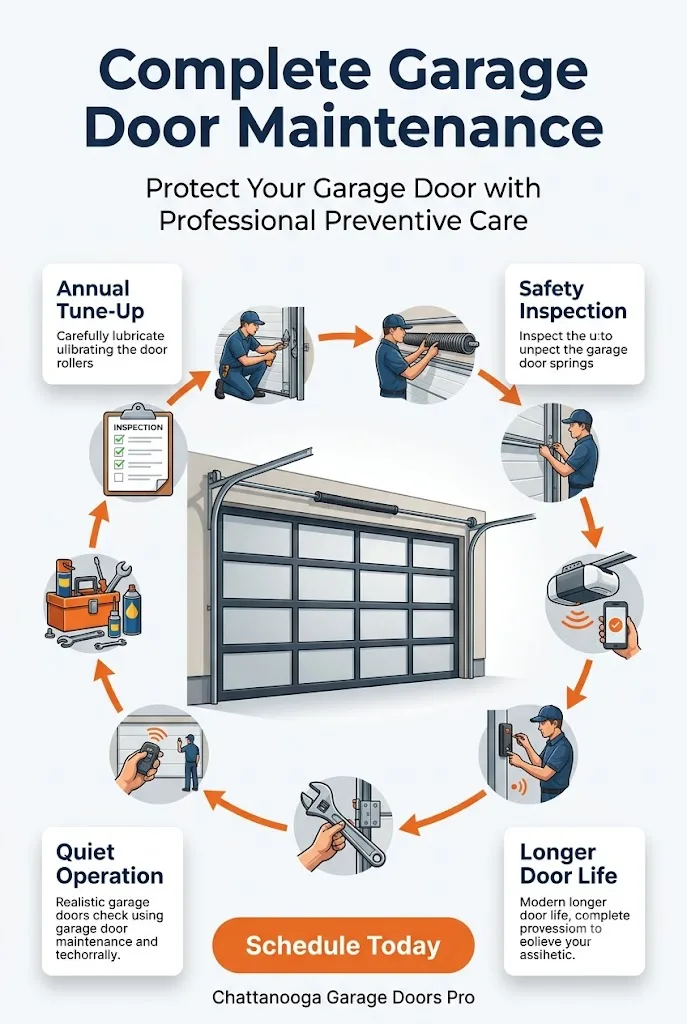
1. Inspect Your Garage Door Regularly
Start with a simple visual inspection.
Look at the door while it is closed and check for anything that appears unusual. Examine the panels, hinges, rollers, tracks, cables, and visible hardware.
Look for:
- Rust or corrosion
- Frayed cables
- Bent tracks
- Loose hardware
- Damaged rollers
- Cracked or damaged panels
- Gaps around seals
- Signs of impact
You do not need specialized equipment for a basic visual inspection. The goal is simply to notice changes that were not present before.
If something looks damaged or out of place, avoid forcing the door and consider having it professionally inspected.
2. Keep Garage Door Tracks Clean
The tracks guide the rollers as the door moves up and down. Dirt, leaves, dust, and other debris can collect around the tracks and interfere with smooth operation.
Periodically inspect both vertical and horizontal track sections. Remove loose debris carefully and make sure nothing is blocking the rollers.
Do not try to bend a track back into position if it has been damaged. A bent track can affect the movement and balance of the entire door.
Professional inspection may be necessary when tracks are visibly bent, loose, or significantly misaligned.
3. Pay Attention to the Rollers
Rollers help the garage door move through its tracks. Worn rollers can cause excessive noise, vibration, or uneven movement.
During a visual inspection, look for rollers that appear cracked, damaged, or excessively worn.
If your garage door has gradually become louder, rollers may be one of several components worth checking.
Replacing worn components at the appropriate time can help the door move more smoothly and reduce unnecessary strain on other parts.
4. Lubricate Appropriate Moving Parts
Some garage door components benefit from proper lubrication. Hinges, rollers, bearings, and other moving parts may require lubrication depending on the garage door system and manufacturer's recommendations.
Use a product designed for garage door components rather than applying random household oils.
Avoid putting lubricant on the garage door tracks simply because the tracks appear dry. The rollers should travel along the track, and excessive lubricant can attract dust and debris.
Always follow the manufacturer's maintenance instructions when available.
5. Check the Garage Door Balance
A properly balanced garage door should not feel excessively heavy when operated manually.
If you know how to safely disconnect the opener according to the manufacturer's instructions, the balance can be checked carefully. However, homeowners should never attempt to adjust springs themselves.
If the door is difficult to lift, drops unexpectedly, or does not remain in position, the spring system or another component may require professional attention.
Garage door springs are under significant tension, making spring adjustment and replacement unsuitable for most DIY maintenance.
6. Inspect Garage Door Cables
Garage door cables are an important part of the lifting system.
During a visual inspection, look for obvious signs of fraying, corrosion, looseness, or damage. Never pull on a cable or attempt to reposition one yourself.
A damaged cable can affect the way the door moves and may create a dangerous situation if the system is under tension.
If you notice a cable problem, professional garage door cable repair can address the damaged component and inspect related parts of the lifting mechanism.
7. Test the Garage Door Safety Sensors
Automatic garage doors normally include safety sensors near the bottom of the door tracks.
These sensors help detect objects in the door's path. If they are dirty, blocked, or misaligned, the door may reverse or refuse to close properly.
To maintain them:
- Keep the sensor lenses clean.
- Make sure nothing is blocking either sensor.
- Check that the sensors are facing each other.
- Test the door according to the manufacturer's safety instructions.
If the safety system does not work correctly, do not bypass it. Have the problem diagnosed instead.
8. Test the Auto-Reverse Feature
The automatic reverse feature is another important safety function.
A garage door opener should respond appropriately when its safety system detects an obstruction. Follow the manufacturer's instructions for testing this feature.
If the door does not reverse as expected, stop using the automatic system until the issue is properly evaluated.
Safety features should never be disabled simply because they are inconvenient.
9. Listen for Changes in Sound
One of the easiest maintenance habits is simply listening to your garage door.
You use the door frequently, so you are likely to notice when its sound changes.
Pay attention to:
- New squeaking
- Grinding
- Popping
- Loud rattling
- Scraping
- Sudden banging
A change in sound does not automatically identify the exact problem, but it can tell you that something deserves attention.
Early inspection may prevent a small mechanical issue from developing into a larger failure.
10. Check the Door's Weather Seal
The rubber seal around the bottom and sides of a garage door helps reduce drafts, moisture, dust, and outdoor air entering the garage.
Over time, seals can become cracked, brittle, or damaged.
Inspect the bottom seal and the weatherstripping around the door. If you see large gaps or obvious deterioration, replacement may improve the garage's protection from outside conditions.
This is especially useful for homeowners who use their garage for storage, workshops, or other activities where keeping outdoor moisture and dust under control matters.
11. Keep the Area Around the Door Clear
Garage door maintenance is not limited to the mechanical components.
Keep boxes, tools, bicycles, vehicles, and other objects away from the door's operating path.
An object placed too close to the tracks or directly underneath the door can interfere with operation or create a safety hazard.
A clear operating area also makes it easier to notice unusual movement or damage during regular inspections.
12. Check the Garage Door Panels
Garage door panels can be damaged by vehicle impacts, storms, accidents, or normal aging.
Small cosmetic damage may not always affect operation, but larger dents or structural damage can change the balance of the door.
Inspect panels for:
- Large dents
- Cracks
- Warping
- Rust
- Separation between sections
- Impact damage
If a panel is badly damaged, professional evaluation can determine whether the individual section can be repaired or whether replacement is more practical.
For homeowners dealing with significant panel damage, garage door panel replacement is one option to consider.
13. Take Chattanooga Weather Into Account
Chattanooga experiences changing weather conditions throughout the year. Rain, humidity, temperature changes, and seasonal storms can contribute to normal wear on exterior garage door components.
Homeowners should pay attention to signs of moisture exposure, corrosion, damaged weather seals, and deterioration of exterior surfaces.
After severe weather, it is sensible to give the garage door a quick visual inspection. Look for obvious damage before continuing normal operation.
If the door was hit by a vehicle, fallen branch, or other object, do not assume it is safe simply because it still opens.
14. Do Not Ignore a Noisy Garage Door
A noisy garage door is sometimes treated as a normal part of owning a home.
Some operating noise is expected, but a sudden increase in noise deserves attention.
A noisy door may have worn rollers, loose hardware, track issues, or another mechanical problem.
The longer a damaged component operates, the greater the possibility that other components may experience additional wear.
Getting the issue checked early can be more practical than waiting for the door to stop working completely.
15. Know When Maintenance Is No Longer Enough
Routine maintenance is useful, but it cannot repair every problem.
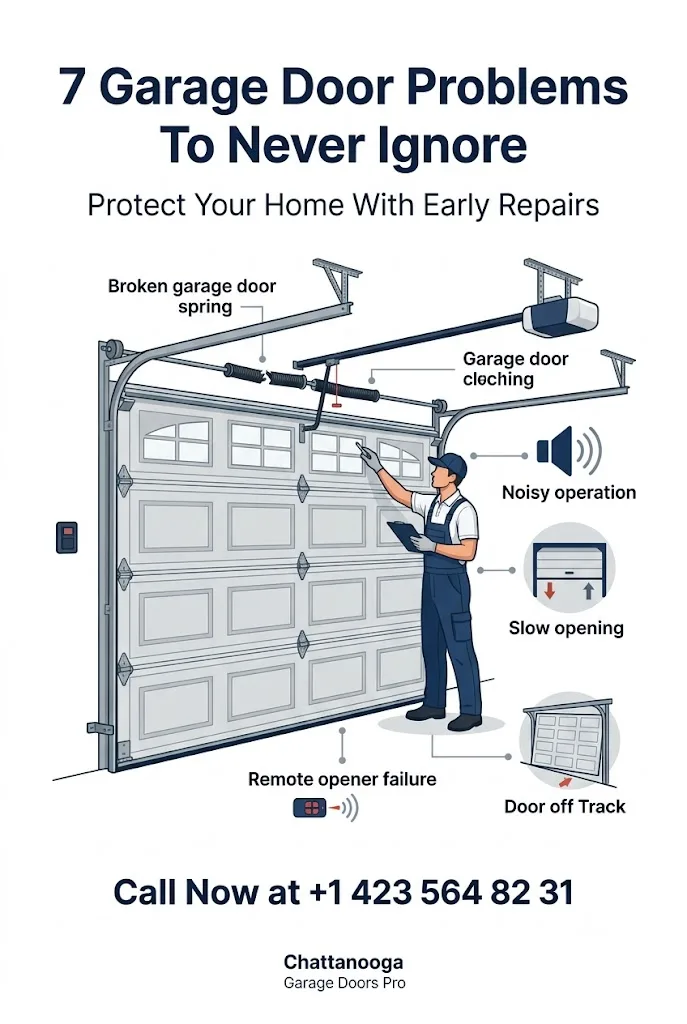
Professional service may be necessary when you notice:
- A broken spring
- Frayed or broken cables
- A door off its tracks
- Severe panel damage
- A malfunctioning opener
- Repeated safety sensor problems
- A door that will not open or close
- Severe imbalance
- Bent or damaged tracks
These problems involve components that can be heavy or under significant mechanical tension.
Trying to repair them without the proper knowledge and equipment can cause additional damage or injury.
Garage Door Maintenance for Commercial Properties
The maintenance needs of commercial garage doors can be different from those of residential doors. Commercial systems may experience much heavier use, larger doors, and different operating requirements.
Businesses should pay close attention to operating speed, unusual noises, damaged hardware, safety features, and signs of excessive wear.
Regular professional maintenance can help businesses reduce unexpected downtime and identify problems before they interrupt daily operations.
For businesses that need specialized service, commercial garage door services can provide information about maintenance and repair options for commercial garage door systems.
How Often Should You Maintain a Garage Door?
There is no universal maintenance schedule that works for every garage door.
A door used several times each day will naturally experience more wear than one used occasionally. The age of the system, local weather exposure, door type, and condition of its components also matter.
A practical approach is to perform a quick visual and operational check regularly and pay attention to any changes.
For more detailed maintenance tasks, follow the garage door manufacturer's recommendations.
When Should You Call a Professional?
Homeowners can safely handle simple tasks such as keeping the operating area clear, checking for visible damage, cleaning sensor lenses, and observing unusual changes.
More complex repairs should be left to qualified professionals.
Call for professional service if:
- The door suddenly becomes very heavy.
- A spring breaks.
- A cable becomes frayed or disconnected.
- The door comes off its tracks.
- The opener stops working correctly.
- The door becomes severely uneven.
- A panel is structurally damaged.
- Safety features do not operate properly.
Professional service is particularly important for springs and cables because these components can store significant mechanical energy.
Final Thoughts
Regular garage door maintenance does not have to be complicated. Simple inspections, cleaning, safety checks, and attention to unusual sounds can help homeowners recognize problems early.
For Chattanooga homeowners, taking weather and regular daily use into account is also important. A garage door that receives routine attention is easier to monitor than one that is ignored until it fails.
The key is to know the difference between basic maintenance and a repair that requires professional equipment or experience. When you notice damaged cables, broken springs, severe track problems, major panel damage, or opener issues, professional inspection is the safer choice.
A few minutes of regular attention can help you avoid being surprised by a garage door that refuses to open when you need to leave for work or get your vehicle inside.