
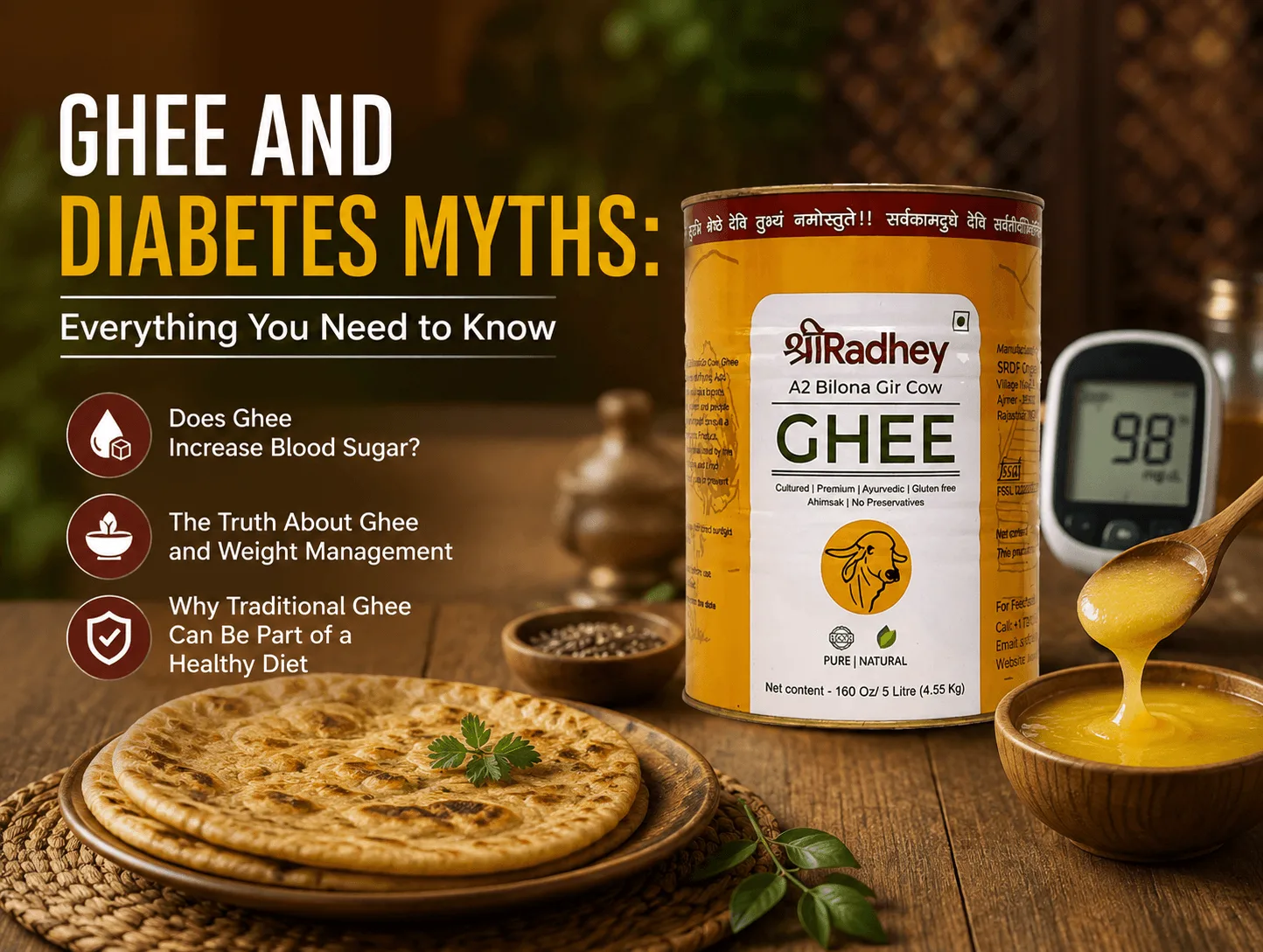
Ghee has been a part of traditional Indian diets for generations, but its role in a diabetes-friendly diet is often misunderstood. Some people believe that ghee should be completely avoided if you have diabetes, while others consider it a healthy fat that can be enjoyed regularly.
A2 Organic Ghee is primarily a source of fat and contains virtually no carbohydrates, but the quantity consumed, overall diet, individual health needs, and the type of ghee can all influence whether it fits into a diabetes-conscious eating pattern. Understanding the facts can help you make smarter choices instead of following common myths.
Can People With Diabetes Eat Ghee?
Diabetes patients are, in most of the cases, allowed to consume ghee in small amounts on a regular basis. Ghee is a low-carbohydrate fat; it does not create the sudden blood glucose spike in diabetics which are associated with carbohydrate-rich foods, but it doesn't mean that consumption can be uncontrolled.
In the case of taking ghee for diabetes, quantity is quite important. As Ghee is very high in calories, taking a good amount of ghee daily will also increase the intake of calories and saturated fat; so a balanced approach is to add a small quantity of ghee along with low-calorie & highly nutritious foods like vegetables, whole grains, pulses, and protein.
Is Ghee Good for Diabetes?
A2 Certified Ghee could bring flavor and richness and enhance bland foods; however it should be considered as a source of fat in the diet, not a therapy for diabetes. It could be appropriate to include small amounts of properly prepared ghee in a diabetic diet instead of large amounts of refined fat or processed foods.
However, ghee cannot control blood glucose; neither does it substitute for conventional treatment for diabetes, exercise, or a healthy diet. Click to learn why is desi cow ghee good for diabetes?
Understanding the Role of Ghee in Diabetes
When using ghee in diabetes, one important point is that foods should not be judged in isolation. A spoonful of ghee added to a vegetable-based meal is very different from consuming large quantities of ghee alongside refined carbohydrates and calorie-dense foods.
Pairing healthy carbohydrates with fiber, protein, and appropriate amounts of fat can help create a more balanced meal. Ghee can be one component of that meal, but it should not become the main source of calories.
Common Myths About Ghee and Diabetes
Myth 1: People With Diabetes Must Completely Avoid Ghee
People think that since a diabetic needs to cut fat from their diets. However, fat can be a part of your overall diet if practiced in moderation.
So instead of cutting out ghee from the entire diet, individuals can check with their physicians or a dietitian as to how much would be an advisable amount per day (especially if they have cholesterol or are managing heart disease risks too).
Myth 2: Ghee Lowers Blood Sugar
Ghee cannot be described as a natural remedy for diabetes. Even though ghee contains little or no carbohydrate, that in itself does not mean that you will have lower blood glucose levels after you eat it.
If you are currently on medication for diabetes, follow your doctor's recommendations closely, as dietary components cannot replace the treatment. Click to learn why a2 cow ghee is the perfect medicine for diabetes.
Myth 3: More Ghee Means More Health Benefits
Pure A2 Cow Ghee has high-density energy, which means that even a very small amount can provide a considerable number of calories. Too much ghee can make the individual to maintain a healthy energy balance.
If you decide on ghee for a diabetic patient's diet, then keeping a check on its quantity should still be a prime factor. A spoonful of ghee will be sufficient to add flavor, and not make the entire meal consist of fat.
Myth 4: All Ghee Is the Same
Not every ghee product is made in the same way. Preparation methods, milk source, processing, storage, and overall product quality can vary.
Consumers interested in adding ghee to their diet should look for a quality product with clear sourcing and preparation information. Traditional varieties, such as bilona-style ghee, are often valued for their traditional preparation methods, although the term itself should not be interpreted as a medical benefit.
How Much Ghee Can You Have With Diabetes?
There’s no specific number of tablespoons per day prescribed for a person with diabetes. What works depends on individual needs for calories, as well as levels of cholesterol, medications used, body composition, and other lifestyle factors such as activity.
Don’t get stuck on exact spoon measurements and instead, keep the total amount of fat in your diet in mind. If you’re unclear about your portion, especially those with concerns regarding high cholesterol and heart disease, a healthcare professional can help you determine what works for your individual needs.
How to Include Ghee in a Diabetes-Friendly Diet
The most appropriate form of consuming ghee should be understood as a tiny portion of a balanced meal. Such small portions can add flavor to vegetables, legumes, grains, and traditional meals, but one should not end up consuming enormous amounts of refined carbs and sugar.
Rather than adding plenty of ghee to a carb-heavy meal, consume it along with fiber sources like fibrous vegetables and grains.
Ghee for Diabetes Patients: What Should You Consider?
If you're choosing ghee for diabetes patient diets, don't focus on whether the ghee has sugar. Think about your overall calories, portion size of the ghee, how much fat you're getting from the entire dish, if you are consuming saturated fat, you'll need to look at your overall diet, and how much the rest of your meals. What is right for an individual might be a bad decision for the next.
Especially if you have diabetes and have other sicknesses, online food guarantees may not be the appropriate resolution for you, and a well-thought-out dietary regimen could serve as an extra benefit.
The Bottom Line: Can Ghee Be Part of a Diabetes-Friendly Diet?
Ghee can be included in many diabetes-conscious diets when consumed in appropriate portions, but it should not be treated as a diabetes remedy or a food that automatically improves blood sugar control.
For those looking for traditionally prepared ghee in diabetes meal planning, choosing a quality product and using it thoughtfully can help you enjoy its familiar flavor while keeping your overall diet balanced. Shree Radhey offers premium A2 ghee in India, making it a flavorful addition to a balanced, diabetes-friendly diet when consumed in moderation.
Originally Posted On: Ghee and Diabetes Myths: Everything You Need to Know