Building a super app is no longer limited to large technology companies. Startups, entrepreneurs, enterprises, and established businesses can now launch multi-service platforms that combine transportation, food delivery, grocery, home services, and other everyday needs in one application.
However, choosing the right business model is an important first step. The Gojek model and Grab model offer different approaches to combining on-demand services, marketplace operations, and customer engagement.
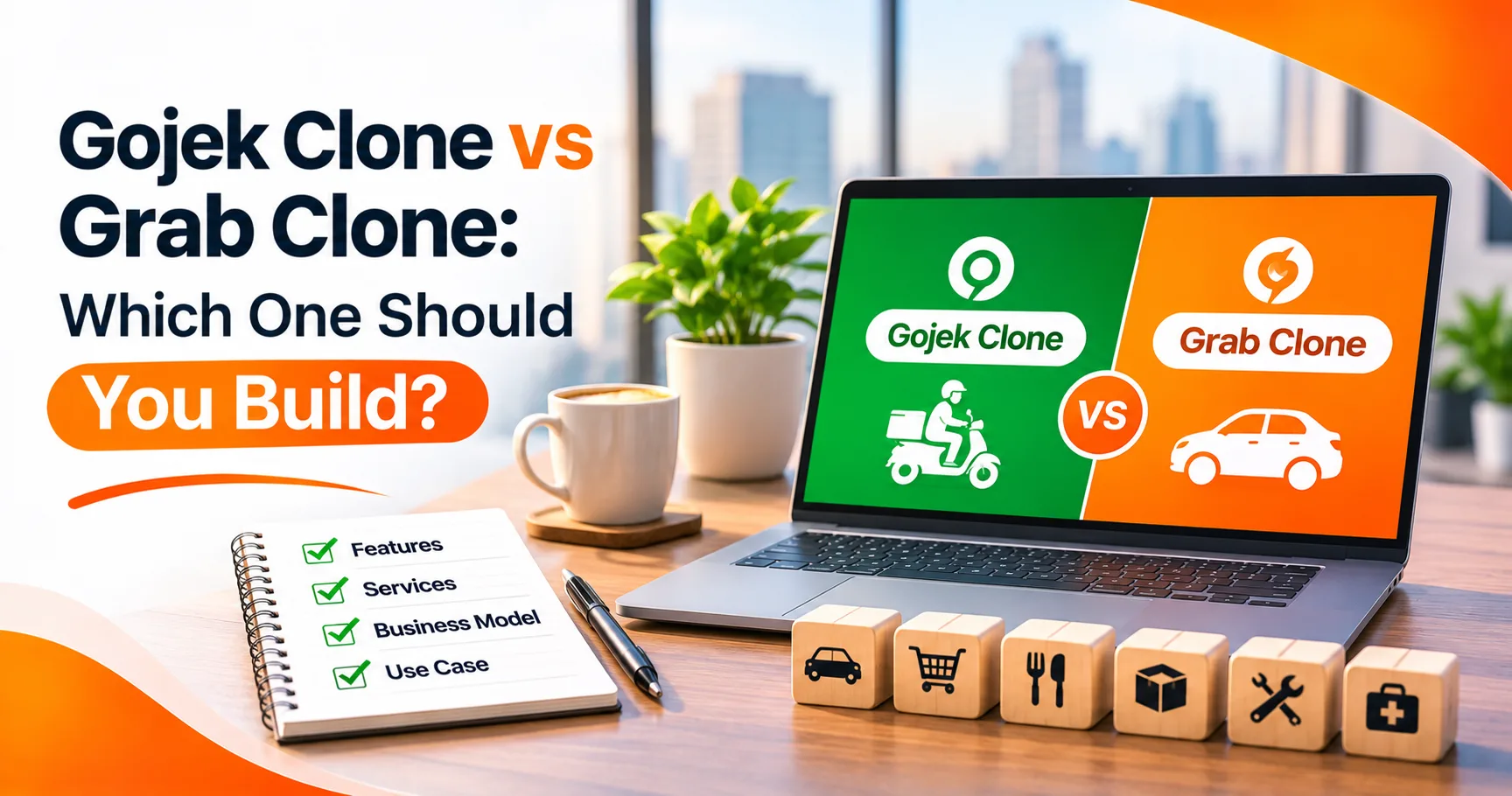
This makes the Gojek Clone vs Grab Clone decision important for businesses planning to enter the super app market. Instead of choosing a model simply because it is popular, businesses should evaluate their target market, service categories, operating model, and long-term expansion plans.
Understanding the Gojek and Grab Business Models
Gojek and Grab are both well-known examples of super apps, but their service structures and market strategies have developed differently.
The Gojek model is strongly associated with combining multiple local services within one platform. These can include ride-hailing, food delivery, grocery delivery, payments, courier services, and home services.
The Grab model also follows a multi-service approach, bringing transportation, food, delivery, financial services, and other offerings together. Its ecosystem is designed around frequent customer interactions and multiple service categories.
For businesses, the difference is less about copying a particular brand and more about selecting a model that matches their target market.
A Gojek-style platform may be suitable when the goal is to build a broad local services ecosystem. A Grab-style model can be attractive for businesses that want to connect mobility, delivery, and other high-frequency services.
Gojek Clone vs Grab Clone: What Is the Main Difference?
The main difference comes down to how you want to structure your service ecosystem.
A Gojek clone app development platform generally focuses on creating a wide range of on-demand services under one application. The business can add categories based on local demand and gradually expand into new services.
A Grab-inspired platform can also support several services but may place stronger emphasis on mobility, delivery, payments, and related services.
The Gojek Clone vs Grab Clone decision should therefore start with your business objectives rather than the name of the original platform.
Ask yourself:
- Do you want to launch multiple services from the beginning?
- Is transportation an important part of your business?
- Do you want to add grocery and food delivery?
- Will home services be part of your marketplace?
- Do you plan to expand service categories over time?
- Is your target market a city, country, or multiple regions?
The answers can help determine which model fits your business better.
Services You Can Offer With a Gojek-Style Model
One of the strongest advantages of a Gojek-style super app is service flexibility.
You can create a marketplace where users access several services from a single account instead of installing separate applications for every need.
Common categories include:
Ride-Hailing
Users can book cars, bikes, taxis, or other transportation services. Drivers receive requests through their dedicated application and manage trips from one place.
Food Delivery
Restaurants can list menus, manage orders, and coordinate deliveries. Customers can discover restaurants, place orders, make payments, and track deliveries.
Grocery Delivery
A grocery delivery app solution can connect customers with supermarkets, local stores, and independent grocery sellers. Businesses can support scheduled or on-demand deliveries depending on their market.
Handyman Services
A handyman app like Uber allows customers to request professionals for services such as plumbing, electrical work, cleaning, appliance repair, or maintenance.
Courier and Package Delivery
Customers and businesses can use the platform to send documents, parcels, and other items through local delivery partners.
This flexibility is one reason businesses consider the Gojek Clone vs Grab Clone approach when planning a multi-service marketplace.
Services You Can Offer With a Grab-Style Model
A Grab-inspired platform can also support a broad ecosystem of services.
The exact combination depends on the business strategy and geographical market. Common options include:
- Taxi and ride booking
- Food delivery
- Grocery delivery
- Courier services
- Package delivery
- Digital payments
- Business delivery services
- Local marketplace services
The advantage is that businesses can build around their strongest category and gradually introduce complementary services.
For example, a company could start with taxi booking, introduce food delivery later, and eventually add grocery or courier services.
This staged expansion can reduce operational complexity while allowing the business to validate demand before entering new categories.
Multi Service App Features You Should Consider
Regardless of the chosen model, the platform needs features that make multiple services easy to discover and manage.
Important Multi Service App Features include:
Unified User Account
Customers should be able to access different services using one account rather than maintaining separate profiles.
Service Discovery
A clear home screen should help users quickly find transportation, food, grocery, handyman, courier, and other available services.
Location-Based Services
Location detection helps customers find nearby restaurants, stores, drivers, and service professionals.
Real-Time Tracking
Users should be able to monitor rides, deliveries, or service requests after placing an order.
Multiple Payment Options
Supporting cards, digital wallets, cash, and other relevant payment methods can make transactions more convenient.
Ratings and Reviews
Customers can rate drivers, delivery partners, stores, restaurants, and service professionals to improve marketplace transparency.
Promotions and Referral Programs
Discounts, promotional campaigns, and referral programs can help businesses attract new users and encourage repeat transactions.
Notifications
Push notifications can keep users informed about order confirmations, driver assignments, delivery progress, promotions, and service updates.
These capabilities support a consistent customer experience across different service categories.
Gojek Clone App Workflow vs Grab Clone App Workflow
The basic workflow of both models can be similar, but businesses can customize the process according to their services.
A typical Gojek clone app workflow begins when a customer opens the application and selects a service. The customer enters the required details, chooses a provider or receives an automated match, confirms the request, completes the transaction, and tracks the service until completion.
For example, a grocery order may involve selecting a store, adding products to the cart, confirming delivery details, paying, and tracking the delivery partner.
A Grab Clone App workflow can follow a similar structure. A customer selects transportation or another service, provides the required information, receives a service provider, confirms the request, tracks progress, and completes the transaction.
The important consideration is consistency. Customers should not feel like they are using completely different applications when switching between services.
Which Model Is Better for Startups?
Startups should avoid launching too many services simply because a super app can support them.
The better approach is to identify one or two services with strong local demand and build the marketplace around them.
For example, a startup in a large urban market could begin with ride-hailing and food delivery. Another business may start with grocery and courier services.
The Gojek Clone vs Grab Clone choice becomes easier when the initial business model is clearly defined.
If your long-term objective is to create a broad local services marketplace, a Gojek-inspired model can provide greater flexibility for adding categories.
If your business is primarily focused on transportation and delivery and intends to expand gradually, a Grab-inspired approach may be more appropriate.
Which Model Is Better for Enterprises?
Enterprises usually have more resources to operate multiple service categories, partnerships, geographic markets, and customer segments.
For these businesses, the decision should focus on ecosystem strategy.
A company with an established transportation network could add food, grocery, courier, and financial services around its existing customer base.
A company already operating in retail or delivery could take the opposite approach by adding transportation and local services.
The key is to create meaningful connections between services. Adding categories without a clear relationship can make the application difficult to manage and confusing for customers.
What About Super App Clone Pricing?
Super app clone pricing should not be the first factor used to select a business model.
Instead, businesses should first define their service categories, user roles, geographical scope, marketplace requirements, and customization needs.
The final investment can vary considerably depending on the scope of the platform. A business launching a basic two-service marketplace will naturally have different requirements from an enterprise planning a broad multi-service ecosystem.
Therefore, evaluate the business model and required capabilities first. Financial planning should follow the defined scope rather than determine the entire product strategy.
How to Choose Between Gojek and Grab Models
The Gojek Clone vs Grab Clone comparison becomes much simpler when you evaluate the decision against practical business requirements.
Choose a Gojek-inspired model if you want:
- A broad multi-service marketplace
- Multiple local on-demand categories
- Flexible service expansion
- Food, grocery, mobility, and home services
- A single ecosystem for different everyday needs
Consider a Grab-inspired model if you want:
- A strong mobility-focused foundation
- Delivery and transportation integration
- Gradual service expansion
- A platform centered around frequent transactions
- An ecosystem connecting mobility and delivery services
There is no universal winner. The right choice depends on what you want to build and where you want to compete.
How to Build a Successful Super App
Selecting a clone model is only the starting point. The real business opportunity comes from adapting the model to your target market.
Start by researching customer demand and identifying the services people already use frequently. Then determine which providers, drivers, stores, restaurants, or professionals you need to bring onto the platform.
Your application should make switching between services simple. Consistent navigation, transparent transactions, reliable notifications, and straightforward booking processes can improve the overall user experience.
It is also important to plan service expansion carefully. Launching every possible category at once can create operational challenges. Starting with high-demand services allows businesses to establish marketplace activity before expanding.
The Gojek Clone vs Grab Clone decision should ultimately support this long-term strategy rather than simply determine the appearance or feature list of the application.
Final Thoughts
The Gojek Clone vs Grab Clone comparison is not about deciding which existing platform is better. It is about identifying which super app model aligns with your market, services, customers, and expansion strategy.
A Gojek-inspired model can be a strong option for businesses that want a broad multi-service ecosystem covering mobility, food, grocery, courier, and home services. A Grab-inspired model can work well for businesses that want to build around transportation and delivery while expanding into related services over time.
Before starting development, clearly define your target audience, initial services, marketplace workflow, provider requirements, and expansion roadmap. Working with an experienced clone app development company can then help turn that business model into a customized platform suited to your market.
FAQs
1. What is the main difference between a Gojek Clone and a Grab Clone?
A Gojek-style clone generally emphasizes a broad multi-service ecosystem, while a Grab-style model can focus strongly on mobility, delivery, and related services. Both models can be customized for different industries and markets.
2. Can I combine Gojek and Grab features in one application?
Yes. Businesses can create a customized super app that combines relevant features and services inspired by different marketplace models. The final product should be designed around the business requirements rather than copying one platform exactly.
3. Can a Gojek-style app include grocery and handyman services?
Yes. Grocery delivery, handyman services, courier delivery, food delivery, and transportation can all be included in a multi-service platform when they match the target market and operating strategy.
4. Is a Gojek or Grab model better for a startup?
Neither model is automatically better. Startups should choose based on local demand, available service providers, competition, operational capabilities, and their planned expansion strategy.
5. Can I launch a super app with only a few services initially?
Yes. Starting with a focused set of high-demand services can be a practical strategy. Businesses can validate demand and gradually add new categories as their marketplace grows.