
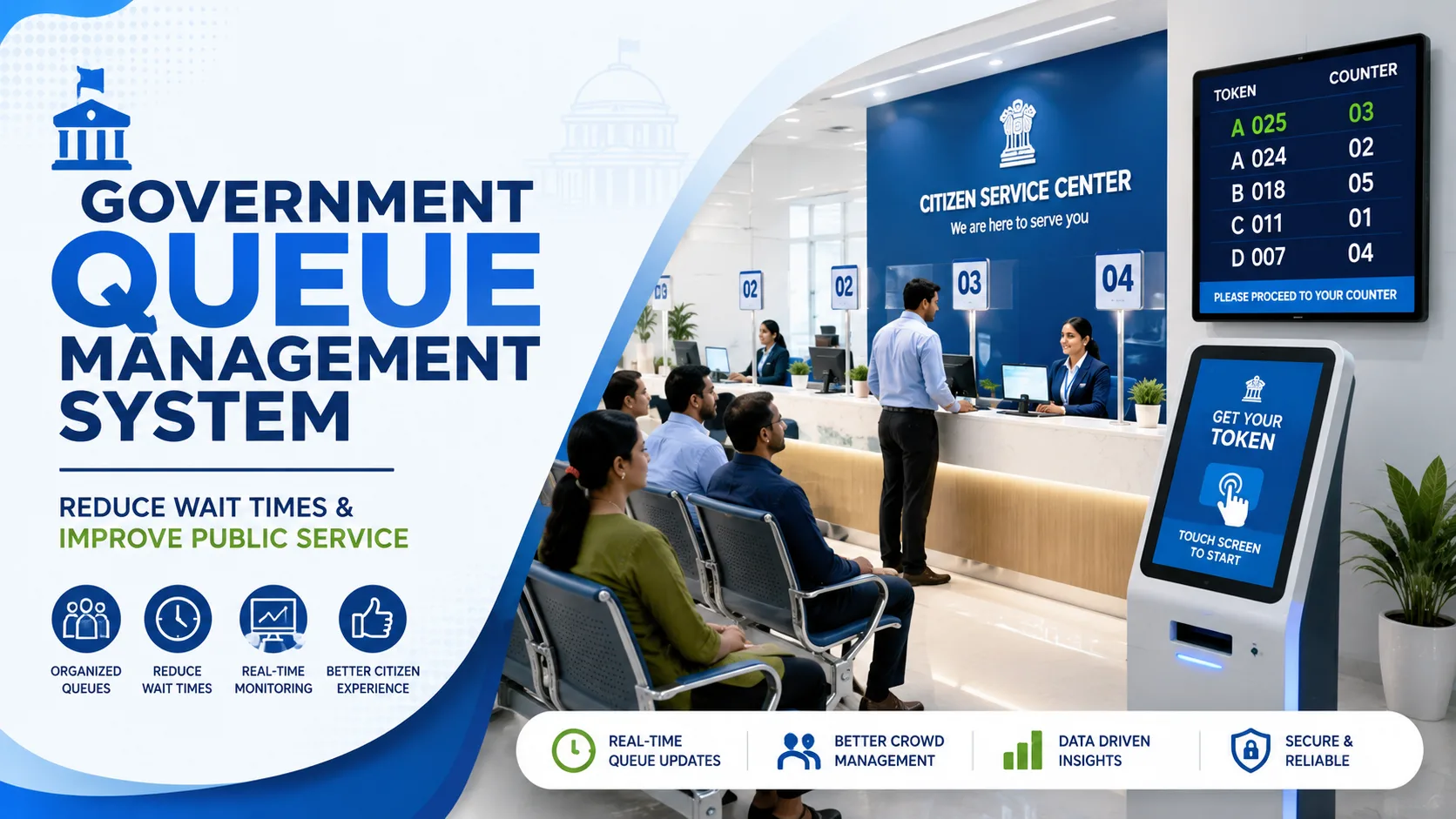
Government offices handle thousands of citizen interactions every day. From driver's license applications and passport services to tax assistance and municipal services, managing visitor flow efficiently is essential. Long waiting lines, overcrowded service areas, and inefficient processes can negatively impact both citizens and government employees.
A government queue management system helps public sector organizations streamline service delivery, reduce wait times, and improve the overall citizen experience. By digitizing and automating queue management, government offices can provide faster, more organized, and more transparent services.
In this guide, we'll explore how a government queue management system works, its benefits, and why it is considered the best queue management system for government offices seeking digital transformation.
What Is a Government Queue Management System?
A government queue management system is a digital solution designed to organize, monitor, and manage citizen visits to public service centers. Instead of waiting in long physical lines, visitors receive digital tickets, schedule appointments, and track their queue status in real time.
The system helps government agencies improve operational efficiency while ensuring citizens receive services in a fair and timely manner.
Key Features Include:
- Digital ticketing and token generation
- Online appointment scheduling
- Virtual queuing
- Real-time queue monitoring
- SMS and email notifications
- Self-service kiosks
- Service performance analytics
- Multi-location management
These features allow government offices to handle high visitor volumes while maintaining service quality.
Challenges Faced by Government Offices
Many government agencies still rely on traditional queue management methods, which often create operational challenges.
Long Waiting Times
Citizens frequently spend significant time waiting for services, leading to frustration and dissatisfaction.
Overcrowded Service Centers
Physical queues can cause congestion, especially during peak service hours.
Limited Visibility
Without digital tracking, managers have little insight into wait times, service performance, and visitor flow.
Resource Allocation Issues
Government offices often struggle to assign staff effectively due to unpredictable service demand.
A modern government queue management system addresses these issues through automation and data-driven management.
Benefits of a Government Queue Management System
1. Reduced Citizen Waiting Times
One of the primary benefits is the ability to significantly reduce waiting times. Citizens can join virtual queues, book appointments online, and receive notifications when their turn is approaching.
This minimizes unnecessary waiting and improves overall service efficiency.
2. Improved Citizen Experience
Modern citizens expect convenient and efficient public services. A digital queue management solution provides a smoother experience by offering:
- Appointment scheduling
- Mobile queue updates
- Digital ticketing
- Faster service delivery
Higher satisfaction leads to greater trust in government services.
3. Enhanced Staff Productivity
Employees can focus on serving citizens rather than manually managing queues. Automated queue allocation helps balance workloads and reduce administrative burdens.
4. Real-Time Monitoring and Reporting
Government administrators gain access to valuable performance metrics, including:
- Average waiting times
- Service durations
- Daily visitor volumes
- Staff efficiency
- Peak service periods
These insights support continuous service improvement.
5. Better Crowd Management
Virtual queuing reduces overcrowding in waiting areas. Citizens can wait comfortably elsewhere while monitoring their queue status through mobile notifications.
This creates a safer and more organized service environment.
Why Government Offices Need Digital Queue Management
Government agencies are increasingly embracing digital transformation initiatives to improve public service delivery.
A government queue management system supports these efforts by:
- Increasing operational efficiency
- Improving transparency
- Enhancing citizen satisfaction
- Reducing service bottlenecks
- Supporting data-driven decision-making
Whether serving hundreds or thousands of visitors daily, queue management technology helps agencies operate more effectively.
Applications Across Government Departments
Driver Licensing Offices
Manage license applications, renewals, and testing appointments efficiently.
Passport and Immigration Services
Reduce waiting times and improve document processing workflows.
Municipal Service Centers
Handle permits, registrations, and citizen inquiries more effectively.
Tax and Revenue Departments
Organize consultations and support services during peak filing periods.
Social Welfare Offices
Provide better service experiences for citizens seeking assistance programs.
Features of the Best Queue Management System for Government Offices
When evaluating the best queue management system for government offices, agencies should prioritize the following features:
Appointment Booking System
Allow citizens to schedule visits online before arriving.
Virtual Queue Management
Enable remote waiting and real-time queue updates.
Self-Service Kiosks
Provide convenient ticket generation at service centers.
Multi-Department Support
Manage various government services from a single platform.
Advanced Analytics
Access reports and dashboards to optimize operations and resource allocation.
Multilingual Support
Accommodate diverse citizen populations with language options.
Integration Capabilities
Connect with existing government systems and digital service platforms.
How Queue Management Supports Digital Government Initiatives
Many governments worldwide are investing in smart governance and citizen-centric services. Queue management technology plays a critical role by digitizing service delivery and reducing administrative inefficiencies.
By leveraging a government queue management system, agencies can modernize operations while providing citizens with a more convenient and transparent experience.
The Future of Government Queue Management
Emerging technologies such as artificial intelligence, predictive analytics, and mobile applications are shaping the future of public service delivery.
Future queue management solutions will enable:
- Predictive visitor flow analysis
- Automated service recommendations
- Personalized citizen experiences
- Smart resource allocation
- Enhanced mobile interactions
These innovations will help government offices deliver faster and more efficient services.
Conclusion
A government queue management system is an essential tool for modern public service organizations. By automating queue processes, reducing wait times, and improving operational visibility, government agencies can provide better experiences for citizens while increasing staff productivity.
For agencies seeking the best queue management system for government offices, investing in a scalable and feature-rich solution can significantly improve service delivery, support digital transformation goals, and enhance citizen satisfaction.
As governments continue to modernize their services, digital queue management will remain a key component of efficient and citizen-focused operations.