
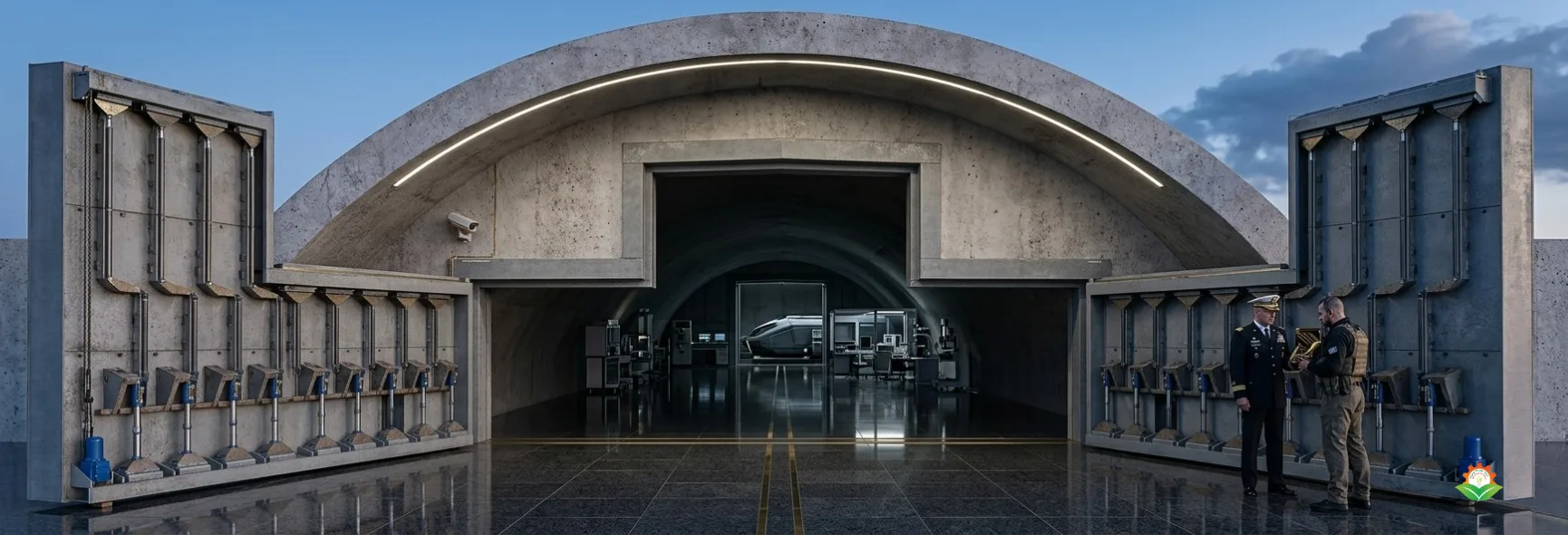
A night shift at a coastal MRO: technicians finish an inspection, a medium-sized transport aircraft positions for overnight shelter, and the duty engineer radios the operator—“Door clear.” The hangar door begins its measured lift, guided by pre-set routines, as gusts from a monsoon front test the seals. Installation quality and commissioning make that controlled movement possible; poor installation turns this routine into a costly hazard.
A correctly specified and installed hangar door matters for aviation and industrial infrastructure because it affects safety, operational uptime, and long-term costs. From military airbases to commercial MROs, understanding what to expect during hangar door installation prevents schedule overruns and guarantees performance under real-world loads. This article outlines the installation process, engineering checkpoints, and procurement considerations for aircraft hangar doors.
What the hangar door system is and how it works
Hangar doors come in several types—sliding, vertical lift, bi-fold, folding-panel, and rolling systems—each using tracks, cables, counterweights, or hydraulic/electric actuators. During installation, mechanical drives, guide rails, seals, and control systems are integrated with the building structure to provide full-width clear-span access and environmental protection.
Pre-installation engineering and site prep
Successful installations begin with detailed site surveys and structural assessments. Engineers verify header and jamb capacities, foundation grades for track supports, and clearances for taxi lanes. Wind-load and seismic data are confirmed against local codes to determine anchorage and reinforcement needs. This phase also coordinates utilities for power, control cabling, and grounding.
Primary installation stages
- Structural works: install reinforced lintels or beam supports, anchor plates, and guide rail foundations. Precision here controls long-term alignment.
- Door assembly: panels and frames are assembled on-site or pre-assembled, then staged for lifting. For very large airplane hangar doors, modular assembly reduces crane time.
- Drive and control fitment: motors, gearboxes, hydraulic units, and safety interlocks are installed and wired. Redundant safety circuits are recommended for high-security or defence sites.
- Sealing and finishing: thresholds, perimeter seals, and weather stripping are fitted; drainage and thermal breaks are completed to protect HVAC performance.
- Commissioning: functional testing, load trials, and programmed safety tests verify operation under worst-case wind and emergency scenarios.
Key engineering principles during installation
Alignment precision is critical; uneven guide rails increase wear and create binding risks. Load paths must transfer door weights and wind reactions into primary structure, not into secondary finishes. Control systems should include soft-start profiles to reduce dynamic shock and wear. For blast- or fire-rated doors, certified fixtures and latching sequences are required.
Operational advantages realized after correct installation
Proper installation produces predictable cycle times, reduced maintenance, and safer apron operations. Automation features such as programmable limits, remote diagnostics, and integration with AGL or base security systems streamline workflows. Large clear-span access improves aircraft movement and interior layout flexibility.
Safety, weather resistance, and structural performance
Installers must verify lateral bracing, latch redundancy, and wind-loading anchors. Seals and thermal breaks prevent water ingress and reduce HVAC loads—essential for climate-controlled MRO spaces. Corrosion-resistant hardware and appropriate coatings mitigate coastal or industrial atmospheres.
Automation and space optimisation
Vertical lift and folding doors conserve apron depth while sliding doors may maximise usable interior height. During installation, cable routings, drive placements, and obstruction clearances determine final aircraft manoeuvring space—so integrate taxiway geometry into door positioning decisions.
Maintenance expectations post-installation
A well-documented maintenance plan should be handed over at handoff. Typical tasks include lubrication of bearings, inspection of drive belts/cables, seal checks, and periodic limit recalibration. Quality installations ease future servicing by providing accessible inspection points and modular component replacement.
Key features to verify at handover
- Structural strength and certified wind-load ratings
- Corrosion-resistant materials and protective coatings
- Durable bearings, rollers, and guide rails
- Continuous weather seals and drainage
- Reliable automation with safety interlocks
- Energy-efficient insulated panels if required
- Low-maintenance design and spare-part availability
- Clear-span access without central obstructions
- Security integration and locking redundancy
Applications and special considerations
Installers tailor procedures for aircraft hangars, helicopter shelters, defence facilities, aerospace manufacturing plants, and logistics hubs. Military and critical infrastructure projects may require blast-resistant detail, hardened latches, and rapid emergency-open sequences. MROs prioritise automation diagnostics and integration with facility management systems.
Cost and investment factors during installation
Major cost drivers include door dimensions (larger clearances mean stronger supporting structures), material quality, on-site assembly complexity, and the chosen automation level. Retrofits typically incur higher civil modification costs. Allow budget for precision foundations, crane time, and commissioning tests to avoid surprises.
Buyer’s guide for selecting suppliers and installers
Evaluate suppliers on industry experience, demonstrated hangar door design capability, manufacturing quality, and compliance certifications. Confirm on-site installation services, commissioning support, and post-installation maintenance contracts. For regional procurement, comparing references from hangar projects in India helps verify real-world performance from hangar door manufacturers in India.
Common mistakes to avoid
- Accepting generic designs without structural integration checks.
- Underestimating crane and staging requirements.
- Choosing a door type without considering taxiway geometry.
- Skipping full commissioning tests and worst-case wind trials.
Failing to secure spare parts and service agreements.
For technical specifications and blast-protected hangar door options used in demanding facilities, consult manufacturer technical pages such as this detailed resource on Hangar door systems which outlines integration and performance considerations.
Conclusion
Expect installation to be an engineered process, not simple hardware delivery. Proper site preparation, precise structural integration, thorough commissioning, and robust maintenance planning ensure the hangar door performs reliably under daily operations and extreme events. Prioritise engineered solutions and experienced installers to protect aircraft, streamline operations, and secure long-term value for your facility.