How Onshore & Offshore Oil Rigs in Oman Depend on Hazardous Area PTZ Cameras With IR
A single helicopter transfer to inspect a remote flare stack can cost more than months of continuous camera monitoring, and that arithmetic is reshaping how Omani operators think about surveillance. PDO fields, along with offshore projects across the Arabian Gulf and developments at Tharwah and Baynunah, span some of the most physically demanding terrain in the region's energy sector. When physical access means a long desert drive or a weather-dependent boat trip, your visual monitoring infrastructure needs to carry considerably more of the operational load. Standard CCTV, built for stable indoor conditions, was never designed for that job.
The Environmental Challenge Unique to Omani Assets
Offshore platforms operating in Gulf waters combine several harsh conditions simultaneously. Corrosive sea air degrades unprotected camera housings within a season, while high humidity places continuous stress on internal electronics. Onshore fields carry a different but equally demanding profile, with dust and extreme desert heat testing equipment durability daily. Layered over both environments, drilling floors, flare stacks, and process modules sit within classified explosive gas zones where only certified equipment can legally operate. This combination is exactly why Hazardous Area PTZ Cameras With IR have become standard specification for Omani operators rather than an optional upgrade.

Where Manpower and Access Constraints Bite Hardest
Physical inspection rounds across Oman's remote desert and offshore locations carry genuine operational cost. Every helicopter or boat transfer represents direct expense and weather-dependent scheduling risk, and each trip briefly exposes personnel to hazard. Limited manpower access compounds the challenge further, since safety teams can only cover so much ground during a single visit to a distant field. An explosion proof ir ptz camera addresses this directly by giving onshore control rooms continuous visual access to drilling floors and process areas, reducing how often personnel need to physically enter remote or classified zones simply to confirm normal operating conditions.
Why 360° Coverage and Night Vision Matter Here
Rig surveillance across Omani assets needs to perform in conditions that would defeat standard cameras entirely. Three capabilities make the real difference:
- 360° coverage of large rig areas and process units, letting a single unit replace multiple fixed cameras across sprawling installations
- Night vision for low-light storms, night shifts, and remote operations where visual conditions deteriorate fastest
- Remote oversight from onshore control rooms in Muscat, Sohar, or Salalah, giving safety teams full situational awareness without anyone physically present at the site
An ATEX PTZ Camera With IR delivering all three gives rig managers a genuinely reliable window into operations, regardless of weather, distance, or time of day.
Technical Requirements Omani Operators Should Specify
Rig-grade equipment needs a specification sheet distinct from standard hazardous area cameras. At minimum, confirm units carry both ATEX/IECEx certification and relevant marine or DNV-style certification for offshore or coastal deployment. Housing material matters just as much: 316L stainless steel consistently outperforms standard alternatives against sustained salt and humidity exposure. Practical weather resilience features — integrated wipers, heater elements, and dependable IR performance — determine whether a camera survives a single harsh season or several years of continuous operation across desert heat and coastal humidity alike.
Operational Benefits Rig Managers Can Take to Budget Reviews
The case for upgrading is measurable rather than theoretical. Fewer helicopter and boat inspections translate directly into reduced operating cost and less scheduling dependency on weather windows. Incident documentation improves substantially when continuous, zoomable footage replaces reliance on operator recall, which also strengthens claim support during insurance reviews. Real-time operator visibility means safety decisions get made with current information rather than data that's already hours old by the time a physical inspection report reaches the control room.
Procurement Checklist for Rig Managers and Safety Officers
Before finalising a purchase order, confirm:
- Certification covers ATEX, IECEx, and relevant marine classification for the specific deployment environment
- IR range and zoom capability are matched against actual rig dimensions, not a generic manufacturer figure
- Power and network constraints on the target platform have been checked against the unit's actual draw and bandwidth needs
- Specification aligns with your national oil company's internal safety policy and relevant international standards such as ISO and API
An ir ptz camera for Hazardous Areas meeting this checklist keeps procurement decisions grounded in actual operating conditions rather than a generic sales sheet.

SharpEagle Technology's ATEX-Certified Camera for Rig Environments
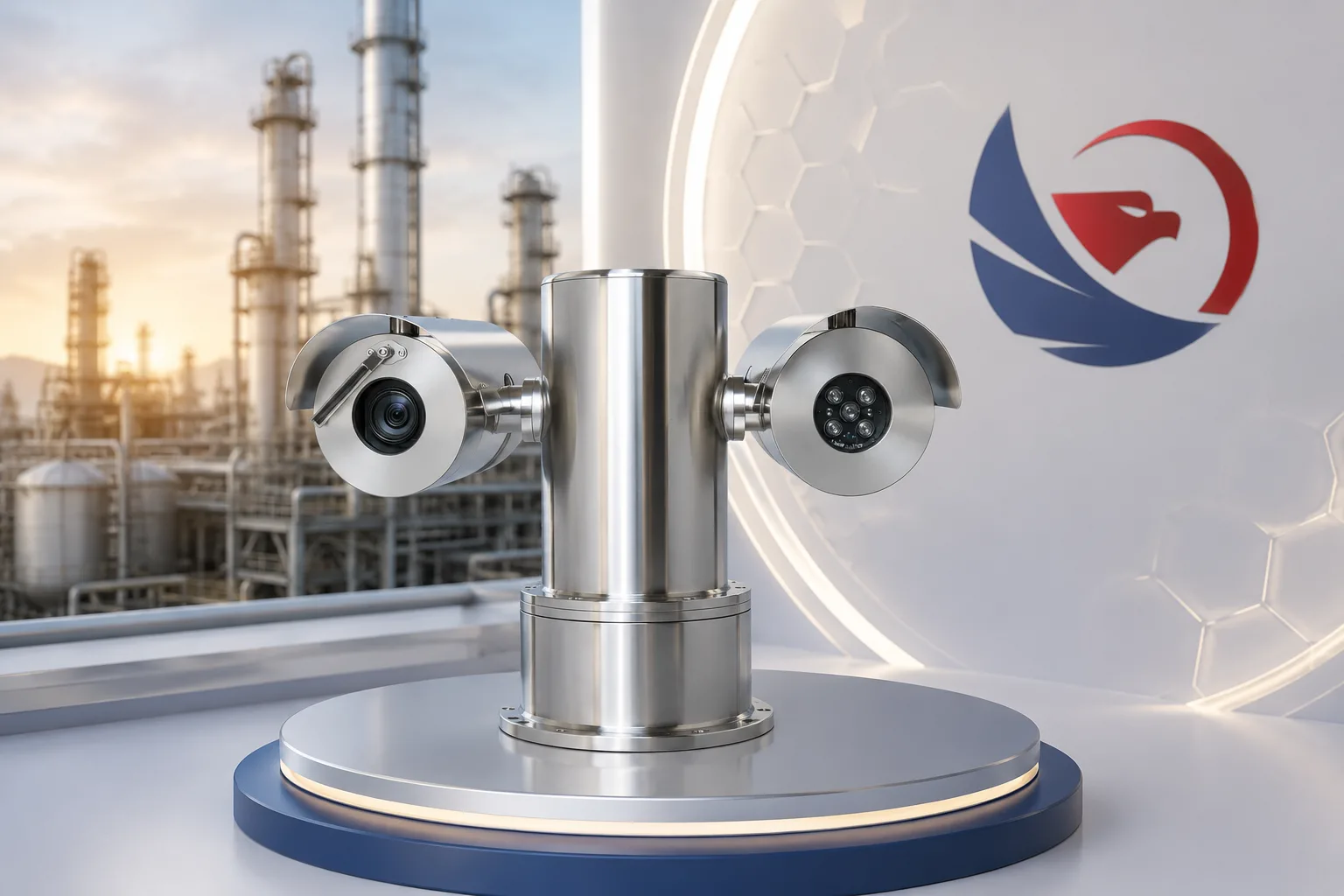
SharpEagle Technology's ATEX certified Explosion Proof PTZ Camera With IR was engineered with exactly this combination of marine and desert hazardous zone demands in mind. It offers full ATEX/IECEx certification, a 316L stainless-steel housing built for sustained corrosion resistance, integrated wiper and heater functionality for storm and dust resilience, and long-range IR suited to expansive drilling decks. As a trusted supplier of hazardous area PTZ cameras, SharpEagle supports operators who need equipment that performs consistently across a demanding operational lifespan.
Where Rig Surveillance Is Heading
Oman's onshore and offshore operations will keep expanding across the Arabian Gulf and inland fields, and remote-oversight expectations will tighten alongside that growth. Rig managers who specify certified, weather-resilient PTZ coverage now will spend considerably less time justifying equipment gaps during the next safety audit. For teams ready to close that gap ahead of the next storm season, SharpEagle Technology's engineering team is a solid place to begin the conversation.