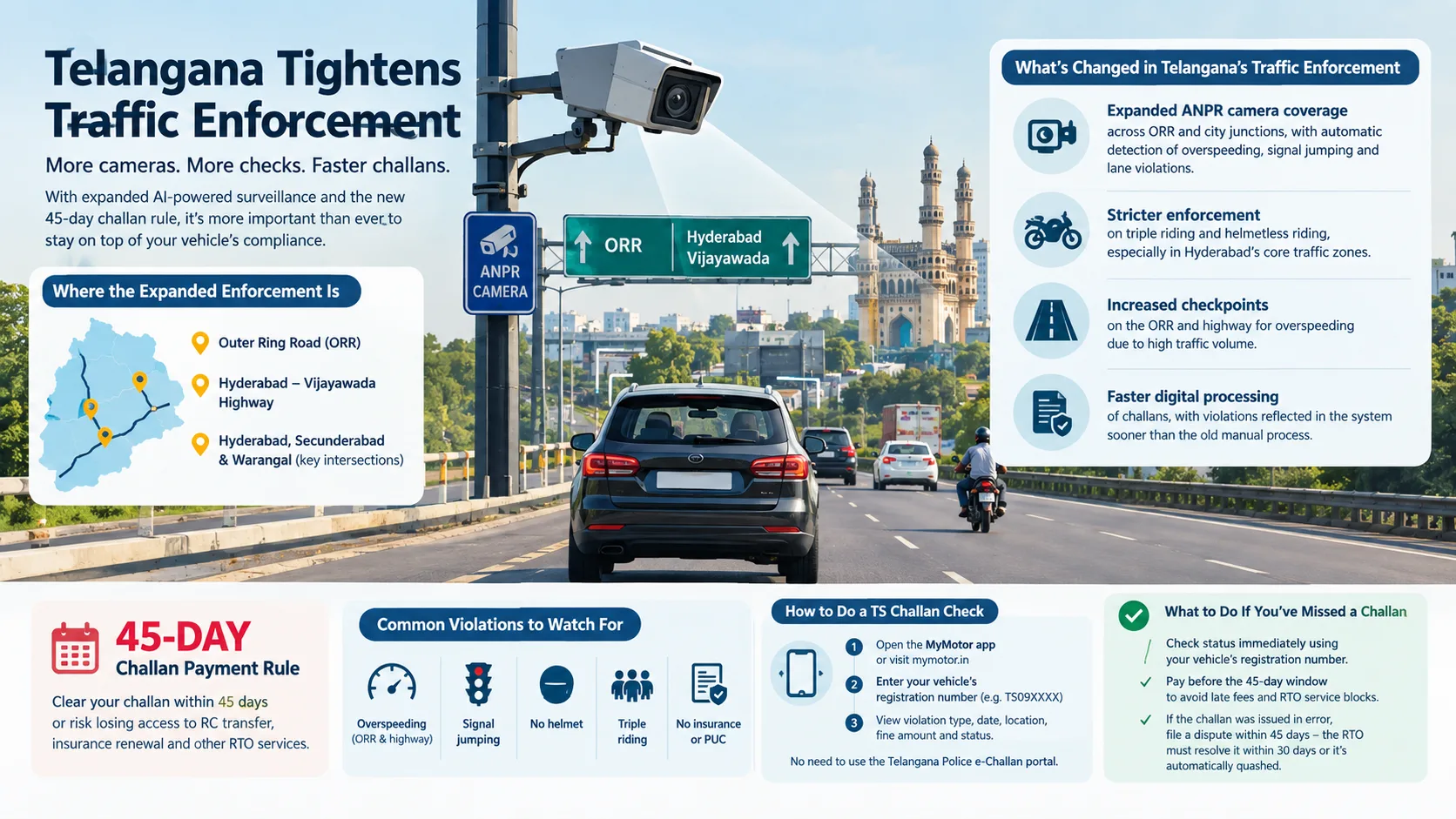
A few years ago, getting caught for a traffic violation involved an officer physically stopping you. Today, that interaction has been largely replaced by a network of cameras, sensors and automated systems that most drivers don't see working. This shift towards AI-driven enforcement has made challan checking a routine that vehicle owners now do, instead of just when they suspect a violation, and is one of the more understated ways artificial intelligence has entered everyday life in India.
From Manual Policing to Automated Detection
Modern traffic enforcement relies heavily on computer vision and pattern recognition. Automatic Number Plate Recognition (ANPR) systems use AI models trained to read vehicle registration plates in real-time, even in poor lighting, at odd angles or through partial obstruction. Combined with speed detection sensors and rule-based logic, these systems can identify a violation, match it to a vehicle and generate a digital challan without any human involvement at the time of detection. This is a genuine machine learning application at scale: image recognition models that process thousands of vehicles per hour across highways and city intersections, flagging violations with a consistency manual policing never achieved.
Why This Creates a New Kind of Problem
While AI-driven enforcement is efficient at catching violations, it introduces a gap the older system didn't have: notification. When an officer stopped a driver, the interaction was immediate and the driver was notified right away. When a camera detects a violation, the record is made digitally but the human on the other end often finds out much later, if at all directly.
This has created a demand for a different kind of tool: not to enforce rules, but to help ordinary people keep up with a system that runs largely on automation. This is where consolidated vehicle-information platforms have begun to matter.
Where MyMotor Fits Into This Shift
MyMotor is a practical response to this gap, not as an AI-enforcement tool itself but as a platform for the people affected by it. It lets vehicle owners perform a challan check using a registration number, aggregating information about pending fines, RC status, insurance validity, PUC certification and FASTag balance into a single view.
The logic is simple: if enforcement has become automated and less visible, verification should become easier and more routine in response. The MyMotor Challan Check App demonstrates this: a quick, no-login lookup that takes less than a minute, designed for a world where a violation may already exist against your vehicle without you being aware of it.
Where This Comes Up in Real Discussions
This is a common enough occurrence that it comes up in casual discussions, there's a thread on r/indianbikes about the kind of consolidated vehicle checking described in this piece, as well as a related Q&A about what to check online for a used bike in India before buying that looks at RC, insurance, PUC and challan checks as part of looking at the same thing from a buyer's perspective. A more personal look at how easily a challan can be overlooked is covered in this reflection on discovering one weeks late, a situation many vehicle owners in India eventually find themselves in.
The Broader Pattern
This isn't unique to traffic enforcement; across sectors, AI has been quietly automating detection and decision-making while tools that help ordinary people respond to that automation lag slightly behind. Vehicle compliance is a small but clear example: enforcement got smarter and faster, and now the tools for staying compliant are catching up to match that pace. As AI-driven systems continue to expand across Indian cities, the practical question for most people isn't about the technology itself, but about having a simple way to stay ahead of what it's already recording.