
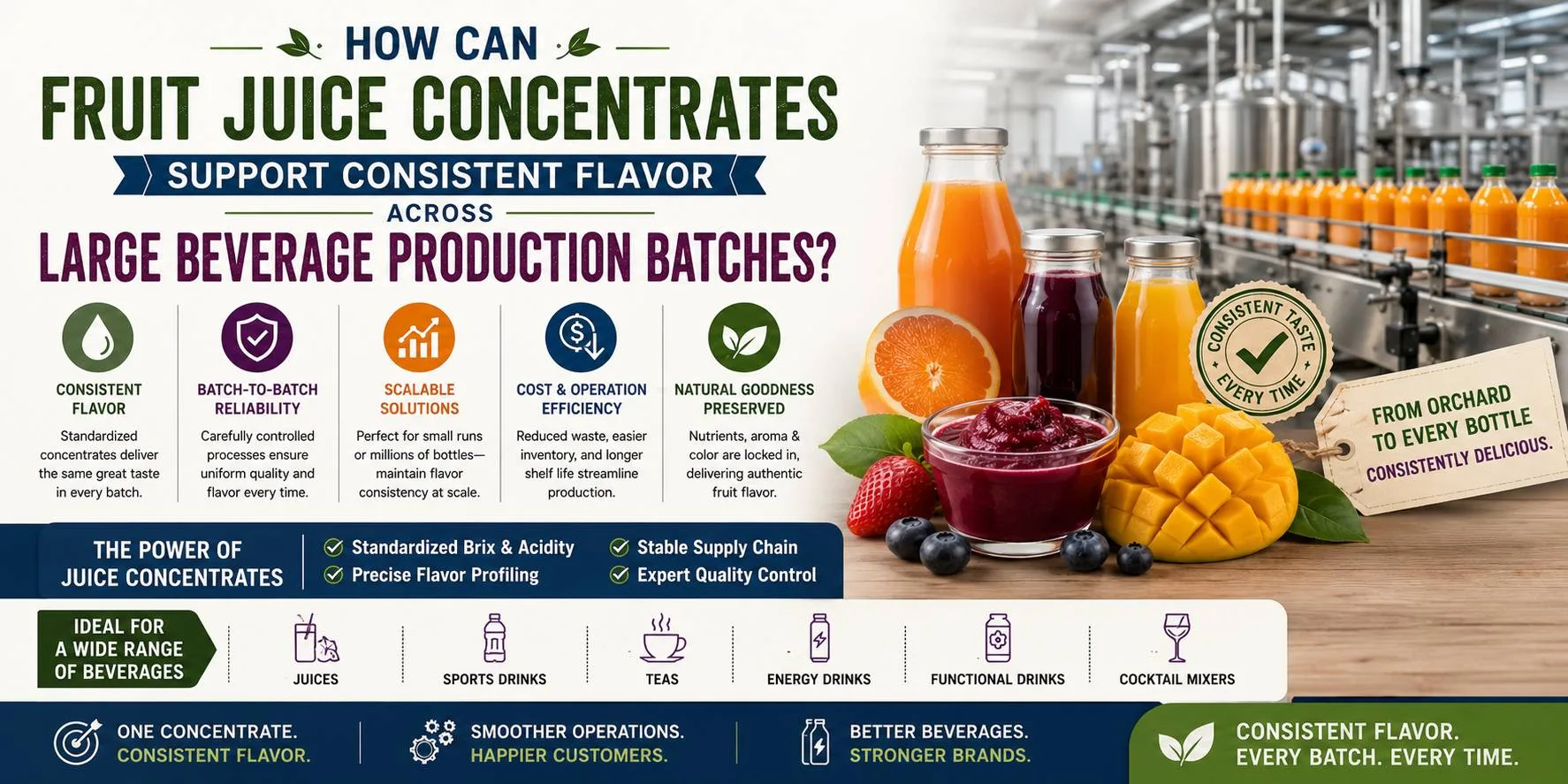
Have you ever approved a beverage in a test batch, then noticed the flavor change once production moves to a much larger tank? A small shift in sweetness, acidity, fruit solids, or aroma can become obvious at scale. That is where fruit juice concentrates can help. They give beverage teams a measurable starting point, so the formula can be checked against defined targets before the batch moves forward.
Consistency still takes work. The ingredient must match the specification, the plant must handle it correctly, and the formula must allow for normal variation between lots.
Why Brix Should Be Checked Before Every Production Run
Brix is one of the first numbers a beverage developer looks at because it shows soluble solids in the ingredient. In a fruit ingredient, that number often connects with sweetness, body, dilution, and finished yield.
If Brix moves too far from the approved range, the drink can taste sweeter, thinner, heavier, or simply different from the previous batch. That is why fruit juice concentrates should be checked against the formulation target before mixing begins. The production team can then adjust water or other ingredients based on the actual specification instead of assumptions.
A dependable concentrate supplier should provide product details that help the buyer review Brix, pack format, storage conditions, and other quality points before production starts.
Why Acidity Can Change Flavor Even When Brix Looks Right
Matching Brix does not guarantee matching flavor. Acidity changes how sweetness is perceived and can make the same fruit profile taste sharper or flatter.
Beverage teams often look at pH and titratable acidity together. pH supports processing and stability decisions, while titratable acidity gives a better picture of total acid content. When fruit juice concentrates are used in a commercial formula, both values should stay within the range approved during product development.
JuiceDeals carries conventional and organic concentrate options across many fruit types, giving manufacturers room to compare ingredient choices without limiting a formula to only common varieties.
What Beverage Teams Should Lock Down Before Scale-Up
Large production runs leave less room for guesswork. A formula that works in a small test tank can still drift when ingredient temperature, mixing order, dilution, or storage conditions change.
Before scale-up, production and quality teams should agree on a short list of controls:
- Target Brix and acceptable variation
- pH and titratable acidity range
- Reconstitution ratio
- Ingredient and water temperature
- Mixing sequence and mixing time
- Sensory checks for aroma, color, and finish
- Storage instructions after opening
- Lot codes and traceability records
These controls become more useful when a plant works with bulk juice concentrates across repeated production schedules. If a batch tastes different, the team has something concrete to check rather than starting from scratch.
How Pack Size Can Affect Ingredient Handling
Pack format gets little attention during early formulation work, but it can affect consistency later. A small beverage company may need pails for pilot runs. A larger plant may prefer drums or higher-volume supply because material moves through production faster.
The right format depends on batch size, storage space, thawing procedures, open-container handling, and how quickly the ingredient will be used.
Wholesale fruit juice concentrates can support growing production, but purchasing volume should follow the manufacturing schedule. JuiceDeals supports quantities from smaller containers through larger commercial orders, giving manufacturers more flexibility when a product moves from trial production into regular runs.
Why Supply Continuity Deserves More Attention
A beverage formula only works commercially if the required ingredient can be sourced again for the next run. Seasonal fruits, organic requirements, unusual varieties, or tighter specifications can complicate that.
Manufacturers buying bulk juice concentrates should ask about availability, origin, clarification level, storage requirements, and possible substitutes before launch. If a substitute becomes necessary later, even a small change in color, acidity, or aroma may force the development team to retest the product.
A concentrate supplier should also discuss whether the same fruit type and specification can support the expected production window. That discussion belongs before demand increases, not after inventory runs low.
Why Sensory Checks Still Belong In The Process
Numbers control part of the formula, but beverage quality cannot be reduced to numbers alone. Two lots can meet the same Brix and acidity ranges and still show a difference in aroma, color, or finish.
A sensory check before full production can catch those changes early. The team can compare the incoming lot with an approved reference sample and note anything unusual. This does not replace laboratory testing. It checks the part consumers notice first: taste.
Conclusion
Large beverage batches magnify small ingredient differences. Manufacturers need clear specifications for Brix, acidity, pH, storage, pack size, handling, and sensory quality. Procurement and formulation teams should review those points together rather than treating sourcing as a separate task. When selecting fruit juice concentrates, consulting formulation and sourcing specialists can help confirm that the ingredient fits the recipe, production volume, and quality standard expected from one batch to the next.