
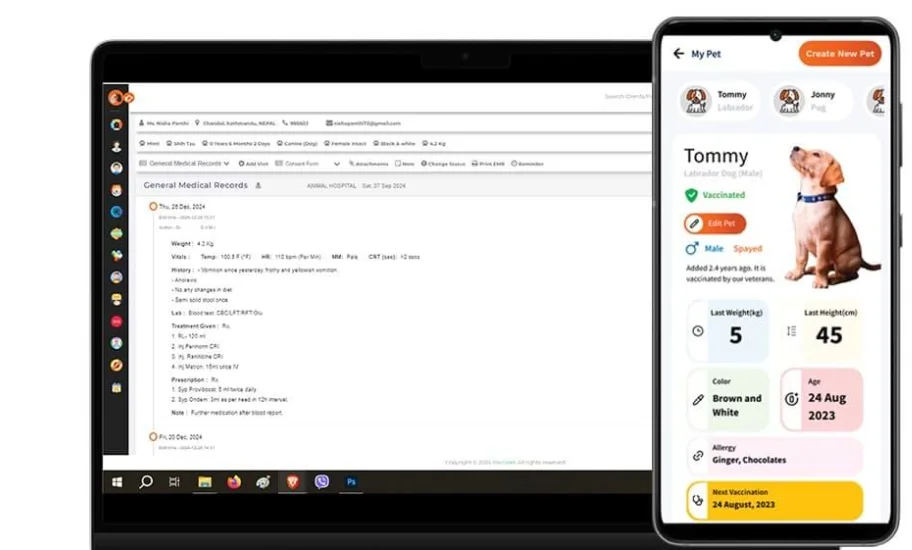
Veterinary practices manage complex relationships among animal patients, pet owners, clinicians, technicians, laboratories, pharmacies, and administrative teams. When medical notes, vaccination histories, prescriptions, images, inventory records, appointments, and invoices live in separate systems, employees spend valuable time searching for information or entering it repeatedly. A connected Veterinary EHR can unify these workflows and give every authorized team member a clearer view of the patient journey.
Complete Animal Patient Records
An animal’s record may include species, breed, age, weight, allergies, vaccination status, chronic conditions, medications, diagnostic results, surgical history, and previous treatment plans. Accurate access to this information supports better decisions during routine appointments, emergency visits, and ongoing care.
Well-designed Veterinary EHR Software organizes data chronologically while highlighting information that requires immediate attention. Clinicians should be able to review weight trends, recent laboratory findings, active medications, and unresolved follow-up tasks without navigating multiple screens. Records must also distinguish verified clinical information from pet-owner submissions or imported data so users understand the source and reliability of each item.
Coordinated Treatment and Prescription Workflows
Digital treatment plans can connect diagnoses with medications, procedures, therapies, diagnostic orders, progress notes, client instructions, and future appointments. Veterinarians can assign tasks to technicians, document completion, and revise the plan as the animal responds to care. This shared visibility helps prevent instructions from being lost during shift changes or transitions between departments.
Prescription tools can display medication history, dosage instructions, allergies, potential interactions, and refill status. Integration with pharmacies and inventory systems may reduce manual transcription and show whether a prescribed product is available. Reliable Veterinary EHR Services should also account for failed transmissions, conflicting medication lists, and prescriptions that require additional review.
Connected Laboratory and Imaging Information
Diagnostic information is most useful when it appears within the clinical workflow. Laboratory orders, results, radiographs, ultrasound images, interpretation notes, and specialist reports should link to the correct animal record and encounter. Automatic notifications can alert the responsible clinician when new results arrive.
The platform should not treat successful data transfer as the end of the process. Work queues are needed for unmatched patients, delayed results, duplicate orders, incomplete reports, and findings requiring client communication. Closing the loop helps practices move from receiving information to acting on it.
Smarter Scheduling and Client Communication
Appointment scheduling becomes more effective when it considers visit type, provider availability, room or equipment needs, anticipated duration, and clinical urgency. Digital reminders can help clients confirm, cancel, or reschedule appointments while reducing front-desk calls. Recurring notifications can support vaccinations, wellness examinations, prescription refills, dental care, and chronic-condition monitoring.
Modern Veterinary EHR Solutions may also include secure pet-owner portals. Clients can access approved visit summaries, care instructions, invoices, appointment information, and messages in one place. Communication should use plain language and clearly explain the next action, especially when a result or symptom requires prompt attention.
Integrated Inventory, Billing, and Payments
Clinical activity has direct operational and financial consequences. Medications, vaccines, supplies, procedures, and diagnostic services used during care should connect with inventory and billing workflows. This relationship can reduce missed charges, improve stock visibility, and help practices monitor products approaching expiration or reorder thresholds.
Itemized invoices make costs easier for pet owners to understand. Integrated payment status, refunds, deposits, and reconciliation tools can reduce manual work for administrative teams. Access controls must ensure that clinical, financial, and payment information is visible only to employees whose roles require it.
Usability, Security, and Multi-Location Growth
Technology must fit the pace of veterinary care. Mobile-friendly documentation, configurable templates, concise dashboards, and fast search can reduce disruption during appointments. Frontline employees should participate in workflow design and testing because small usability problems often create major workarounds after launch.
Security remains essential even though veterinary records are regulated differently from human health records. Practices still manage confidential client details, employee accounts, financial data, and payment information. Strong authentication, role-based permissions, encryption, audit logs, backups, and incident-response procedures provide a responsible foundation.
Multi-location organizations also need consistent patient identity, shared records, standardized terminology, and location-specific permissions. Scalable Veterinary EHR Software Services can support new sites and specialties without forcing teams to rebuild every workflow.
Conclusion
A connected Veterinary EHR does more than replace paper charts. It aligns clinical records, treatment plans, prescriptions, diagnostics, scheduling, inventory, billing, and client communication around the needs of each animal patient. When implemented with thoughtful governance and frontline input, it can reduce administrative friction, improve care continuity, and help veterinary practices grow without losing operational control.