
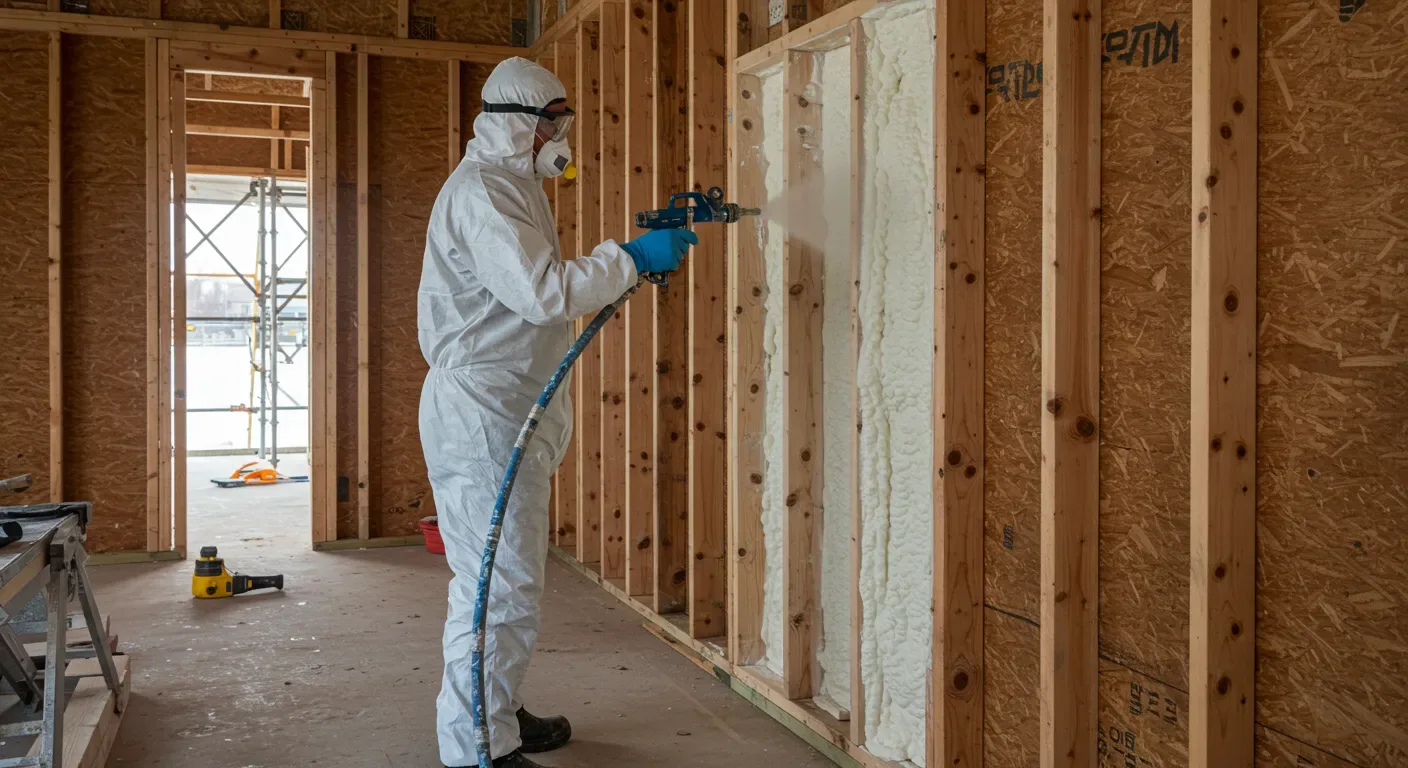
We install open-cell spray foam insulation by evaluating a home's thermal shell, identifying air leak paths, and applying low-density polyurethane foam directly into wall cavities, floor joists, and unvented roof assemblies. Our approach focuses on creating an airtight seal that stops drafty air movement while maintaining cost efficiency for local property owners. In this guide, we explain how open-cell spray foam works, where it delivers the best performance, and what our installation crew looks for during a home insulation upgrade.
Over years of working on properties across the region, our team at Cascadia Spray Foam Insulation of Seattle has insulated thousands of square feet of residential space. We have learned exactly how regional humidity, building styles, and temperature shifts affect thermal performance over time.
Understanding How Open-Cell Spray Foam Works in Pacific Northwest Structures
Open-cell spray foam insulation is a low-density material, weighing roughly 0.5 pounds per cubic foot. When we spray the liquid polyurethane mixture into an open wall stud cavity or rafter space, it expands rapidly up to 100 times its original liquid volume. This fast expansion allows the foam to fill narrow cracks, gaps around electrical wiring, and irregular shapes between framing lumber that standard batt insulation often misses.

The cured material contains soft, open cells filled with air, giving open-cell spray insulation a value of roughly R-3.7 per inch. Because the cell walls remain flexible, the foam moves naturally alongside structural wood. That flexibility works well in our climate, where framing expands and contracts between wet winters and dry summers. The foam flexes with the building without pulling away from the wood studs.
Industry data shows that up to 40% of a home's heating energy escapes through air leaks around unsealed framing joints and attic spaces rather than pure thermal conduction. By applying open-cell foam insulation in enclosed building cavities, we stop air movement while filling the full stud depth.
Comparing Open-Cell and Closed-Cell Foam for Local Retrofits
Choosing between open-cell spray foam insulation and closed-cell options comes down to location and performance goals. Open-cell material offers high coverage rates per gallon, making it an affordable choice for above-grade interior walls, ceiling assemblies, and unvented attics.
Because open-cell foam insulation is vapor-permeable, it allows moisture vapor to pass through slowly instead of trapping water against wood framing inside exterior walls. Closed-cell foam, on the other hand, works as a vapor barrier and adds rigid strength, which fits below-grade basements or areas with high moisture contact.
Here is how we compare these materials during initial project evaluations:
FeatureOpen-Cell Spray FoamClosed-Cell Spray FoamDensity~0.5 lbs per cubic foot~2.0 lbs per cubic footR-Value per InchR-3.6 to R-3.8R-6.0 to R-7.0Vapor PermeabilityPermeable (allows vapor drying)Impermeable (vapor barrier)Material FlexibilitySoft, flexible, expands with woodRigid, structural racking strengthBest Application AreasInterior walls, attic rafters, subfloorsBasements, crawl spaces, exterior wallsRelative Project CostLower cost per installed volumeHigher cost per installed volume
Bonus Tip: When we apply open-cell foam to the underside of a roof deck, we double-check that the outer roof assembly has clean shingle underlayment to prevent top-down leaks before spraying.
Our Step-by-Step Installation Process for Maximum Air Sealing
When we handle a home insulation upgrade, correct application technique makes the difference between a simple fill job and a true air barrier. Spraying foam requires controlled mixing temperatures, stable hose pressures, and steady gun movement across the bay.

First, our crew prepares the site. We mask off windows, doors, electrical outlets, and finished floors to keep them clear of overspray. We inspect every framing bay to ensure the wood surfaces are dry and clean.
Next, we apply open-cell spray foam insulation formulations in measured passes. As the chemical reaction takes place, the foam expands outward to fill every gap. After curing for a few minutes, we trim away excess material flush with the stud faces using a wide hand saw. This leaves a smooth plane for drywall contractors to work on.
Building science studies show that air sealing combined with complete insulation upgrades can reduce annual home heating and cooling expenses by up to 15%. Our process targets air leakage points around top plates, pipe penetrations, and wiring pass-throughs.
Bonus Tip: Finish all electrical, plumbing, and duct installation work before our spray crew arrives so all utilities remain safely behind the trimmed foam layer.
Things to Consider Before Making a Decision
Before picking open-cell foam insulation for your house, consider these key evaluation points from our field experience:
- Location and Moisture Exposure: Open-cell foam is vapor-permeable, so we do not recommend using it directly against soil or inside wet crawl spaces. It functions best inside dry, above-grade building walls and roofs.
- Acoustic Noise Reduction: The open structure of open-cell foam insulation absorbs airborne sound waves. If you want to quiet noise between interior bedrooms, home offices, or floor levels, open-cell foam offers strong acoustic dampening.
- Framing Depth and R-Values: With an R-value of about R-3.7 per inch, your wall studs or rafter bays need sufficient depth to meet local code targets. Deep 2x6 or 2x8 cavities allow us to reach target performance levels easily.
- Budget Allocation: Open-cell spray insulation costs less per cubic foot than dense closed-cell alternatives. That savings allows many homeowners to insulate larger areas, such as full roof slopes, within their planned budget.
Final Advice for Local Property Owners
Installing open-cell spray foam insulation offers a balanced approach to air sealing, heat retention, and acoustic management. By matching the right foam type to your building structure, you get an energy-efficient home that stays comfortable across all seasons. If you are renovating an attic or building out interior partitions, evaluating your insulation needs early helps secure lower energy bills for years to come.

Contact Our Insulation Team
If you are planning a home insulation upgrade or want to discuss open-cell foam insulation for your project, our crew at Cascadia Spray Foam Insulation of Seattle is ready to assist. We deliver professional Residential Insulation, Attic Insulation, Wall Insulation, Commercial Insulation, and Open-Cell Spray Foam applications designed for local structures.
Email: info@cascadiasprayfoam.com Phone: (425) 386-3500
Addressing Common Questions About Open-Cell Foam
Does open-cell spray foam absorb water if a roof leaks?
Open-cell foam can absorb liquid water if exposed to a direct roof leak over time. However, once you repair the roof leak, the foam dries out without losing its shape or breaking down, provided air can circulate the area.
Can open-cell foam be used on basement walls below ground level?
We advise against using open-cell foam directly on concrete basement walls below ground level. Concrete wicks soil moisture, so we prefer closed-cell foam or rigid foam boards to keep ground moisture out of interior spaces.
How does open-cell spray foam control sound between rooms?
The flexible, open-cell structure traps mid- and high-frequency sound waves as they pass through walls. This cuts down noise transfer from plumbing lines, televisions, and adjacent rooms across interior partitions.
What is the expected lifespan of open-cell foam insulation?
When protected from direct sunlight and weather inside wall cavities or enclosed attics, open-cell foam stays stable for decades. It will not settle, sag, or break apart like fiberglass batts or loose cellulose.