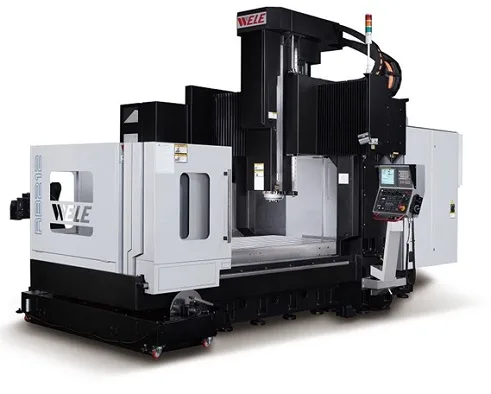
Modern manufacturing demands accuracy, speed, and consistency. Whether producing automotive components, aerospace parts, sheet metal products, or custom-engineered solutions, businesses rely on advanced machinery to meet increasingly tight tolerances and production deadlines. One of the most transformative technologies in manufacturing is the CNC machine.
Computer Numerical Control (CNC) technology has revolutionised fabrication by automating machining processes, reducing human error, and delivering repeatable, high-quality results. From cutting and drilling to milling, turning, and forming, CNC machines have become essential for businesses seeking greater efficiency and competitive advantage.
What Is a CNC Machine?
A CNC machine (Computer Numerical Control machine) is an automated manufacturing system that uses computer-programmed instructions to control the movement of cutting tools and machinery. Instead of relying on manual operation, CNC technology executes complex machining tasks with exceptional precision and consistency.
CNC machines are commonly used for:
- Cutting
- Milling
- Turning
- Drilling
- Engraving
- Routing
- Grinding
- Sheet metal fabrication
Modern CNC systems can produce highly intricate parts repeatedly while maintaining tight dimensional tolerances.
How CNC Machines Work
Every CNC machinery follows a programmed sequence of operations.
The process typically involves:
- Creating a CAD (Computer-Aided Design) model.
- Converting the design into CAM (Computer-Aided Manufacturing) instructions.
- Generating G-code that directs machine movements.
- Loading the material into the CNC machine.
- Automatically performing machining operations according to the program.
- Producing accurate finished components with minimal manual intervention.
Because the machine follows exact programmed instructions, every part produced is virtually identical.
How CNC Machines Improve Precision
Precision is one of the biggest reasons manufacturers invest in CNC technology.
1. Exceptional Accuracy
Unlike manual machining, a CNC machine follows digital instructions with remarkable accuracy. Even highly complex geometries can be manufactured within extremely tight tolerances.
This level of precision is critical for industries where even minor dimensional errors can affect performance or safety.
2. Repeatable Results
One of the greatest strengths of CNC machining is repeatability.
Whether producing:
- 10 components
- 1,000 components
- 100,000 components
every part is manufactured to the same specification.
This consistency significantly improves product quality and customer satisfaction.
3. Reduced Human Error
Manual machining depends heavily on operator skill and experience.
CNC automation minimises:
- Measurement mistakes
- Inconsistent cuts
- Incorrect positioning
- Variable machining quality
The result is fewer rejected parts and lower production costs.
4. Tight Tolerances
Many industries require tolerances measured in fractions of a millimetre.
A CNC machine can consistently achieve these precise dimensions, making it suitable for:
- Aerospace components
- Medical devices
- Automotive parts
- Defence equipment
- Industrial machinery
5. Complex Part Manufacturing
Traditional machining often struggles with intricate shapes.
CNC technology allows manufacturers to produce:
- Curved surfaces
- Multi-axis components
- Precision holes
- Detailed profiles
- Custom designs
without sacrificing accuracy.
How CNC Machines Improve Productivity
Beyond precision, CNC machines dramatically increase manufacturing efficiency.
Faster Production Speeds
A CNC machine performs machining operations continuously with minimal interruptions.
Compared to manual machining, CNC equipment can complete jobs much faster while maintaining high quality.
This enables manufacturers to increase production capacity without compromising accuracy.
Reduced Setup Time
Modern CNC machines store machining programs digitally.
Once a program has been created, it can be reused whenever the same part needs to be manufactured.
This reduces:
- Setup time
- Programming time
- Production delays
making repeat jobs significantly more efficient.
Continuous Operation
Many CNC machines are capable of running for extended periods with minimal operator supervision.
Some advanced systems can even operate overnight using automated material handling systems, maximising equipment utilisation and increasing output.
Lower Material Waste
Accurate machining means fewer mistakes.
By reducing cutting errors and rejected parts, CNC technology helps manufacturers maximise raw material usage and minimise scrap.
Lower waste directly contributes to reduced production costs and improved profitability.
Improved Workflow Efficiency
CNC machines integrate seamlessly into modern manufacturing environments.
Combined with:
- CAD software
- CAM software
- Production scheduling systems
- Robotics
- Automated quality control
they create highly efficient manufacturing workflows.
Industries That Benefit from CNC Machines
Virtually every manufacturing sector uses CNC technology.
Major industries include:
Automotive Manufacturing
CNC machines produce:
- Engine components
- Suspension parts
- Brake systems
- Transmission components
with exceptional consistency.
Aerospace
Aircraft components require extremely tight tolerances.
CNC machining delivers the precision needed for:
- Structural components
- Turbine parts
- Engine housings
- Aircraft fittings
Sheet Metal Fabrication
CNC-controlled equipment improves the accuracy of:
- Sheet cutting
- Punching
- Folding
- Bending
- Plasma cutting
- Laser cutting
This results in faster production and higher-quality fabricated products.
Medical Manufacturing
Medical equipment often requires intricate, precision-machined parts.
CNC technology produces:
- Surgical instruments
- Orthopaedic implants
- Diagnostic equipment components
- Laboratory devices
with exceptional accuracy.
Construction and Engineering
Manufacturers use CNC machining for:
- Steel fabrication
- Custom brackets
- Structural components
- Industrial equipment
- Machinery parts
Additional Benefits of CNC Machines
Enhanced Workplace Safety
Because machining operations are automated, operators spend less time working near cutting tools.
This reduces the risk of workplace injuries while improving overall safety.
Greater Production Flexibility
Manufacturers can quickly switch between different production jobs by simply loading a new machining program.
This flexibility is particularly valuable for businesses producing custom components or handling short production runs.
Better Surface Finish
High-precision tool paths produce cleaner cuts and smoother finishes.
This often reduces the need for secondary polishing or finishing processes.
Lower Labour Costs
One operator can often supervise multiple CNC machines simultaneously.
Automation reduces dependence on manual machining while allowing skilled workers to focus on programming, inspection, and process optimisation.
Choosing the Right CNC Machine
Selecting the right CNC equipment depends on your production requirements.
Factors to consider include:
- Material type
- Maximum workpiece size
- Required machining operations
- Production volume
- Number of machine axes
- Automation features
- Software compatibility
- Future business growth
Investing in the appropriate CNC solution ensures long-term productivity and return on investment.
Best Practices for Maximising CNC Performance
To get the most from your CNC machines:
- Perform regular preventive maintenance.
- Keep cutting tools sharp and properly calibrated.
- Update machine software when required.
- Train operators in programming and machine operation.
- Monitor machine performance using production data.
- Use high-quality tooling for improved accuracy and tool life.
Routine maintenance and continuous process improvement help maintain productivity while extending equipment lifespan.
The Future of CNC Technology
The next generation of CNC machines is becoming even more intelligent through the integration of Industry 4.0 technologies.
Emerging innovations include:
- Artificial Intelligence (AI)-assisted machining
- Predictive maintenance
- Internet of Things (IoT) connectivity
- Real-time production monitoring
- Automated quality inspection
- Digital twins
- Cloud-based manufacturing systems
These advancements enable manufacturers to optimise production, reduce downtime, and make data-driven decisions that further enhance efficiency.
Frequently Asked Questions
What is the main advantage of a CNC machine?
The primary advantage of a CNC machine is its ability to produce highly accurate, repeatable parts while reducing manual labour, material waste, and production time.
Which industries benefit most from CNC machines?
Industries such as automotive, aerospace, medical, construction, electronics, and sheet metal fabrication rely heavily on CNC technology for precision manufacturing.
Are CNC machines suitable for small businesses?
Yes. Many compact and entry-level CNC machines are designed for small workshops, allowing businesses to improve productivity, reduce errors, and scale production as demand grows.
How do CNC machines reduce manufacturing costs?
CNC machines minimise material waste, reduce labour requirements, improve production speed, and lower the number of defective parts, resulting in significant long-term cost savings.
Conclusion
The CNC machine has transformed modern manufacturing by combining precision, automation, and efficiency into a single solution. From producing complex components with micron-level accuracy to streamlining high-volume production, CNC technology enables manufacturers to meet demanding quality standards while reducing costs and increasing output.
As industries continue to embrace automation and smart manufacturing, CNC machines will remain at the forefront of innovation. Whether you're operating a fabrication workshop, engineering firm, or large-scale manufacturing facility, investing in CNC technology is a strategic step toward improved precision, greater productivity, and long-term business growth.