
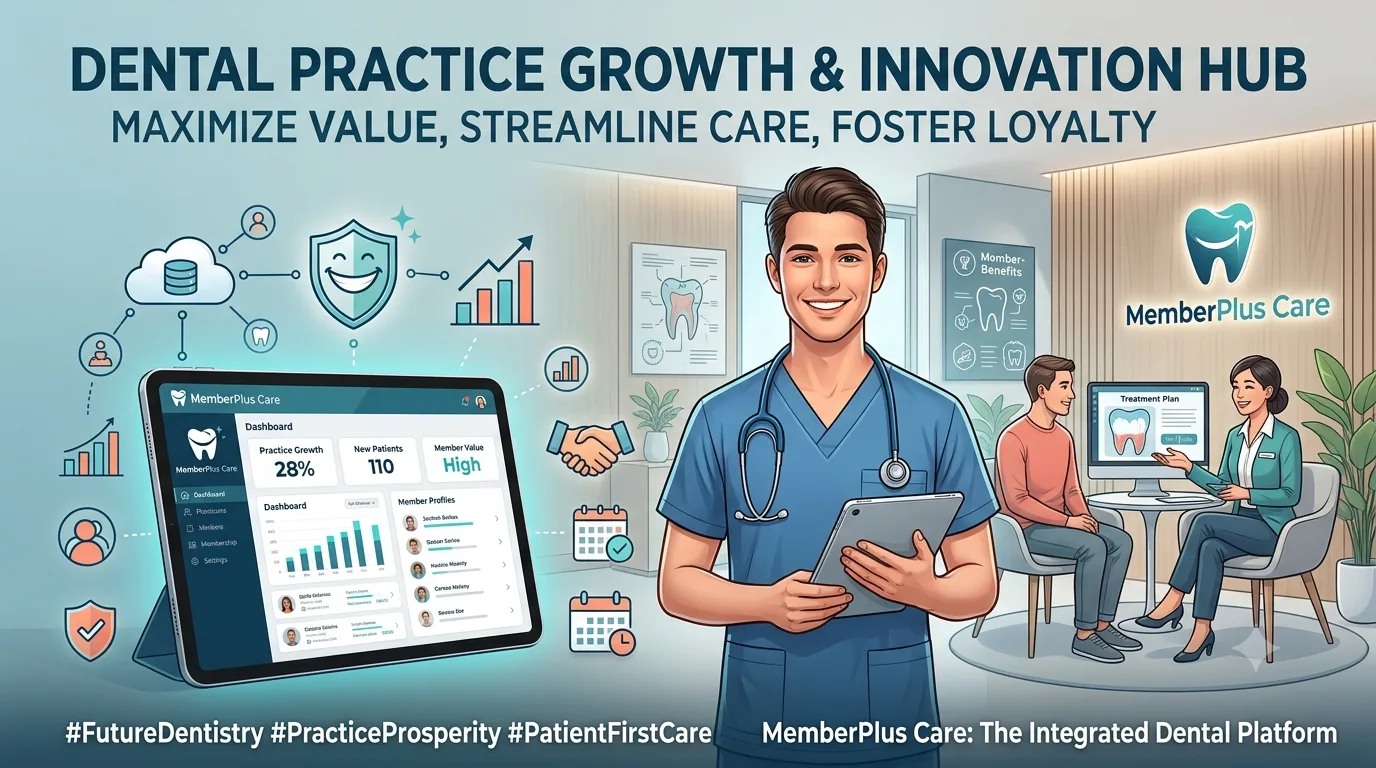
For many dental practices, growth is often associated with attracting more new patients. While patient acquisition is important, sustainable growth also depends on what happens after a patient walks through the door. Do they return for preventive care? Do they understand their payment options? Are they more comfortable moving forward with recommended treatment?
These questions are becoming increasingly important as dental practices look for ways to build stronger patient relationships and reduce administrative complexity. In-house membership plans have emerged as one option for practices that want to offer a direct, structured alternative for patients who may not have traditional dental coverage.
The challenge is that membership programs can become difficult to manage without the right systems. Enrollment, recurring payments, renewals, family accounts, benefit tracking, and patient communication can quickly create additional work for the front office. This is where dental membership software can play an important role by helping practices turn a membership program into a more organized and scalable part of their operations.
Why Patient Access and Practice Growth Are Connected
Patients do not always make dental decisions based only on clinical need. Cost, perceived affordability, and uncertainty about payment can all influence whether someone schedules care or moves forward with a treatment recommendation.
The American Dental Association notes that patients with a benefit plan are more likely to seek dental care and accept treatment plans. The ADA also recognizes in-office dental plans as a potential option for practices looking to improve patient engagement and retention.
An in-office membership plan generally allows a patient to pay the dental practice directly on a monthly or annual basis. In return, the patient may receive preventive services and discounted pricing on other treatments, depending on how the practice structures the plan.
This creates a direct relationship between the practice and the patient. However, offering a plan is only the beginning. The practice also needs a reliable way to manage it.
The Administrative Problem Behind Membership Programs
Imagine a practice with only 20 members. Tracking payments and renewal dates manually may initially seem manageable.
Now imagine that same practice growing to 200 or 500 members.
The team may need to keep track of:
- Different membership plans
- Monthly and annual payment schedules
- Active and inactive members
- Failed payments
- Renewal dates
- Individual and family memberships
- Included services and discounts
- Patient notifications
When these tasks are handled through spreadsheets, manual reminders, or disconnected payment systems, administrative complexity can grow alongside the membership program.
The goal of dental membership software is to help centralize and automate many of these processes so that a growing program does not necessarily require a proportional increase in manual work.
Automation Can Improve the Patient Experience
Automation is often discussed as a way to save staff time, but it can also improve consistency for patients.
For example, membership programs may require communication at several stages:
- When a patient enrolls
- Before a membership renewal
- When a payment fails
- When a membership status changes
- When the practice wants to maintain ongoing engagement
If these communications depend entirely on manual follow-up, important messages can be delayed or overlooked during busy periods.
A dedicated platform can automate routine notifications while keeping the practice involved in the overall patient experience. Dentaloo, for example, offers automated membership billing and scheduled email and SMS notifications for events such as welcomes, renewals, and failed-card alerts.
For patients, consistent communication can make a membership program easier to understand and use.
Recurring Revenue Is Only Part of the Story
One of the most discussed benefits of membership programs is recurring revenue.
When members pay monthly or annually, practices can potentially create a more predictable revenue stream than relying entirely on individual treatment payments. The ADA notes that prepaid dental arrangements can provide a more predictable cash flow, although financial performance depends on the specific structure of the program and the costs of providing care.
However, focusing only on recurring payments can miss the broader value of a membership strategy.
Memberships may also help practices:
- Build longer-term patient relationships
- Encourage preventive visits
- Improve patient engagement
- Create a direct payment relationship
- Reduce some dependence on manual billing processes
The real opportunity is to design a program that works for both the patient and the practice rather than viewing membership fees as the only measure of success.
Supporting Different Types of Patients
Dental practices serve patients with different needs. A single membership option may not be appropriate for everyone.
For example, a practice may want separate options for:
- Adults
- Children
- Families
- Periodontal patients
- Patients seeking different levels of benefits
Managing these options manually can become complicated, especially when family members have different plans or billing dates.
Modern membership platforms can help practices organize different plan structures. Dentaloo, for example, supports family and group membership management, with individual members able to have their own plans, billing dates, and benefit sets under a family account.
This type of flexibility can be particularly useful when a practice wants to create membership options that reflect the needs of its patient base.
Choosing Software Based on Workflow, Not Just Features
When evaluating a membership platform, it can be tempting to compare software based only on the length of its feature list.
A better approach is to start with the practice's workflow.
Questions worth asking include:
How are memberships currently managed?
If staff members rely on spreadsheets, manual billing, and separate communication tools, a centralized platform may reduce unnecessary complexity.
How much staff time is spent on recurring tasks?
Practices should identify repetitive processes such as payment follow-ups, renewal reminders, and membership updates.
Will the program include multiple plan types?
A practice planning to offer individual, family, or specialized plans should consider how easily the software can support those options.
Can the system support future growth?
A platform should work not only for the current number of members but also for the size the practice expects to reach.
How easy is it for patients?
The patient experience should remain a priority. Complicated enrollment or unclear membership information can reduce adoption.
The Importance of Transparency
A successful membership program should be easy for patients to understand.
Patients should know what their membership includes, what services may be discounted, how payments work, and what they can expect when their membership renews.
The ADA emphasizes the importance of clear financial policies and patient education when practices offer payment and benefit options.
Software can support organization and automation, but technology alone cannot replace clear communication. Practices should ensure that their membership terms, benefits, and payment policies are presented transparently.
They should also review applicable state and local requirements before launching a program. The ADA's in-office plan resources specifically highlight legal and regulatory considerations that may vary by location.
How Dentaloo Fits Into a Modern Membership Strategy
For practices that want to reduce manual membership administration, a platform such as Dentaloo brings several functions into one system.
According to its platform information, Dentaloo supports customizable membership plans, monthly or annual billing, automated failed-payment retries, family membership management, and automated patient notifications.
Instead of treating membership management as a collection of separate tasks, a centralized dental membership software platform can help practices build a more consistent workflow around enrollment, billing, communication, and ongoing membership administration.
The best approach will depend on the size of the practice, the complexity of its plans, and how the team currently manages patient payments and membership information.
Final Thoughts
Dental membership programs can offer practices an opportunity to create stronger direct relationships with patients while providing a structured way to manage recurring membership payments and benefits.
But a membership program that depends heavily on spreadsheets, manual reminders, and disconnected systems can become increasingly difficult to operate as it grows.
The right dental membership software can help automate routine processes, organize patient membership information, and create a smoother experience for both staff and patients. By combining clear membership plans with transparent communication and an efficient technology platform, dental practices can build programs that support patient access while creating a stronger foundation for long-term growth.