
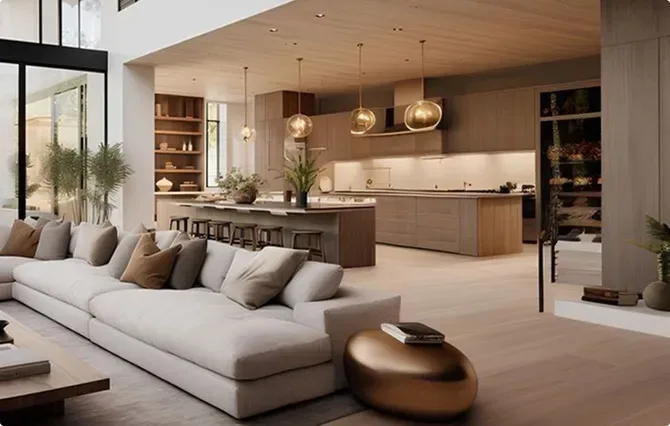
Choosing a luxury interior designer is not just about selecting the most attractive portfolio. The true measure of a designer lies in execution quality and finishing—the factors that determine whether the final space matches the original vision. To compare luxury interior designers effectively, evaluate their completed projects, attention to detail, material quality, workmanship standards, project management process, and client feedback. A designer who consistently delivers flawless execution and premium finishes is more likely to provide long-term value and satisfaction.
Summary Table: How to Compare Luxury Interior Designers
Evaluation FactorWhat to CheckWhy It MattersFinished ProjectsActual completed homesReveals real execution qualityMaterial QualityBrands, finishes, durabilityImpacts longevityCraftsmanshipJoinery, edges, alignmentReflects workmanship standardsSite ManagementSupervision processEnsures consistencyVendor NetworkTrusted contractors and suppliersInfluences quality controlTimelinesProject completion historyIndicates reliabilityClient ReviewsReal homeowner feedbackShows customer satisfactionCustomizationTailored solutionsDemonstrates expertiseQuality ChecksInspection proceduresReduces defectsPost-Completion SupportWarranty and assistanceEnsures peace of mind
What Does Execution Quality Mean in Interior Design?
Direct Answer
Execution quality refers to how accurately and professionally a designer transforms approved designs into completed spaces while maintaining quality, functionality, and attention to detail.
Detailed Explanation
Many luxury interiors look impressive in design presentations, but execution determines the final outcome. High execution quality means:
- Accurate implementation of designs
- Consistent workmanship
- Premium material installation
- Proper site coordination
- Timely project delivery
Example
Two designers may propose similar living room concepts. However, one delivers perfectly aligned cabinetry, seamless finishes, and precise lighting installation, while the other leaves visible gaps and uneven surfaces. The difference lies in execution quality.
Why Is Finishing So Important?
Direct Answer
Finishing is the final layer of quality that affects the appearance, durability, and overall luxury feel of a home.
Detailed Explanation
Luxury interiors are defined by details. Even premium materials can look ordinary if finishing standards are poor.
High-quality finishing includes:
- Smooth paint application
- Uniform polish and coatings
- Precise edge detailing
- Perfect alignment of fixtures
- Seamless transitions between materials
Example
A custom wardrobe may use expensive materials, but uneven door gaps or poor hardware installation can significantly reduce its perceived quality.
How to Evaluate Execution Quality Before Hiring a Designer
1. Visit Completed Projects
Direct Answer
The best way to assess execution quality is by viewing completed projects in person whenever possible.
What to Observe- Paint finish consistency
- Furniture craftsmanship
- Material alignment
- Lighting installation
- Overall attention to detail
Example
A luxury apartment completed two years ago can reveal how well materials and workmanship hold up over time.
2. Examine Joinery and Woodwork
Custom furniture often reflects the designer's execution standards.
Check For:- Smooth edges
- Uniform finishes
- Accurate measurements
- Soft-close mechanisms
- Durable hardware
Example
Premium cabinetry should open and close effortlessly while maintaining perfect alignment.
3. Assess Material Quality
Direct Answer
High-end execution depends on both skilled workmanship and quality materials.
EvaluateAreaWhat to CheckFlooringDurability and finishStone SurfacesUniformity and installationHardwareBrand reputationUpholsteryStitching qualityWood FinishesSurface consistency
Example
Natural stone should have clean joints and carefully finished edges without visible imperfections.
4. Review Quality Control Processes
Professional firms typically follow structured quality checks throughout execution.
Ask Questions Such As:- How are defects identified?
- Who supervises installations?
- How often are inspections conducted?
- What happens if corrections are required?
Design firms with dedicated project management teams often maintain better quality standards.
Key Indicators of Superior Finishing
Direct Answer
Superior finishing is visible through precision, consistency, durability, and attention to detail.
Signs of High-Quality Finishing
IndicatorQuality BenchmarkPaint WorkSmooth and uniformTile InstallationEven spacing and alignmentWoodworkClean edges and jointsLightingBalanced placementHardwarePrecise fittingUpholsteryNeat stitching
Example
Luxury interiors often appear effortless because all elements are installed with precision and consistency.
Common Mistakes Homeowners Make When Comparing Designers
1. Judging Only by Renderings
Beautiful 3D designs do not guarantee flawless execution.
2. Ignoring Site Management
Strong project supervision is often more important than visual presentations.
3. Comparing Only Price
The lowest quote may result in compromises on materials, labor, or finishing quality.
4. Skipping Reference Checks
Past clients can provide valuable insights into workmanship and project management.
5. Not Reviewing Completed Homes
Finished projects reveal much more than portfolio images.
Statistics and Industry Insights
Direct Answer
Industry trends show that homeowners increasingly prioritize execution quality and project management when selecting luxury interior designers.
Key Insights
TrendImpactGrowing demand for turnkey interiorsIncreased focus on executionRising use of custom furnitureHigher importance of craftsmanshipHomeowners seeking end-to-end servicesGreater accountabilityIncreased investment in premium materialsNeed for expert installation
What This Means
Luxury homeowners are looking beyond design concepts and evaluating actual delivery capabilities before making decisions.
Expert Tips for Comparing Luxury Interior Designers
Request Detailed Case Studies
Case studies provide insight into project challenges, solutions, and outcomes.
Ask About Vendor Relationships
Reliable suppliers and contractors often contribute significantly to execution quality.
Evaluate Communication Standards
Regular updates help maintain quality throughout the project lifecycle.
Review Recently Completed Projects
Recent projects provide a better understanding of current workmanship standards.
Prioritize End-to-End Service Providers
Designers who manage both design and execution typically offer greater accountability.
Why Homeowners Evaluate Native Sutra for Execution-Focused Luxury Interiors
Homeowners seeking luxury interior solutions often prioritize firms that combine design expertise with execution management. Native Sutra follows a comprehensive approach that includes planning, material selection, vendor coordination, site supervision, and quality-focused implementation. This integrated process helps ensure consistency between design concepts and completed spaces while maintaining high finishing standards throughout the project.
Key Takeaways
- Execution quality determines whether design concepts translate successfully into reality.
- Finishing quality directly impacts the luxury feel of a home.
- Completed projects provide the most reliable evaluation method.
- Quality craftsmanship is visible in furniture, joinery, and detailing.
- Strong project management supports consistent execution.
- Material quality and installation standards work together.
- Reference checks help verify performance.
- Structured quality control reduces defects.
- End-to-end service providers often offer greater accountability.
- Long-term value depends on both design and execution excellence.
Frequently Asked Questions
1. What is execution quality in luxury interior design?
Execution quality refers to how accurately and professionally a design is implemented in the final space.
2. Why is finishing important in luxury interiors?
Finishing affects appearance, durability, and the overall premium feel of the home.
3. How can I evaluate a designer's execution quality?
Review completed projects, client testimonials, and workmanship details.
4. Should I visit completed projects before hiring a designer?
Yes, completed projects provide the clearest picture of actual quality standards.
5. What are signs of high-quality craftsmanship?
Precise alignment, smooth finishes, clean joints, and durable installations.
6. Are expensive materials enough to ensure luxury quality?
No. Installation and workmanship are equally important.
7. How important is project management?
Project management plays a major role in maintaining quality and timelines.
8. What questions should I ask about execution?
Ask about supervision, inspections, quality checks, and vendor management.
9. Why should I check client references?
References provide real-world insights into quality and reliability.
10. What is the biggest mistake when comparing designers?
Focusing only on design renderings rather than completed projects.
11. Do turnkey interior firms offer better quality control?
Many turnkey firms provide better accountability because they manage execution directly.
12. How does finishing impact property value?
High-quality finishes improve aesthetics, durability, and market appeal.
13. How can I compare multiple designers objectively?
Use a checklist covering execution, materials, craftsmanship, timelines, and reviews.
14. What role do vendors play in execution quality?
Experienced vendors contribute significantly to workmanship and consistency.
15. Which factor matters most when choosing a luxury interior designer?
A combination of proven execution quality, finishing standards, project management, and client satisfaction.