
Excavation is not always about removing as much material as quickly as possible. On sites where you need to follow a defined profile, work close to existing structures, or remove rock in layers, control over the cutting process becomes just as important as digging power.
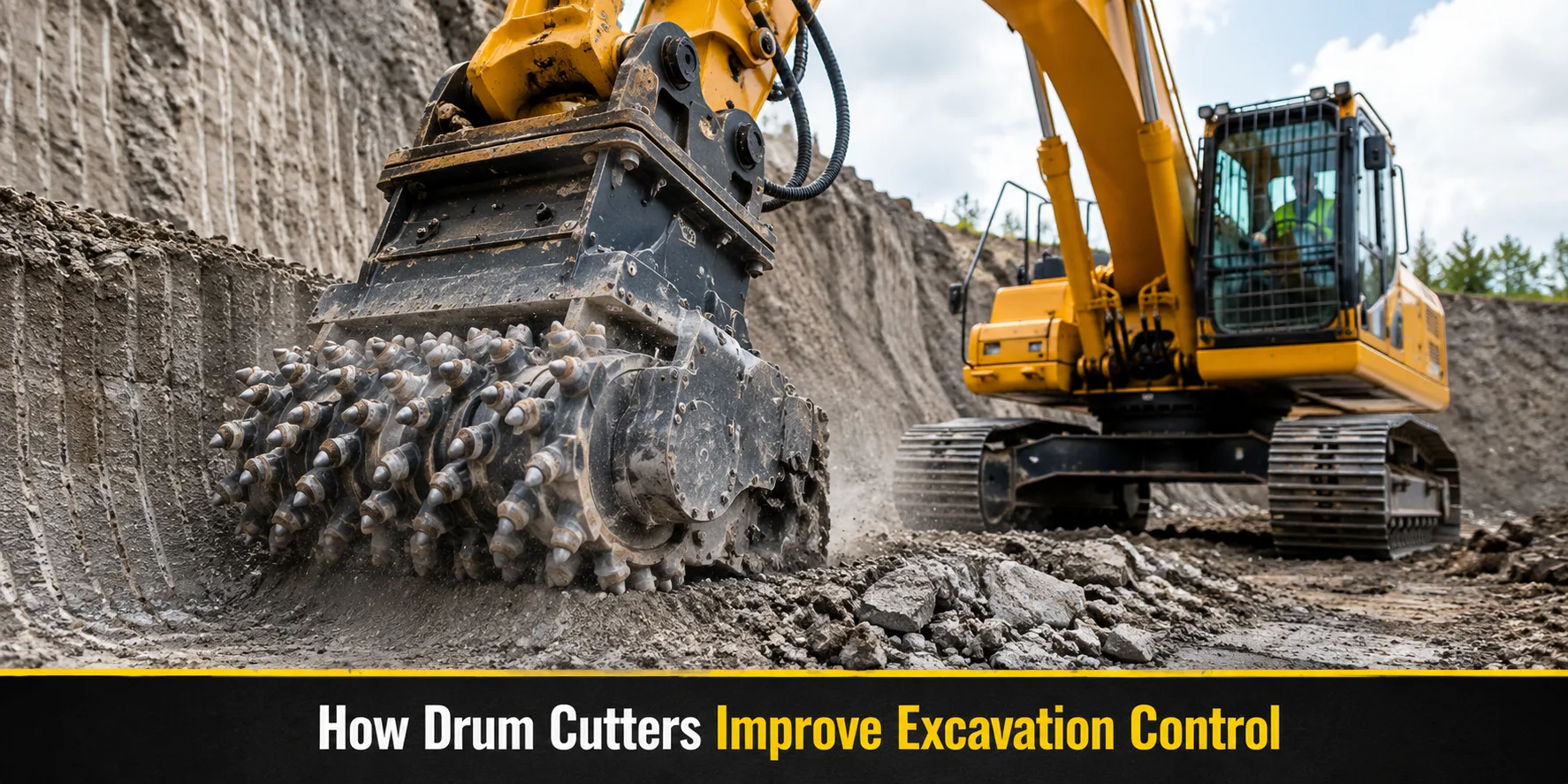
This is where a drum cutter can be useful. Unlike an excavator bucket that tears and lifts material or a hydraulic breaker that fractures it through repeated impacts, a drum cutter uses rotating drums fitted with cutting picks to mill rock, concrete, frozen ground and other hard materials progressively.
What Makes a Drum Cutter More Controlled?
The main difference is the cutting action.
A hydraulic motor rotates the cutter drums, while replaceable picks around the drum engage with the material. As you move the excavator attachment across the surface, the picks remove material continuously rather than breaking a large section at once.
This allows you to control the excavation path through the excavator's boom, stick movement and cutting passes. Instead of relying on a sudden fracture, you can gradually remove material and shape the required surface.
Better Control Over Excavation Profiles
This characteristic is particularly valuable when the final shape matters.
For example, during trenching, you can progressively deepen the excavation rather than attempting to break the entire section in one operation. In tunnelling, drum cutters are used for profile trimming and scaling, helping operators bring the excavation closer to the required contour.
The same principle applies to rock walls, concrete surfaces and other areas where excessive removal can create additional work.
Lower Impact During Sensitive Work
A drum cutter's continuous rotary cutting also produces a different type of excavation force from an impact breaker. Because there is no repeated hammering action, it can be suitable for work where lower vibration and reduced disturbance are important, including tunnelling and excavation near sensitive surroundings.
However, this does not mean every drum cutter operation is vibration-free. Material hardness, cutting depth, attachment selection and operating technique still affect the actual working conditions.
To Sum it up
A drum cutter is particularly useful for rock excavation, trenching, tunnel profiling, scaling, concrete removal and controlled surface shaping.
The attachment is not simply a replacement for a bucket or breaker. Its real advantage is the ability to remove hard material progressively and shape the excavation with greater precision.
For projects where over-excavation, vibration or an uneven finished profile can create problems, that additional control can make the excavation process more predictable and easier to manage.